Get Full Government Meeting Transcripts, Videos, & Alerts Forever!
Get email alerts on the Education Student Recognition topic
No spam. Unsubscribe anytime.
Paradise Valley senior lauded for public-health work, machine-learning model for valley fever
Summary
Shubham Kale, a Paradise Valley High School senior and Phoenix Youth Leader of the Year for District 2, described founding a nonprofit serving seniors and a machine-learning model he said predicts valley fever cases with about 90% accuracy.
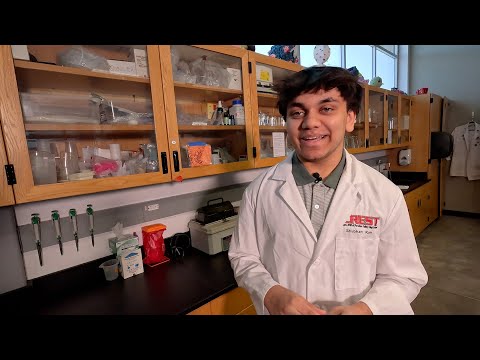
Shubham Kale, a senior at Paradise Valley High School and the Phoenix Youth Leader of the Year for District 2, used remarks in the meeting transcript to describe a nonprofit he founded that provides technology workshops for older adults and a machine-learning model he said predicts valley fever cases with about 90 percent accuracy.
A staff member who teaches in the school's CREST bioscience program said, “I have had him for actually 4 classes in the bioscience program. And from the very first semester that he entered as a high school freshman, I could tell that he was gonna be really engaged.” The teacher said few students complete two CREST pathways and praised Kale’s combination of computer science and bioscience interests.
Kale told the meeting he founded a registered 501(c)(3) organization he called “seniors in powder technology,” which he said has two chapters in Arizona and “Bridal,” and has helped more than 100 senior citizens. He said the nonprofit runs weekly one-on-one workshops across the Phoenix metropolitan area and in Jacksonville, Florida.
Kale described a project begun in his junior year, with guidance from “Miss Longerville and Miss Cherry,” that combined environmental data and valley fever case data into a machine-learning model. “I created a machine learning model that would be able to predict, these valley fever cases for about 90 percent accuracy,” he said, adding that the model “was also able to predict exact interventions that could help prevent valley fever from starting up, and especially in places in undisturbed soil.” The remarks are presented as Kale’s description of his work and are not a public-health agency finding.
Kale also said he will attend Johns Hopkins University as a Hudson Trust Scholar. “It was given to 20 students out of the entire incoming class and 45,000 applicants that applied,” he said, and added that he plans to major in public health and computer science to pursue public-health startups.
The meeting transcript shows the item was a presentation or recognition; no motions, votes, or formal board actions about Kale’s projects or nonprofit are recorded in the provided transcript.