Get Full Government Meeting Transcripts, Videos, & Alerts Forever!
Get email alerts on the Ethics In Local Government topic
No spam. Unsubscribe anytime.
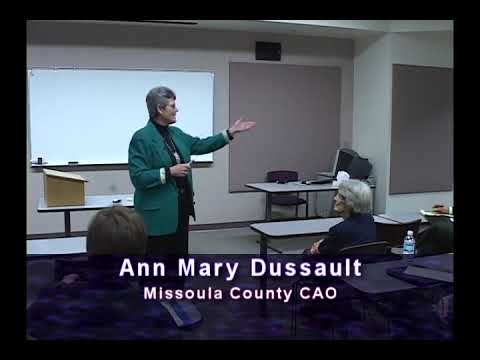
Missoula County chief administrative officer urges public servants to follow values-based ethics
Summary
Anne Marie Dusso, Missoula County chief administrative officer, told a public forum that ethics in government are derivative of core values, discussed conflicts of interest and gift limits, and urged patience for incremental policy change while describing tensions in the state legislature’s budget process.
Anne Marie Dusso, the chief administrative officer of Missoula County, told a public forum that ethics in government flow from a person’s core values and that officials must balance personal convictions with public duty.
“[W]hen we talk about things like ethics and principles and values, a lot of that comes from our own, you know, experience,” Dusso said, describing how her upbringing and career shaped her view of public service. She framed ethics as derivative of values and urged attendees to prepare for both incremental change and sudden opportunities for reform.
Dusso told the group that major policy change usually takes time in a legislature: “Plan on 8 years,” she said, describing how ideas typically need multiple sessions to survive committees and floor votes. She also criticized current partisan maneuvering over the state appropriation, saying the usual single budget bill (House Bill 2) was split into six separate bills and that Missoula-area legislators were focusing on the contents of the bills rather than the political vehicle.
On conflicts of interest and gifts, Dusso outlined three common standards she said govern public officials: the prohibition on bribery, the duty to declare conflicts, and limits on accepting gifts. “The issue is whether or not that person who has been bought a drink or something of value does something as a result of that,” she said, adding that jurisdictions typically set a dollar threshold for permissible gifts and citing “about $50” as the commonly used statutory limit.
Panel participants asked how officials reconcile party pressure with a personal moral compass. Dusso described organizational tools she has used, including a “True North” moral-compass exercise from a nonprofit she worked for, which helped rank actions against stated values. She argued that officials should be willing to tell party leaders they cannot follow orders that conflict with their principles, even if that could cost them politically.
Attendees contributed perspectives. Jenna Zellzer of Cascade said she was looking for ethical guidance applicable to her life; Sam Raman said cynicism about government made it hard to sustain activism; and Dane Scott said he was thinking about climate change and long-term consequences when weighing incremental versus sweeping change.
Dusso also recounted a personal ethics episode from her legislative career: she said a Catholic bishop threatened excommunication over a vote on abortion policy, and she decided to follow what she believed was right for the public rather than religious instruction. “I’m in the legislature to do what I believe is right, the right thing for the public,” she said.
The session was a discussion rather than a formal meeting of a governing body and produced no motions or binding directives. The primary outcomes were audience questions and Dusso’s guidance on applying values to public decision-making, conflict disclosure, and gift limits.
Dusso closed by urging patience and preparation: small, incremental steps create durable change, she said, but being ready for rare, fast-moving opportunities can accelerate progress.