Get Full Government Meeting Transcripts, Videos, & Alerts Forever!
Get email alerts on the Same Sex Marriage India topic
No spam. Unsubscribe anytime.
Speaker: Hindu texts and local custom offer precedents for same-sex unions in India, colonial law introduced modern homophobia
Summary
At a Missoula event organized by the Outfield Alliance, a visiting scholar argued that Hindu religious texts and customary marriage practices contain examples that have recognized same-sex relationships, and that British colonial law (Section 377) and later nationalist stances helped create modern homophobia in India.
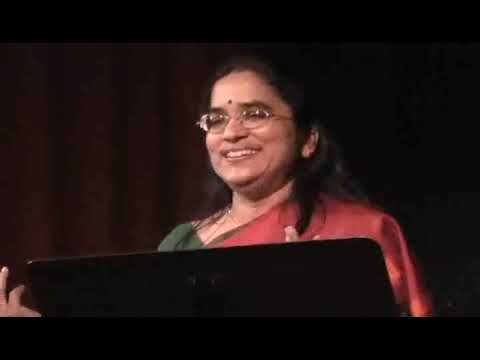
Ruth, a lecturer and author, told an audience in Missoula that Hindu religious texts and customary marriage practices include precedents for same-sex unions and that modern legal and social hostility to such relationships largely stems from British colonial laws and later nationalist attitudes.
In a talk organized by the Outfield Alliance, Ruth said the British-era criminal provision — Section 377 of the Indian Penal Code — helped transform earlier, more varied cultural responses into a dominant modern homophobia. She described historical and literary examples, including a translated fourteenth-century story in which a divinely blessed relationship between two women results in a miraculous birth, and cited cases reported in Indian newspapers — including policewomen who married by Hindu rites and couples who took or threatened joint suicide when families rejected their unions.
Why it matters: the lecture linked religious, social and legal strands that shape contemporary debates about marriage and civil recognition in India. Ruth pointed to both constitutional nondiscrimination arguments and a second strategy that emphasizes custom and historical practice: because many Hindu communities have long-recognized ceremonial marriages and because Indian law gives weight to local custom, she said courts and advocates can argue that communities — not only the state — define marriage in significant ways.
Ruth described two cultural ideas she said help explain how same-sex unions have been treated in India: the belief that souls are reborn carrying attachments but not fixed social characteristics, and a view of marriage in some Hindu texts as a union of spirits rather than of fixed sexes. As she put it, “marriage is a union of souls and the spirit is not male or female.” She also told the audience that Hindu law and practice historically recognize multiple forms of marriage — including Gandharva marriage, a mutual-attraction form discussed in the Kama Sutra — and that the Hindu Marriage Act of 1955 states that “any two Hindus who marry according to the ceremonies that are customary in the community of one partner are legally married,” a provision she cited in explaining how community ceremonies can carry legal weight even without state registration.
Ruth traced a turning point to the 19th century, saying the 1860 enactment of Section 377 of the Indian Penal Code labeled “unnatural” practices punishable and that the colonial period produced suppression and self-censorship of indigenous literature dealing with same-sex desire. She summarized decades of news reports she has collected documenting village and small-town marriages and joint suicides dating back to the 1980s and said those reports show a recurring pattern: some families or communities accept unions performed by priests or through local ceremony, while other families react with opposition that in extreme cases has led to suicide.
Audience members asked legal and social questions after the lecture. One asked whether Indian constitutional nondiscrimination provisions could be pressed in court; Ruth said that clause is being used in some arguments, and that another viable line is emphasizing history and custom in court filings — pointing to precedents in Canadian litigation where courts requested historical evidence about marriage. Another questioner asked whether families ever arrange same-sex marriages; Ruth said she was not aware of cases where a family proactively selected a same-sex spouse, but she described several instances in which families later participated in or accepted such marriages, including a double wedding where two sisters married — one to a man and one to a woman — with family participation.
The event opened with Mona Bachman of the Outfield Alliance, who introduced the speaker and noted the group’s campus work, including organizing talks and advocating for partner benefits. Mona said the group has been active in pushing for benefits “which, as you all know, we’ve finally won in a lawsuit,” and noted an affidavit and sign-up materials were available for attendees.
The presentation and the questions that followed treated the topic as discussion and analysis; there were no formal actions or votes taken at the event. Ruth framed her conclusions as historical and legal observations and suggested the intersecting forces of social acceptance, democratic institutions and advocacy could make legal recognition of same-sex marriage in India more likely in the future.