Get Full Government Meeting Transcripts, Videos, & Alerts Forever!
Get email alerts on the Fresh Bucks Program topic
No spam. Unsubscribe anytime.
Seattle office gives overview of Fresh Bucks food-benefit program; staff say program serves 12,000 households
Summary
Office of Sustainability & Environment staff briefed council on Fresh Bucks, a $40-per-household monthly fruit-and-vegetable benefit that serves about 12,000 Seattle households, has a growing waitlist and relies on a small six-person team for administration.
Office of Sustainability & Environment staff told the Seattle City Council Sustainability, City Light, and Arts and Culture Committee on May 2 that Fresh Bucks provides a $40 monthly benefit to about 12,000 Seattle households to buy fruits and vegetables at participating retailers, farmers markets and delivery services.
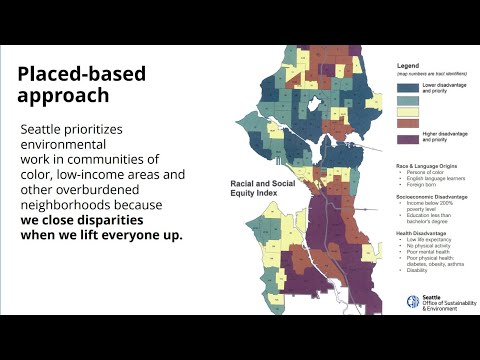
Liliana Ayala, interim deputy director at the Office of Sustainability & Environment, framed the program as part of a city strategy to prioritize residents historically burdened by environmental and economic injustice. Robin Kumar, Fresh Bucks program manager, said the program “connects Seattle residents who are most impacted by food insecurity and diet-related chronic disease with locally grown, culturally relevant, and health-promoting foods.”
Kumar said Fresh Bucks began as a SNAP match at a few farmers markets in 2012 and expanded after the 2018 sweetened beverage tax enabled larger city investments. The program now serves about 12,000 households; customers receive $40 per month and benefits can be used at 40 participating Seattle retailers. Kumar reported that last year $4,870,000 in Fresh Bucks benefits were spent at Seattle businesses and that the program has translated into broader local economic impacts.
OSC staff described eligibility and enrollment: any Seattle household at or below 80% of area median income (AMI) may apply. Customers may enroll through community enrollment partners, and OSC opened a continuous public waitlist application in March to widen access; staff said the waitlist received over 3,000 applications in the first two months. Staff said about 1,000 program spots open each year through natural attrition (households moving or becoming ineligible), which is the baseline rate available to fill from the waitlist.
Committee members asked about expanding participating retailers (including large grocery chains and culturally specific independent stores), increasing the monthly benefit amount, and staffing needed to scale the program. Kumar said OSC is exploring partnerships to add retailers and delivery options and confirmed the $40 monthly benefit is a flat amount set in 2018. Kumar said the program has six full-time staff administering benefits and that OSC would provide follow-up data about how benefit levels would need to change to meet current food-cost realities, options for household-size adjustments, retailer lists, and analysis of staffing needs to scale.
Councilmembers praised the program’s economic and health impacts and requested additional detail on (1) the full list of participating retailers for constituent outreach, (2) updated estimates of what a realistic monthly benefit would be given post-2018 food-price increases, (3) how community enrollment partners are selected and how organizations such as North Seattle Helpline can become partners, and (4) data on overlap with SNAP and other programs. OSC staff said they would follow up with the committee on those questions.