Get Full Government Meeting Transcripts, Videos, & Alerts Forever!
Get email alerts on the Personal Privacy Court Staff topic
No spam. Unsubscribe anytime.
Committee considers expanding confidentiality protections for court staff and related officials
Summary
Senate Bill 1749, as explained to the Business & Commerce Committee, would allow certain current and former court employees and related officials to keep home addresses and personal contact information confidential; the committee heard testimony from district clerks and the State Commission on Judicial Conduct and left the bill pending.
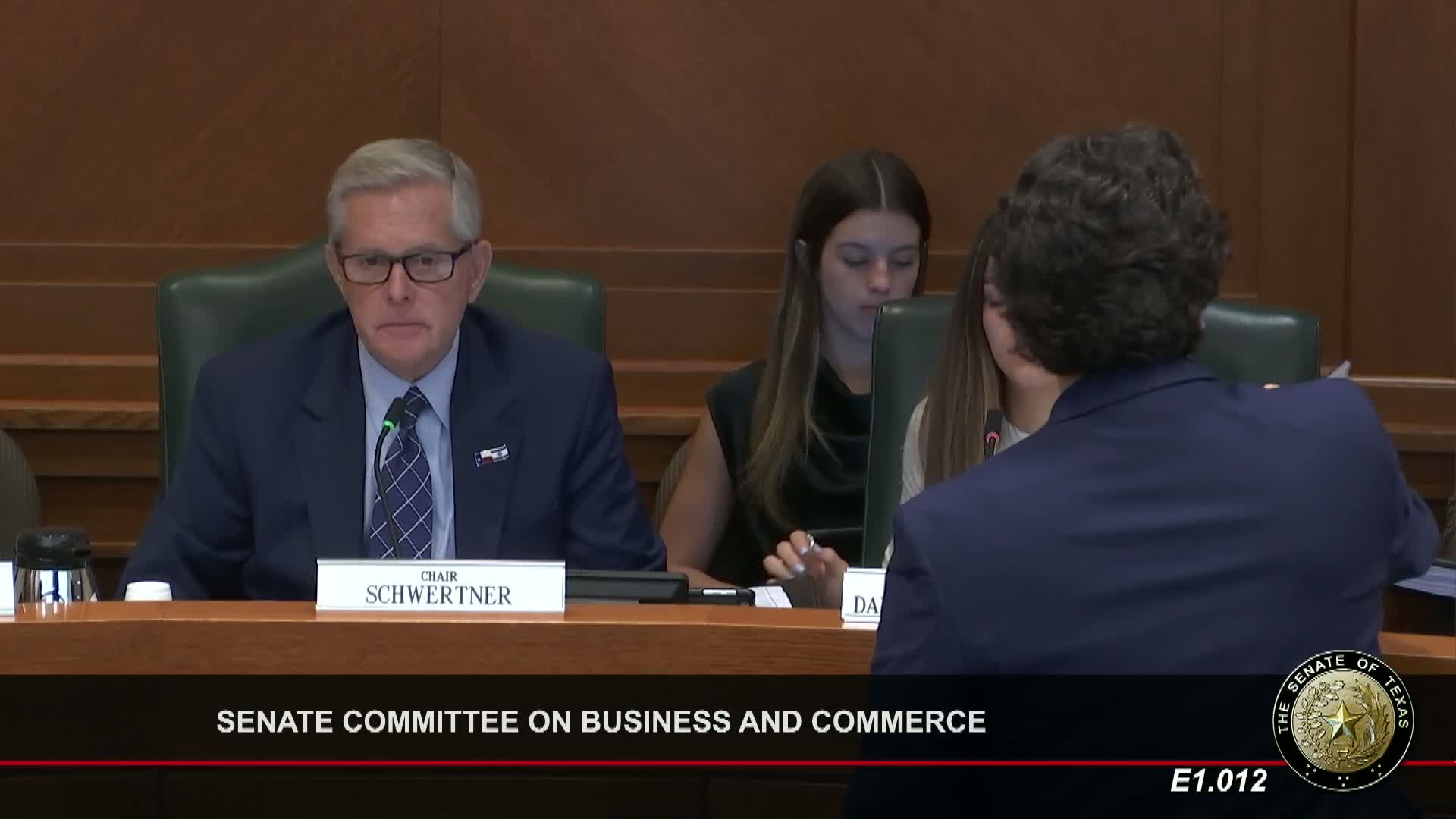
Senator Nichols explained to the Senate Committee on Business & Commerce that Senate Bill 1749 (committee substitute filed) would add categories of current and former court employees, juvenile case managers and state commission on judicial conduct members to a list of individuals permitted to keep certain personal information confidential.
Witnesses described repeated hostile conduct or threats tied to publicly available addresses. Lisa David, district clerk for Williamson County, testified on behalf of herself and the County and District Clerks Association about threats she said followed the public release of court paperwork that included her name and contact details. David described one litigant who made threats and later died by suicide; she said the office had required a bailiff and had endured sustained harassment.
Jacqueline Habersham, executive director of the State Commission on Judicial Conduct, and Zindy Thomas, the commission's general counsel, told the committee the commission and staff receive frequent complaints from litigants and have been subject to threats and personal lawsuits. Habersham said she has been ‘‘served at home with lawsuits’’ and described hostile messages from complainants they could not identify.
The bill would let affected employees use a work or courthouse address for public filings and require procedures for verifying precincts for judges — testimony noted that a similar protection already exists for judges and that election registrars verify residency in writing during election-related scrutiny. Megan Lavoie, administrative director for the Office of Court Administration, appeared as a resource and said the address‑confidentiality process for judges is already used and, as she understood it, would not disrupt voting lists because registrars confirm residency privately.
Committee members said they were generally supportive and raised technical questions about how work‑address listings would interact with voter registries and mailings. No final vote was taken and the bill was left pending.