Get Full Government Meeting Transcripts, Videos, & Alerts Forever!
Get email alerts on the Workforce Recruitment topic
No spam. Unsubscribe anytime.
Bill would extend tuition exemption to paramedics employed by stand-alone EMS departments
Summary
Senate Bill 750 aims to close a gap in Texas tuition-exemption law so paramedics employed by stand-alone emergency medical services (EMS) organizations qualify for the same tuition exemptions firefighters and fire-based paramedics receive.
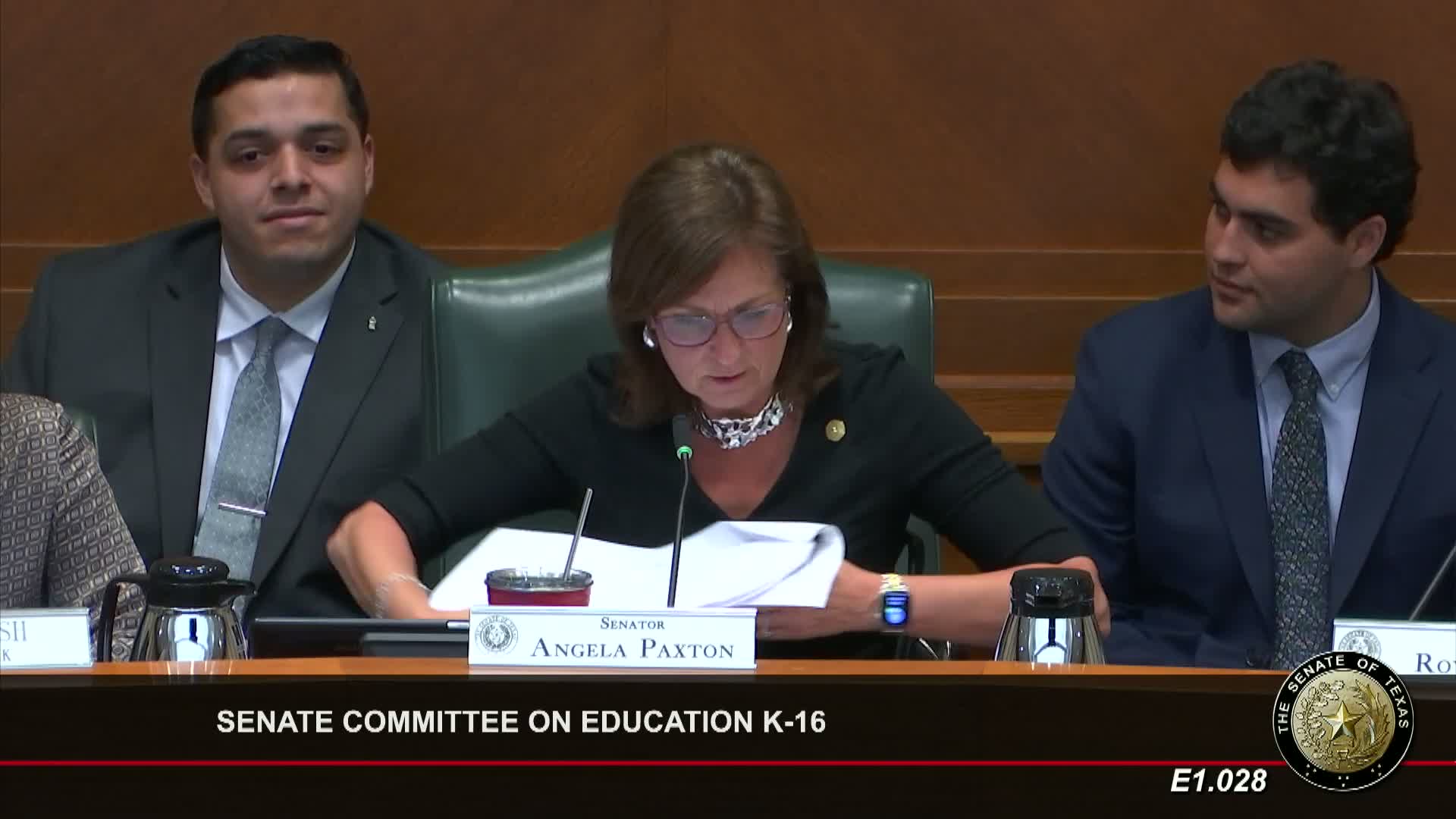
The Senate Committee on Education heard Senate Bill 750 May 1, a measure to extend existing tuition exemptions to paramedics employed by stand-alone emergency medical services (EMS) providers.
Senator Eckhart, presenting the bill, described the measure as "a very narrowly tailored solution to a loophole in our tuition exemption laws." She told the committee that current law extends tuition exemptions to firefighters and paramedics employed by fire departments or emergency service districts, but not to paramedics who work for stand-alone EMS providers.
Eckhart said Texas has 842 fire departments and about 300 emergency service districts, and 32 stand-alone EMS providers statewide that employ an estimated 9% of the state's paramedics. "SB 750 closes the loophole by extending the tuition exemption to all paramedics employed by a political subdivision," she said.
The author estimated the fiscal impact on an individual institution would be small—about $7,000 to $10,000—and noted institutions control which programs qualify under current coordinating board rules. James Munks, president of the Austin EMS Association, testified in support, saying the bill would create parity with other first responders and help recruitment and retention for rural EMS.
Committee members asked questions; the committee received written testimony from other EMS leaders and left the bill pending subject to the call of the chair.