Get Full Government Meeting Transcripts, Videos, & Alerts Forever!
Get email alerts on the Medicaid Estate Recovery Caregivers topic
No spam. Unsubscribe anytime.
Senate narrows Medicaid estate-recovery rules, adds physician attestation and caregiver protections in LB641
Summary
The Legislature adopted committee amendments to LB641 clarifying when a deceased Medicaid recipient's home can be foreclosed in estate-recovery actions, narrowed protected relatives, and restored language to allow compensation (paid or unpaid) for family caregivers when properly documented.
Lincoln — Lawmakers on Thursday amended Legislative Bill 641 to clarify Medicaid estate-recovery procedures and add protections for relatives who provide caregiving in the family home.
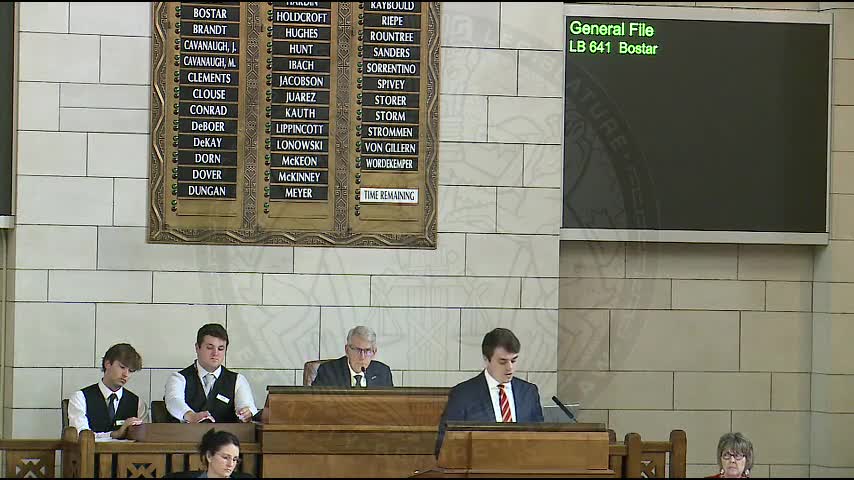
Senator Fred Bostar, sponsor of LB641, said the bill aims to prevent family caregivers from losing the home they occupy while caring for a relative who later requires Medicaid-paid long-term care. Bostar told the Legislature family caregivers provide substantial unpaid work and financial contributions, and that current law can unintentionally discourage caregiving because of unclear estate-recovery rules.
What changed: The Judiciary Committee amendment AM 05-38 limited a proposed exemption to an adult child or sibling who lived in the home and provided care that delayed institutional admission; the amendment makes a written physician attestation adequate documentation that the caregiving delayed the recipient’s admission. Senator Bostar later offered AM 06-72 to restore a provision about paid or unpaid compensation for caregiving that had been struck from the earlier committee language; the floor adopted the change.
Support and evidence cited: Sponsors cited national and state data on the value of family caregiving and the cost differential between home care and nursing homes. In debate, Bostar quoted data indicating a semi-private nursing home room’s annual cost and Medicaid reimbursement figures (figures were provided in committee testimony and summarized on the floor). Advocates argued the bill would allow family members to continue providing in-home care without the risk that the home will be seized to repay Medicaid costs after the recipient’s death.
Votes and outcome: The committee amendment AM 05-38 was adopted on the floor (recorded as adopted); Senator Bostar’s corrective amendment AM 06-72 (to reinstate caregiving compensation language) was adopted on the floor. LB641 then advanced to E & R initial on a recorded vote (39 ayes, no nays).
Limitations and federal law: Sponsors acknowledged that federal Medicaid rules limit the scope of state exemptions; the committee process initially removed language that exceeded federal permissibility and the subsequent amendments restored only the elements states can allow. The Department of Health and Human Services will have rulemaking and regulatory responsibilities to implement changes if the bill becomes law.
Next steps: The bill moves to engrossing; sponsors expect rulemaking by DHHS and anticipated guidance to counties and estate-recovery administrators to implement the attestation and caregiver documentation process.