Get Full Government Meeting Transcripts, Videos, & Alerts Forever!
Get email alerts on the Education Funding Head Tax topic
No spam. Unsubscribe anytime.
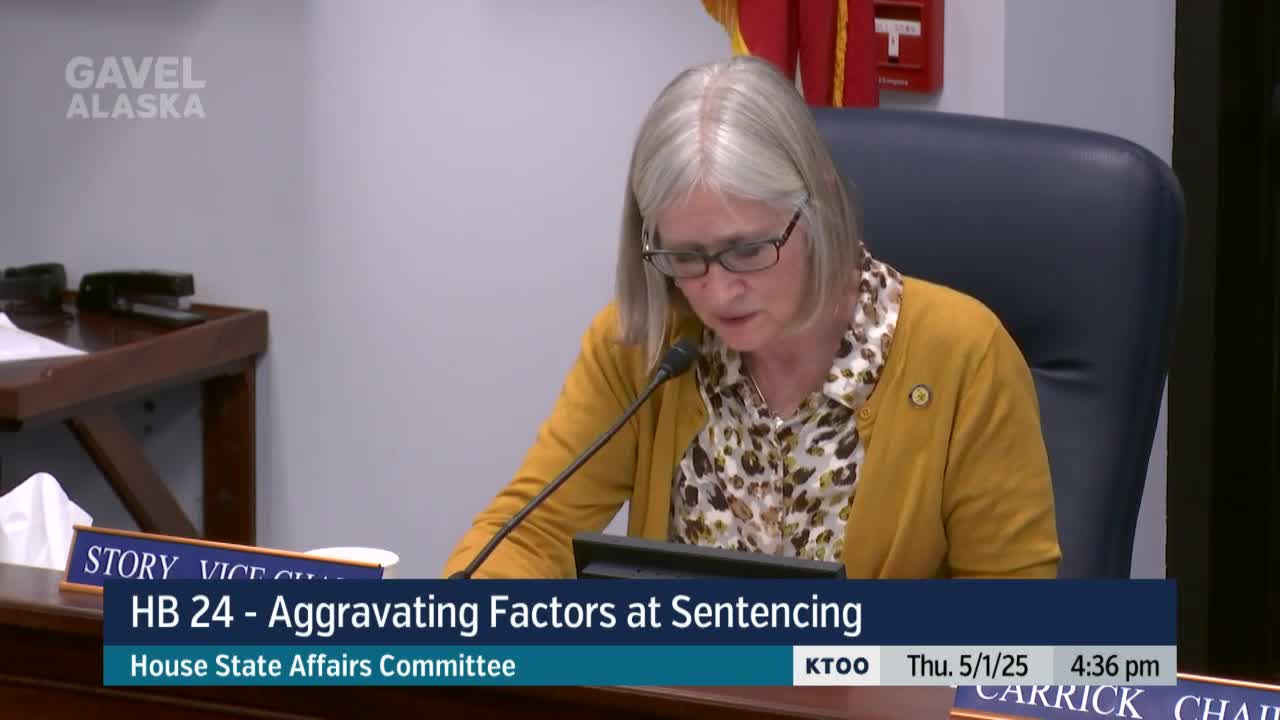
Committee hears sponsor and public testimony on House Bill 152, an education head tax proposal; bill set aside for further work
Summary
Representative Elise Galvin presented House Bill 152, proposing an education revenue package combining a $150 per-person head tax and a 4% flat tax on income above $150,000; staff provided revenue estimates and the committee took public testimony before setting the bill aside.
The House State Affairs Committee on May 1 heard presentation and public testimony on House Bill 152, a proposed funding package for public education that combines a one-time $150-per-person head tax and a 4% flat rate applied to income above $150,000.
Sponsor Representative Elise Galvin said the measure is intended to create a dedicated funding stream for education and to be a starting point for discussion; she said she is open to amendments to address distributional concerns. Galvin said the bill’s design was intended to be simple: “I tried to simplify it with the 100 and fifty. To me that felt like an easy thing to explain to people.”
Staff to the sponsor, David Jang, presented revenue model estimates provided to the committee: under the proposal as presented, the $150 head tax would generate roughly $62–68 million and total revenue (including the 4% flat tax on income above $150,000) would be roughly $326–359 million, broadly consistent with the fiscal note. Jang showed an example amendment: exempting individuals with income $50,000 or less from the $150 head tax would reduce head-tax yield to about $33.6–37.0 million and lower total revenue to a range near $298–328 million; Jang emphasized that the bulk of projected revenue derives from the 4% flat tax on earnings above $150,000.
Several members questioned implementation details. Representative Hemshue asked about predecessor council membership (context for other agenda items). Representative Himshoo asked when Alaska’s earlier head tax had been discontinued; committee staff said they would provide the historical, inflation-adjusted equivalent. Members asked how employers would ensure employees working multiple jobs would not be double-deducted; Representative Galvin and staff said the Department of Revenue could process refunds and employers could accept wage stubs as proof, and that the state’s PFD form could be used to avoid duplicate collection.
Public testimony included a mix of support and opposition. Tammy Evelyn Trefon (New Haven) said HB 152 would create a dedicated funding stream for public education that rural communities need after years of cuts; she cited local school-day reductions and loss of services. Longtime resident Carl Berger said he would pay a small head tax but urged larger contributors (including private industry and authorities with cash reserves) to contribute. Several testifiers opposed the bill, citing government spending priorities and local school-district costs; one opponent argued the Anchorage School District had large reserves and opposed the measure.
Committee members discussed options such as phasing in the proposal, exempting lower-income people from the head tax, or adjusting the $150 threshold. The committee set HB 152 aside for further consideration and invited technical follow-up on implementation and possible amendments.