Get Full Government Meeting Transcripts, Videos, & Alerts Forever!
Get email alerts on the Hate Crimes Sentencing topic
No spam. Unsubscribe anytime.
Committee hears bill to add sexual orientation and gender identity to sentencing aggravators; victim urges passage
Summary
Representative Andy Josephson presented House Bill 24 to add sexual orientation and gender identity to aggravating factors in sentencing; invited testimony included the victim of a 2019 assault and the former U.S. attorney for Alaska urging the committee to advance the bill.
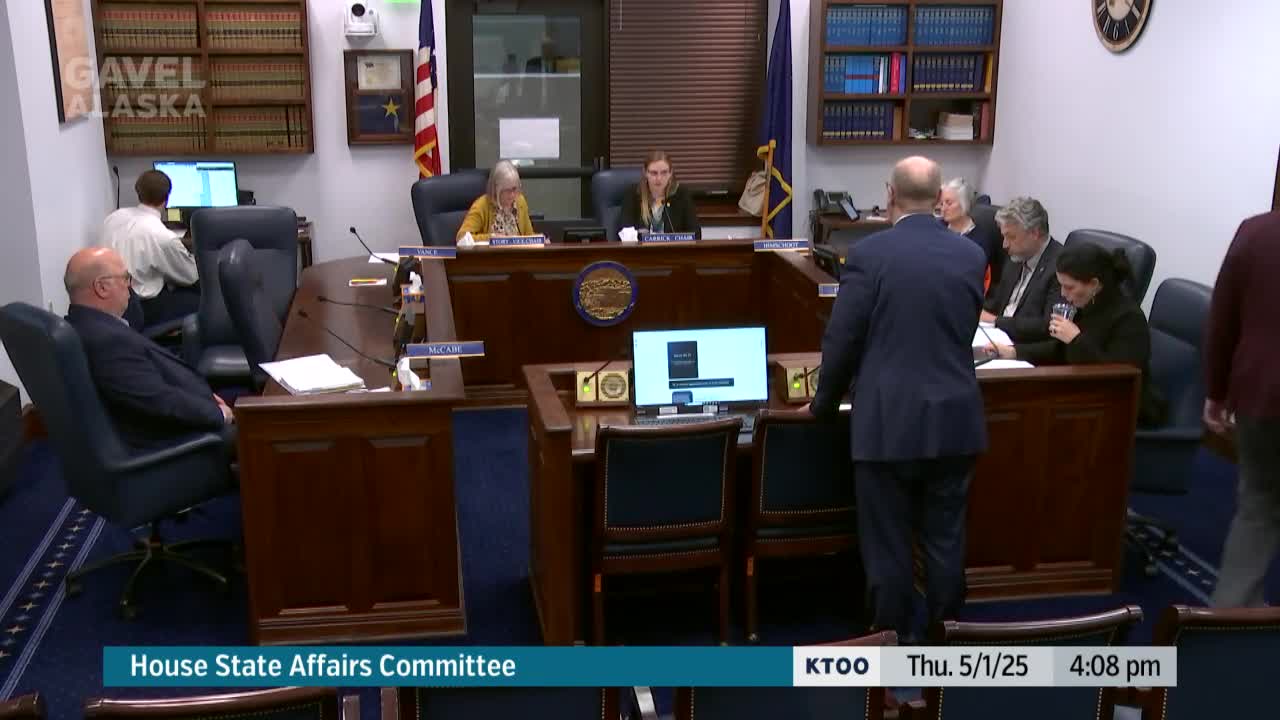
The House State Affairs Committee on May 1 received an introductory presentation and invited testimony on House Bill 24, a sentencing bill that would add “sexual orientation and gender identity” to the list of aggravating factors a jury may consider at sentencing under AS 12.55-155(c).
Sponsor Representative Andy Josephson (House District 13) said the bill adds four words to the statute’s aggravators: “sexual orientation and gender identity.” He described the change as limited to the sentencing phase: prosecutors would need to prove beyond a reasonable doubt that the crime was motivated by bias and juries would address aggravated sentencing only after conviction.
Invited testifier Tammy Willis described a series of incidents beginning in 2019 she said targeted her as an LGBTQ community member. Willis told the committee she received a threatening note, a rock thrown through her truck with “on that rock was the word dyke,” and later suffered a knife attack that required multiple stitches. Willis said she left the Kenai Peninsula because of persistent threats and that she supports HB 24 because it signals that violence against LGBTQ people is not tolerated.
Karen Westler, identified herself as a former U.S. attorney for Alaska and a longtime prosecutor. Westler told the committee such targeted crimes reflect a perpetrator who chooses victims because of bias and said the state has an interest in protecting vulnerable groups. Ken Alpert, staff to Representative Josephson, summarized the bill’s effect: it would not change trial charging or proof requirements but would allow consideration of the bias motive as an aggravating factor at sentencing.
Committee members asked about data trends, whether the increase in reported hate crimes reflects better reporting or real increases, and whether Alaska currently has standalone hate-crime statutes. Staff said Alaska does not have a separate hate-crime statute that creates an independent criminal offense on this basis; the proposed change would add the categories to the existing aggravator list at sentencing. Several members expressed support and concern for victims; Representative Inchute said he “wished this wasn't needed.”
The committee set the bill aside for further consideration and took no vote on the measure at this meeting.