Get Full Government Meeting Transcripts, Videos, & Alerts Forever!
Get email alerts on the Early Intervention topic
No spam. Unsubscribe anytime.
Senate committee hears testimony to expand Alaska infant learning eligibility from 50% to 25% delay threshold
Summary
Supporters, parents and program directors urged the Senate Health and Social Services Committee to pass SB 178 to lower the developmental-delay eligibility threshold for Alaska's Infant Learning Program and increase funding to serve more children; committee set an amendment deadline and will refer the bill to finance.
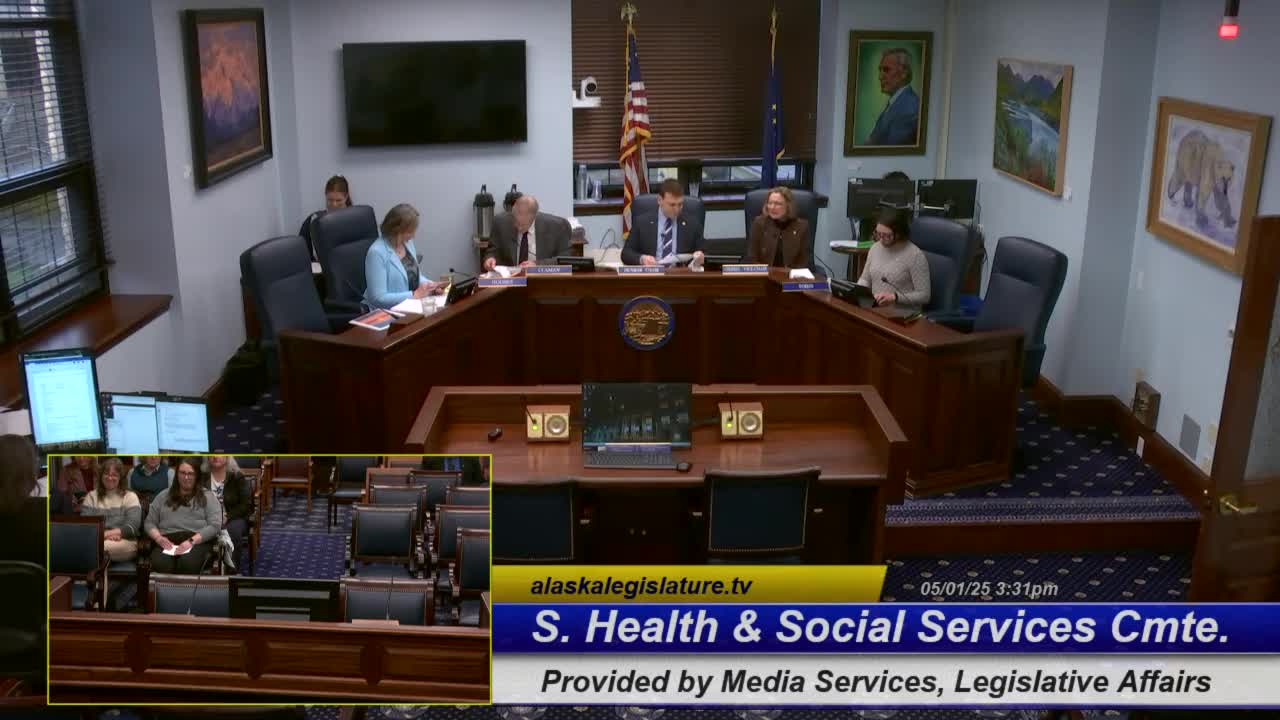
Juneau ' Supporters of Senate Bill 178 urged the Senate Health and Social Services Committee on May 1 to lower the Infant Learning Program's developmental-delay eligibility threshold from 50 percent to 25 percent and to add funding to serve a larger cohort of infants and toddlers.
The bill, sponsored by the committee, would expand early intervention services for children from birth to age 3. Proponents said the change would allow many more children to qualify for services earlier.
Niamh Dardis, director of the REACH Infant Learning Program and a longtime Juneau resident, told the committee SB 178 is "a vital step towards ensuring that more young children with developmental delays receive early intervention during the most critical window of brain development." Dardis said lowering the threshold to 25 percent "will allow up to 77 percent more children to access services they need before they enter kindergarten."
Stephanie Tucker, Infant Learning Program director for the Matanuska-Susitna Borough, said Alaska's eligibility standard lags the rest of the country and that local programs face rising demand with static funding. "Our funding has been the same for the last 10 years," Tucker said, adding that ILP programs are mandated to serve every child referred and that capacity "gets reached pretty fast."
Mark Lackey, executive director of CCS Early Learning in the Matanuska-Susitna Borough, said local early-childhood programs are seeing more children with delays and that delayed access to ILP services can lead to long-term special-education needs. "Early intervention could have really helped," Lackey said, describing a child he adopted who later required an individualized education program through high school.
Parents who testified described cases they said underline the need for expanded eligibility. Amy Rudd of Wasilla said her son scored 38 percent on an ILP evaluation but was told the program required a 50 percent delay to qualify; she said access to state services is critical for families who cannot obtain private therapy. Michelle Love, who has adopted a related child, said her child received one year of ILP services and improved, but that the child's delays reemerged after service ended because he did not meet the higher threshold.
Susan Kessler, infant learning program manager with the Department of Health, confirmed the department has received some Mental Health Trust Authority funds and other mental-health-related general funds for ILP projects and said staff could provide additional fiscal details to the committee on request.
Chair Senator Gary Dunbar set an amendment deadline of 5 p.m. Monday, May 5, and noted SB 178 will be referred to the finance committee for consideration of fiscal impacts. Committee members asked staff to work with the finance committee on funding details.
The hearing combined public and invited testimony; no committee vote was taken on SB 178 during the May 1 session.
Supporters and program staff urged lawmakers to approve the eligibility change and to consider accompanying funding to expand capacity; committee action on amendments and fiscal analysis is pending.