Get Full Government Meeting Transcripts, Videos, & Alerts Forever!
Get email alerts on the Citizen Diplomacy topic
No spam. Unsubscribe anytime.
Missoula speakers describe citizen-diplomacy trips to Iraq and Jordan before Gulf War bombing
Summary
Two Missoula residents described visits to Baghdad, a border peace camp and Jordanian refugee sites as part of citizen-diplomacy efforts that sought to open lines of communication before bombing began on Jan. 17.
Two Missoula residents who traveled to the Middle East as part of citizen-diplomacy missions described visiting Baghdad, meeting officials and speaking with schoolchildren and refugees in the days before bombing began on Jan. 17.
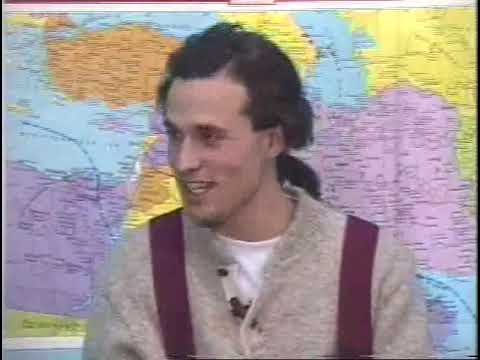
Anita Doyle, host of the Missoula Peace Network and a member of the Jeanette Rankin Peace Resource Centre, introduced the guests as local participants in two citizen-diplomacy efforts. Rick Schrum, a graduate student in environmental economics at the University, and Todd Randolph, a Vietnam-era former assault pilot and Gulf Peace Team participant, spoke about their experiences in Iraq, Jordan and at a border peace camp.
The visitors said their goals were to open informal channels of communication, bear witness to civilian conditions and return to the United States with first‑hand perspectives they could share locally. "Citizen diplomacy is something that to me, it's a negotiation, it's an interaction between people. It ends in hugs instead of bombs," said Todd Randolph, identified on the program as a Gulf Peace Team participant and former assault pilot.
Both speakers described staying at what was called the World Peace and Friendship Camp near the Tigris River and attending a range of events organized by local sponsors. Randolph described a Gaza‑area style border camp that organizers had planned to use as a human shield; he said organizers initially hoped to attract up to 1,000 international participants but that, in his account, roughly 150 people from about 20 nations ultimately took part in on‑the‑border activities and related demonstrations. He told the program that some international participants remained on the camp into the early days of the conflict and that Iraqi authorities later asked the foreigners to leave because the location became unsafe.
Schrum said his delegation was sponsored by the Fellowship of Reconciliation and that the group met Jordanian and Iraqi officials, including a roughly 50‑minute meeting with Prince Hassan of Jordan. Schrum described extensive contact with students and faculty at Al Masdansariya University in Baghdad and said the university was later heavily damaged by bombing. He said, "I firmly believe that citizen diplomacy has a very important role to play," and described the mission as intended to empower citizens to press their governments for diplomatic solutions.
Both guests described meetings with schoolchildren in Baghdad that they said were emotionally powerful. Randolph said he asked children in a classroom whether they knew someone who had died because of the embargo; "about half of the kids or more raised their hand," he said on the program. Schrum and Randolph also described hand‑holding demonstrations and a human chain organized while they were at the camp; Schrum said the group joined hands with Iraqi schoolchildren and sang "Give Peace a Chance" amid a larger demonstration.
Schrum described Jordan's role sheltering evacuees and attributed to Prince Hassan an estimate that some 865,000 foreign nationals had been displaced into Jordan after the invasion of Kuwait. Schrum said the Jordanian government had borne substantial costs and told the program that up to that point Jordan had spent roughly $55,000,000 supporting evacuees. On the program both speakers emphasized that their accounts were the perspectives of visiting citizen delegates and that their presence had limits: they described being guests of local hosts at times and acknowledged concerns about being used for staged events while saying they tried to preserve their own messaging and objectives.
Neither guest described any formal negotiations or official outcomes arising from their trips. Both said their intention was to gather impressions, create opportunities for personal contact and return to Missoula to share slides and first‑hand testimony. Schrum said his slides and presentations were available through the economics department at the University; Randolph said he had already spoken to local groups and was willing to share his slides as well.
The program was hosted on MCAT by Anita Doyle of the Jeanette Rankin Peace Resource Centre, which arranged the broadcast time and the public presentations by the two guests.