Get Full Government Meeting Transcripts, Videos, & Alerts Forever!
Get email alerts on the Credit Rating topic
No spam. Unsubscribe anytime.
Williams: Alaska’s credit ratings have improved but state remains a ‘unique’ credit
Summary
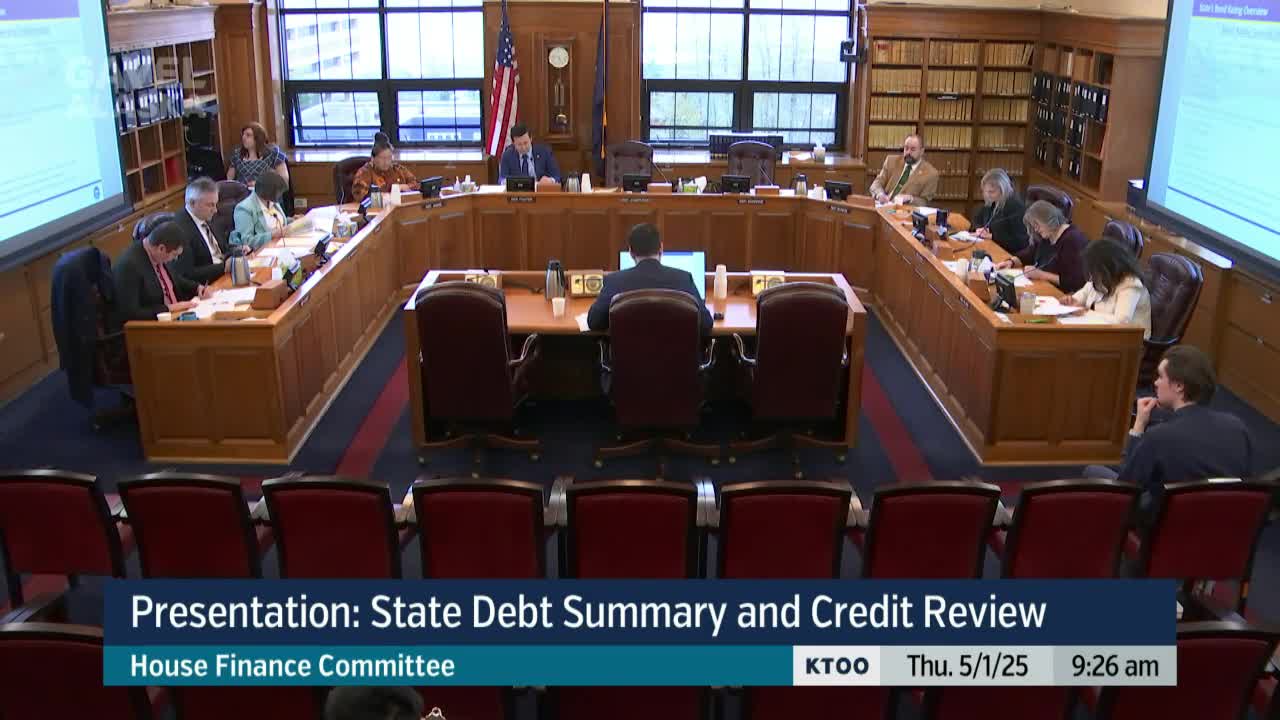
State Debt Manager Ryan Williams told the House Finance Committee that recent credit-rating upgrades and a positive outlook reflect improved reserves and management but Alaska’s reliance on oil and the Permanent Fund make it structurally different from most states.
May 1, 2025 — Credit rating agencies have recently upgraded parts of Alaska’s credit profile, but the state’s revenue mix and savings structure make comparisons with other states difficult, State Debt Manager Ryan Williams told the House Finance Committee.
Williams told members that several rating agencies now assign Alaska high investment-grade scores: he noted Crowell Bond Rating Agency’s upgrade to AA+, Moody’s recent upgrades (including a move for the airport system) and an improved outlook reported by Moody’s for the state.
“Crowell Bond Rating Agency upgraded the state's general obligation credit rating to AA plus,” Williams said, and he added that Moody’s upgraded the airport system and changed the state outlook to positive.
Why it matters: Higher credit ratings lower borrowing costs, broaden the investor base and can reduce the spread between higher- and lower-rated state issuances. Committee members said they want more comparative context about where Alaska sits among states, especially given Alaska’s lack of a broad-based tax.
Key rating drivers and state distinctiveness
Williams told the committee rating analysts examine government framework, financial management, the economy, and debt and liability profiles. He said several features strengthen Alaska’s credit picture: sizable reserves, an accelerated general obligation paydown, a well-funded pension picture in combined reporting, and the Permanent Fund and its percent-of-market-value transfer (POMV).
At the same time, he said, the state is unusual because it relies heavily on oil-and-gas revenue and investment earnings. “The reliance on oil was maybe 80% back in the day, but now it's reduced all the way to 30%,” Williams said, adding that agencies treat Alaska as “a significantly unique credit.”
Committee follow-up
Representative Galvin asked how many other states lack a broad-based tax; Williams said he would provide an analysis to the committee. Members also asked for better current market slides; Williams agreed to distribute updated materials.
Ending
Committee members said they want additional comparative analysis to understand how changes to revenue structure or to the Permanent Fund’s reserve arrangements could affect ratings and borrowing costs. Williams said he will return follow-up materials to provide that context.