Get Full Government Meeting Transcripts, Videos, & Alerts Forever!
Get email alerts on the Tax Increment Financing topic
No spam. Unsubscribe anytime.
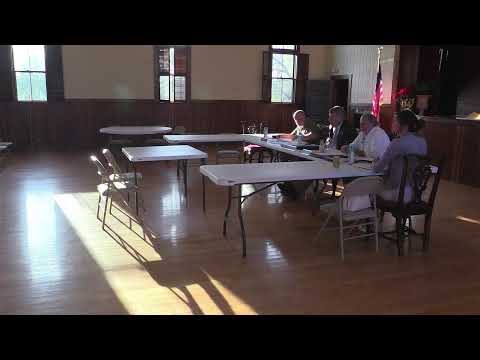
Selectboard establishes West Swanzey TIF advisory board, names town administrator as district administrator
Summary
The Selectboard voted to establish a five-member advisory board for the newly approved West Swanzey tax increment financing district and appointed the town administrator as the district administrator.
The Selectboard voted to establish a five-member advisory board for the newly approved West Swanzey tax increment financing district and appointed the town administrator, Laurie, as the district administrator.
The advisory board is created under RSA 162‑K and the warrant article the town approved on March 11 to form the West Swanzey TIF district. The board’s stated first-year priorities include public education about TIF, outreach to entities experienced with TIF implementation, developing visual project concepts and exploring infrastructure improvements that do not require purchase of the local water company.
Adam, a town staff member who presented the financing plan and development program, told the Selectboard the next step after the warrant article’s passage is to form the advisory board and set its first-year goals. He said the purchase of the West Swanzey Water Company did not pass, and that has slowed the district’s implementation; the advisory board should therefore identify what projects and infrastructure improvements are feasible without acquiring the water company.
The statute that authorizes the district (RSA 162‑K) directs the appointing body to name a district administrator and to create a five‑member advisory board. Under the statute and the town’s financing plan discussed at the meeting, advisory-board members will serve three-year terms with initial staggered terms to establish rotation. A majority of members must be owners or occupants of real property in the town; at least one advisory member must be an owner or occupant of property within the TIF district itself.
Presenters suggested recruiting members who worked on earlier West Swanzey planning efforts and property owners with stakes in the district; one property owner mentioned as a potential candidate was identified in the meeting transcript as Nikifarakis (also referenced later as Nick Fracas). The board was also urged to seek participation or presentations from people and organizations with successful TIF experience in New Hampshire and elsewhere to help the advisory board and the public understand typical project types and financing models.
Selectboard members discussed how the advisory board should focus in year one on public workshops, small-group sessions, site visits and development of visual aids and simple financial models to show what development could look like with water and sewer. Meeting participants said year two is likely to be more work-intensive because a pending water/sewer study is expected to return in the fall and could prompt design or infrastructure recommendations.
At the meeting a motion to appoint the town administrator as the district administrator and to establish the five‑member West Swanzey TIF District Advisory Board was moved, seconded and approved by the Selectboard. The board asked staff to return with proposed staggered terms for the five seats (the Selectboard asked Cordele/Cordell to be consulted for staggering) and to begin outreach to potential members; the Selectboard also discussed bringing candidates to a future meeting for interviews or presentation.
Implementation risks discussed at the meeting include the unresolved water and sewer question and the need for external expertise; presenters emphasized that the advisory board’s role is advisory to the district administrator and the Selectboard on planning, construction and operation of the development program, not to make final policy decisions. The town will continue recruiting advisory-board members, finalize staggered terms, and schedule public outreach and expert briefings.
Next steps described at the meeting: Selectboard staff will provide staggered-term recommendations by the next meeting, begin recruiting and contacting suggested candidates and arrange sessions with external TIF practitioners to support public education and project scoping.