Get Full Government Meeting Transcripts, Videos, & Alerts Forever!
Get email alerts on the Vision Zero topic
No spam. Unsubscribe anytime.
Riverside residents urge board to adopt Vision Zero plan after series of bike and pedestrian injuries
Summary
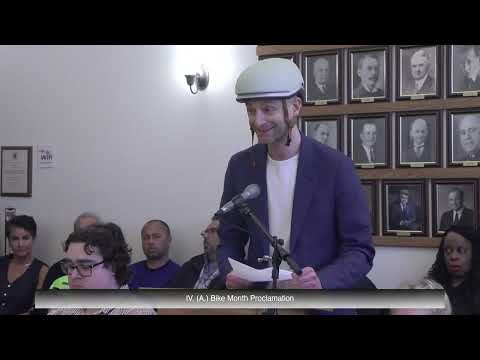
At the May 1, 2025 Village of Riverside Board of Trustees sine die meeting, residents urged the board to adopt a Vision Zero policy committing the village to prioritize the safety of vulnerable road users in future infrastructure projects.
At the May 1, 2025 Village of Riverside Board of Trustees sine die meeting, residents urged the board to adopt a Vision Zero policy committing the village to prioritize the safety of vulnerable road users in future infrastructure projects.
Residents said the request is a policy-level commitment rather than an immediate infrastructure plan. Charles Wigan, a Riverside resident and signer of Ride Riverside’s petition, asked the board to adopt a resolution “that in all future infrastructure projects, the safety and needs of vulnerable road users will be given equitable consideration.” Wigan told the board a resolution would not bind the village to specific spending but would set a formal guiding principle.
The comments were part of a larger pitch by Ride Riverside and community members that included local crash and injury figures, a petition and street-level priorities. Valerie Kramer, leader of Ride Riverside, said children have been struck while biking in Riverside and urged the village to “design streets that forgive human error, where safety is built into every turn and crosswalk.” Kramer cited speed as a key factor and said, “Speed is everything. A pedestrian hit at 20 miles per hour has a 10 percent chance of being killed. At 30 miles per hour, that jumps to 40 percent.” She urged adoption of Vision Zero-style measures such as raised crosswalks, diverters and protected bike lanes and asked the board to begin “by identifying priority streets around schools like Forest Avenue.” Kramer also told the board that a petition in support of a Vision Zero plan has 170 resident signatures.
Lisa Peters, a Riverside resident, and Jackie Robbins, a pediatrician whose prepared remarks were read at the meeting, told trustees that Vision Zero principles can be implemented with small, thoughtful design changes that preserve Riverside’s historic character. Robbins, in remarks read by a speaker, said helmet use and community awareness reduce risks; she cited national emergency-department figures for bike injuries and urged stronger prevention measures.
President J. Douglas Pollock acknowledged the comments and said the village typically addresses infrastructure items during capital budgeting later in the year. No board action to adopt Vision Zero or a resolution was taken at the May 1 meeting; speakers asked for a formal policy commitment and for staff and trustees to consider Vision Zero principles in upcoming planning and capital projects.
Discussion vs. decision: the record shows only public comment and requests for a policy-level resolution; the board did not vote on Vision Zero at this meeting. The board did note that infrastructure projects are usually addressed during capital budgeting and that the village will consider next steps in its planning process.
Community context and details: speakers connected Vision Zero to specific local locations including Forest Avenue (leading to RB High School and the Salt Creek Trail), Turtle Park and the Riverside Public Library. Kramer said recent local data show multiple serious injuries and fatalities over several years, and that 170 residents signed a petition supporting the policy commitment. Kramer closed her remarks by saying, “Let’s be the village that says not 1 more child.”