Get Full Government Meeting Transcripts, Videos, & Alerts Forever!
Get email alerts on the Vape Shops Moratorium topic
No spam. Unsubscribe anytime.
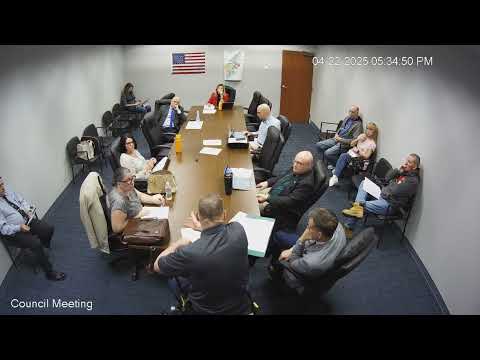
Eastlake City Council discusses moratorium, signage and zoning limits for vape and hemp-product shops
Summary
Councilmembers debated extending a moratorium and drafting an ordinance to limit standalone vape shops, set window-signage limits and use conditional use permits after a previous moratorium lapsed in February.
Eastlake City Council members spent an extended portion of a workshop reviewing options to control standalone vape stores and the sale of hemp-derived products after a one-year moratorium lapsed in February.
Councilmembers said the moratorium had allowed new businesses to begin selling products such as kratom and delta-8 during the lapse, and they discussed several tools — a new moratorium, zoning limits, conditional use permits and tighter sign rules — to reduce youth exposure and limit clustering on Vine Street.
The council focused first on whether to extend a moratorium while staff drafts a more detailed ordinance. Members discussed a range of moratorium lengths (30, 90 or 365 days) to halt new standalone vape-shop openings immediately and give planning staff time to prepare regulatory language.
Several councilmembers proposed restricting future standalone shops by limiting the total number citywide (examples discussed included three to five total), requiring conditional use permits (CUPs) for new standalone shops, or setting distance buffers from schools or playgrounds similar to rules used for other regulated retail. Members repeatedly raised the practical concern that a citywide cap could concentrate permitted shops on Vine Street, the city’s main commercial corridor.
Signage and window-coverage limits were discussed as a separate but related tool. Councilmembers noted the city’s current 50% window-coverage allowance and said neighboring Richmond Heights limits window signage to 20% of storefront glass. They asked staff to consider reducing allowable window coverage, restricting neon signage hours (examples discussed: turn-off times after 10 p.m. or 11 p.m.), and clarifying measurement rules (for example, whether signage within 18 inches of the glass counts toward the limit).
Members also debated whether to treat convenience stores or gas stations that add these products the same as standalone vape shops. Some councilmembers said grandfathering existing sellers would be appropriate, while others argued that overly broad grandfathering would negate the ordinance’s intent.
Council members raised enforcement concerns: current enforcement options are primarily civil and staff described challenges in pursuing code enforcement without clearer criminal penalties or simpler administrative remedies. Several councilmembers recommended that any draft ordinance include enforceable penalties and clear processes for police reports, documentation and prosecution steps.
As next steps, councilmembers asked staff to draft ordinance language and a proposed moratorium for formal consideration at the next council meeting. A councilmember requested that a draft be placed on a staff desk by 9:30 a.m. the next business day for review; council consensus favored giving planning staff authority to craft CUP criteria and sign restrictions for council consideration.
The council did not adopt a final ordinance or extend a moratorium during the workshop; members directed staff to return with draft language for a formal vote at a future meeting.