Get Full Government Meeting Transcripts, Videos, & Alerts Forever!
Get email alerts on the School Finance topic
No spam. Unsubscribe anytime.
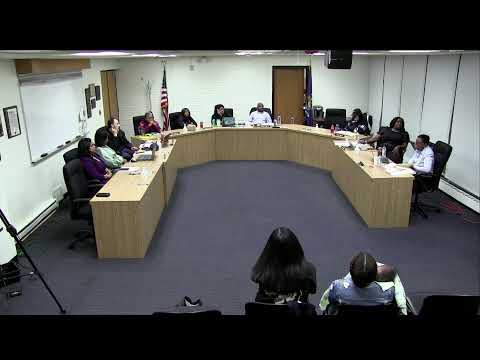
Oak Park board hears overview of voter bond options, timeline and state loan program
Summary
Municipal advisor Mr. Nelson briefed the Oak Park Board of Education on how voter-approved bonds work, allowable uses, debt limits and the state School Bond Qualification Loan Program; no action was taken.
Municipal advisor Michael Nelson presented an overview of voter-approved school bonds to the Oak Park Board of Education at the special meeting on April 22, explaining how an approved bond gives the district upfront capital that must be repaid by a dedicated bond property tax levy.
Nelson told board members the community votes on a “not to exceed” bond amount and an accompanying description of allowable projects. He said, “after the voters approve the bond issue...we actually have a sale date when investors give us bids for interest rates” and the district receives proceeds into a restricted account for capital work such as roofs, security improvements, playgrounds, buses or technology, but not salaries or ordinary operating costs.
The presentation explained why districts often stage approved bonds into multiple series rather than issuing the full approved amount at once: staggering sales can reduce interest expense and better match when projects are actually constructed. Nelson described the state’s School Bond Qualification Loan Program as a common option in Michigan that can lower borrowing costs because the state effectively backs qualified bonds, but he cautioned that the program requires an application and about 90 days of review before a sale.
Nelson reviewed statutory and administrative constraints noted in his slides: voter-approved bonds are capital-only, Michigan places a 30-year maximum maturity on an individual bond sale, and broad voter-backed debt is tracked against a debt limit measured as a percentage of state equalized value (the presentation cited a 15% limit on outstanding voter bonds). He illustrated a hypothetical capital plan that used a $29.5 million not-to-exceed ballot amount issued in two series (an example of $10 million in 2027 and $19.5 million in 2029) and said the scenario was estimated to keep the district’s bond millage at the current 5.98 mills rather than increasing it.
Board members asked procedural and timing questions. Nelson recommended planning 18–24 months before a target election to gather stakeholder input, produce project cost estimates, and prepare any state qualification application. He emphasized that ballot language must list eligible uses carefully (for example, bus purchases must be listed explicitly if they are to be allowed) and that the board will provide voters an estimate of the millage effect when it moves forward.
No vote or formal direction was taken. Nelson and district staff told the board they will provide follow-up materials and answers to questions in the board’s weekly update and continue work with the construction, legal and financial teams if the board wants to pursue a referendum.