Get Full Government Meeting Transcripts, Videos, & Alerts Forever!
Get email alerts on the Financial Literacy topic
No spam. Unsubscribe anytime.
Pennsylvania auditor general urges earlier and broader financial literacy, highlights Be Money Smart program
Summary
Auditor General Tim Dufour discussed the statewide Be Money Smart initiative, a proposed half-credit for graduating seniors under Act 35 beginning in 2026–27, an intern-to-hire auditor program, and advice for seniors and students to avoid financial scams.
Auditor General Tim Dufour said Pennsylvania should teach financial literacy earlier and more broadly, describing his office’s Be Money Smart initiative and partnerships with schools, nonprofits and the Pennsylvania Higher Education Assistance Agency (PHEAA).
Dufour said the state-level push includes promoting a law known as Act 35, which the interview says will require graduating high-school seniors to complete a half credit of financial literacy beginning in the 2026–27 academic year, and a range of outreach including school visits, a statewide high-school competition and teacher supports.
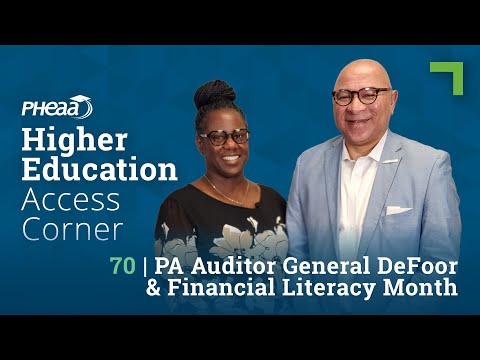
In a roughly 32-minute interview on PHEAA’s Higher Education Access Corner, Dufour said he started the Be Money Smart program after hearing college students ask questions about personal finance and finding few K–12 programs across Pennsylvania. “I started our Be Money Smart financial literacy initiative,” he said, describing visits to more than 25 schools across Erie, Scranton, Philadelphia, central Pennsylvania and Pittsburgh to highlight how districts teach the subject.
Dufour described components of the Auditor General’s outreach: a statewide financial literacy competition coordinated with Harrisburg University and Members 1st, classroom visits from kindergarten through 12th grade, partnerships with credit unions and nonprofits such as Junior Achievement and the YMCA, and resources for teachers. He said the competition is entering its 10th or 11th year and that the office will announce winners at a press event in the state capital.
The auditor general also outlined an “intern-to-hire” program designed to address an anticipated wave of retirements in state government. Students who complete about 900 internship hours (the equivalent of two summers or year-round work) and receive a satisfactory rating are eligible for hire; Dufour said his office hopes to hire about 100 new auditors over the next few years.
On risks tied to gaps in financial education, Dufour warned listeners about scams that target seniors and students. “If something seems too good to be true, it probably is,” he said, urging people to verify callers before sharing personal identifying information and pointing listeners toward resources such as the state attorney general’s consumer pages and AARP scam‑awareness events called “scam jams.”
The interview touched on practical classroom timing and content: Dufour said younger students tend to engage with basic saving concepts (he described explaining compound interest to fourth graders using a children’s book), while high-schoolers are often interested in credit, loans and the stock market. He told listeners that Act 35’s required half credit for graduating seniors will prepare students for real-life decisions ranging from car loans to buying a home.
Host Tiffany DeVan, of the Pennsylvania Higher Education Assistance Agency, noted that PHEAA and other agencies (the Pennsylvania Department of Banking and Securities, the Department of Education, and the Pennsylvania Treasury) maintain online resources; the interview also directs prospective interns to PAauditor.gov/careers. Dufour encouraged adults to use National Financial Literacy Month as a prompt to review household finances annually.
The interview consisted of discussion and outreach descriptions and did not record any formal vote or regulation adopted by the Auditor General’s office during the program.