Get Full Government Meeting Transcripts, Videos, & Alerts Forever!
Get email alerts on the Homelessness Policy topic
No spam. Unsubscribe anytime.
Muskogee council adopts ordinances restricting sidewalk sitting, camping and enforcing vacant-structure maintenance
Summary
The council approved a package of ordinances targeting behaviors associated with unhoused encampments: prohibiting sitting/lying on public sidewalks, banning unauthorized camping, and increasing code enforcement for vacant structures and nuisances.
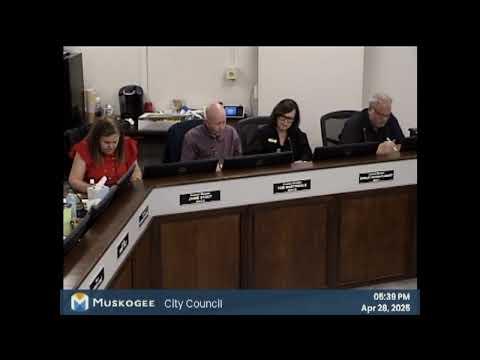
The Muskogee City Council approved a set of ordinances on April 28 aimed at addressing public-safety, public-health and quality-of-life concerns associated with encampments and vacant properties.
The ordinances add a prohibition on sitting or lying on public sidewalks and criminalize unauthorized camping in public spaces; they also add penalties and code enforcement tools for maintenance of vacant buildings and define additional public nuisances. Council members said the measures are intended to address impacts on local businesses, downtown safety and fire risk from vacant structures being occupied.
Councilors who sponsored the items said the intent is not to criminalize homelessness but to provide enforceable rules similar to shelter codes and to give businesses and first responders tools to address hazardous behavior. One councilor noted the city needs daytime options and social services for people who are unhoused; another urged the homeless task force to develop designated places and resource pathways so people are not only penalized.
Penalties and enforcement: Sponsors said fines would be modest (for example, $50 noted in discussion) and that enforcement would typically be a misdemeanor code process leading to municipal court; staff and council said outreach and connections to service providers should accompany enforcement. Council approved the ordinances by roll-call votes recorded in the minutes.
Why it matters: The ordinances change city code to allow police and code officers to remove unauthorized encampments, cite property owners for unsecured buildings used as shelter and prohibit certain behaviors in public rights-of-way. Council members asked staff to coordinate with service agencies to reduce harms and noted the police department already works to route people to services when possible.