Get Full Government Meeting Transcripts, Videos, & Alerts Forever!
Get email alerts on the Creative Communities Local Arts Panel topic
No spam. Unsubscribe anytime.
Wisconsin Arts Board panel reviews local-arts grant applications, submits scored recommendations to board
Summary
A Wisconsin Arts Board advisory panel met virtually to review Phase 2 Creative Communities local-arts grant applications. Panelists discussed project design, outreach, evaluation, budgets and equity for more than a dozen applications and submitted scored recommendations for the full board's ratification.
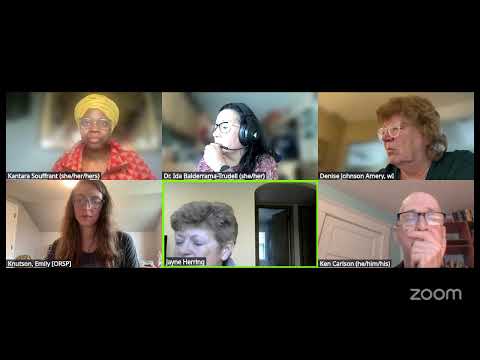
MADISON — A panel convened by the Wisconsin Arts Board reviewed Phase 2 applications for the Creative Communities local-arts grant program at a virtual meeting, discussing more than a dozen proposals and submitting scored recommendations for consideration by the full board.
Panel chair Jane Herring opened the session with a readout of the board’s role and the panel’s responsibilities, noting staff will present the panel’s recommendations to the Wisconsin Arts Board for final ratification. Karen Gishko, assistant director and staff lead for the panel, and Caitlin Burrell, folk and traditional arts coordinator, supported the discussion; Dale Johnson, grants coordinator, handled scoring logistics.
Why this matters: the board’s biannual appropriation from the Wisconsin State Legislature, augmented by funds from the National Endowment for the Arts, is the principal source for the Creative Communities grants. Panel scoring determines which applicants the board will consider for awards at its next meeting; applicants may appeal only on procedural grounds.
Panelists reviewed applications that ranged from youth development and community murals to performance festivals and rural outreach. Many panelists praised the projects’ aims while repeatedly asking for more detail on recruitment, timelines, evaluation and how programs will reach historically underserved residents.
Ken Carlson, the first reader on the meeting’s opening application, described Art Start Inc.’s Artist Statement program in Milwaukee: “The artist statement is intended to strengthen up to 20 Milwaukee youth ages 14 to 24 in their pursuit of an artistic career,” he said. Panelists noted strengths in the project’s educational approach and partnerships but asked for clearer timelines and a selection plan for participants.
Other notable applications discussed:
- West Allis Arts Collective (West Allis): The panel considered a two-day showcase and capacity-building work the applicant priced at $4,700 of an $11,481 budget. Panelists welcomed the group’s local focus but flagged whether capacity-building items (branding, banners) were the right early priority and pressed for built-in accessibility rather than “upon request” accommodations.
- Driftless Development (Crawford County Farmers Market Arts and Music Series): Reviewers praised the applicant’s evaluation plans and multi-site reach but wanted a clearer artistic voice and specifics about how frequently programming will occur at each market.
- Friends of the Tuscovia Trail (Winter, Wis.): A proposed mural project based on community nominations drew praise for its local sourcing and cultural focus; panelists asked for clarity on the total number of 4-by-8 panels planned and stronger confirmation that the chosen artist can meet the proposed schedule.
- Girls Rock Milwaukee: The panel supported the organization’s career-focused workshops for girls, transgender and nonbinary youth and welcomed stipends and accessible programming. Several panelists raised concern about outreach and representation, noting repeated mention of a partner organization (PEARLS) but the absence of a supporting letter to confirm the partnership and help ensure BIPOC participation.
- Horicon Phoenix / Butterfly Project (Dodge County): Panelists liked the project’s potential to draw foot traffic via outdoor metal butterfly sculptures and student involvement. They requested clearer information on how many sculptures would be produced, how artist fees would be handled and whether local businesses would provide supporting letters.
- In Tandem Theater (Fond du Lac): The proposed outdoor Shakespeare festival drew favorable comments for accessibility and audience development. Reviewers asked for more logistical detail about moving audiences indoors mid-performance (bug/weather concerns) and suggested rethinking post‑show evaluation timing so audience feedback isn’t lost as people depart.
- Jambalaya Arts (Oshkosh): The applicant proposed many new workshops and gallery‑walk activities; reviewers asked for clarity about whether sessions would be free (some text and budget lines referred to a $10 fee) and requested stronger partner letters to confirm community connections.
- Madison Circus Space (Madison): Panelists accepted the Movement Arts Performance project’s cross‑discipline goals and payment for artists. Several recommended adding qualitative evaluation methods beyond surveys and spelled‑out outreach plans to recruit diverse artists and audiences.
- Madison Senior Center (West Mifflin community mural): Reviewers praised the project as a response to the center’s internal outreach findings and welcomed partnerships with local groups. They urged organizers to include supports so older adults with little painting experience can participate comfortably and asked for modest marketing funds to publicize a planned unveiling.
- Maestro Productions (Madison): A proposal to reinvigorate community choirs and ensembles — with a plan to add two new ensembles — prompted questions about a large projected jump in next‑year revenues and expenses; panelists asked for a clearer narrative to explain the budget change.
- Milwaukee Film (Dialogues Documentary Festival): Reviewers welcomed the emphasis on filmmaker fees and curated talkbacks with local topic experts. They asked Milwaukee Film to demonstrate how year‑two learnings will shape programming and to develop short post‑screening pulse tools to better capture audience responses.
- Monroe Street Art Center (Create & Connect) and Neighborhood House (Collaborative Community Art Program): Panelists welcomed both organizations’ free, drop‑in approaches and community focus but asked for clearer schedules, evidence of past teaching artists, and evaluation methods accessible to participants with limited digital access.
- Native American Educational Technologies (Madeline Island, Music for the Water): Reviewers praised the cultural and environmental focus and letters of support; they suggested collecting and reporting attendance and qualitative outcomes from prior years to strengthen future proposals.
- Northwoods Strings (Ashland area guest quartet): Panelists liked the plan to leverage a visiting quartet for concerts, master classes and teacher training; reviewers asked for specifics on artist compensation, the number of concerts and methods to reach rural students who lack local access to strings instruction.
- Philadelphia Community Farm (Osceola): A week‑long artist residency and performances that generate ongoing community dialogue on race and cultural trauma drew support; panelists asked for clearer local partnership documentation and attendance data from prior years.
Decisions and next steps: panelists completed individual scoring sheets and the staff grants coordinator collected submissions during the meeting. No final awards were made at the panel; staff will present the scored recommendations to the Wisconsin Arts Board for review and ratification at a board meeting next month. Applicants will be notified of final grant decisions following the board’s ratification.
Panel priorities that emerged during the review included clearer outreach plans to reach BIPOC and low‑income residents, stronger evidence of partnerships (letters of support), explicit timelines and selection processes, clearer artist availability/commitments, and evaluation methods that go beyond single online surveys. Several panelists repeatedly suggested budgeting for modest marketing or outreach costs to ensure intended audiences learn about events.
The panel’s review is advisory. Board staff reminded applicants that appeals are allowed only on procedural grounds and that a panel score below the program threshold (an average under 50 in Phase 2) removes an applicant from funding consideration for the year.
Funding source note: the Creative Communities grants are funded from the agency’s state appropriation and by the National Endowment for the Arts; the board distributes matching grants to eligible nonprofit organizations.