Get Full Government Meeting Transcripts, Videos, & Alerts Forever!
Get email alerts on the NFIP topic
No spam. Unsubscribe anytime.
Industry and senators warn against privatizing National Flood Insurance Program; say NFIP plays unique mapping and risk role
Summary
Industry representatives told the Senate committee that the National Flood Insurance Program (NFIP) supports millions of homeowners, provides mapping and community floodplain management, and that full privatization would be difficult to implement and would likely raise costs for many policyholders.
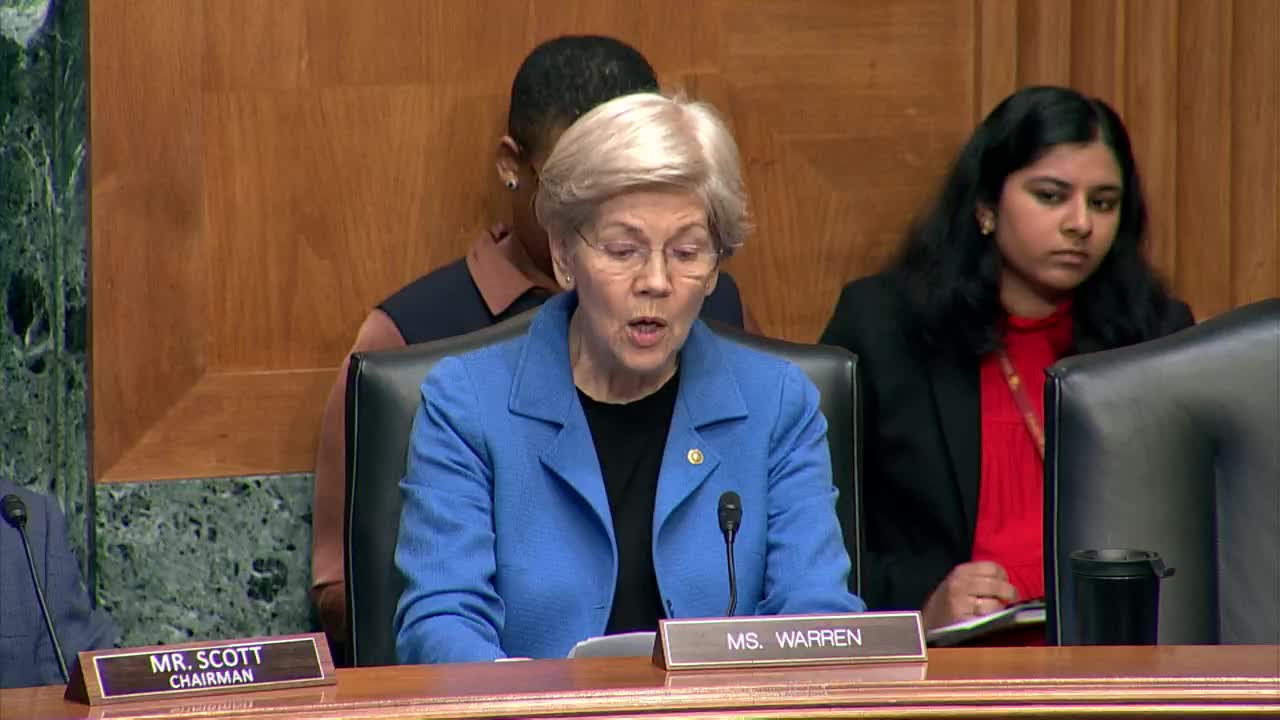
Industry witnesses and several senators at the Senate Banking, Housing and Urban Affairs Committee hearing warned that eliminating or fully privatizing the National Flood Insurance Program (NFIP) would pose significant affordability and implementation challenges for homeowners and communities.
Robert Gordon, senior vice president at the American Property Casualty Insurance Association, told the committee that flood is the most common disaster risk and that the NFIP currently supports about 4.7 million policyholders. "Short answer is no," Gordon said when asked whether the private market could immediately absorb NFIP's book of business while keeping premiums lower for consumers. He added that the NFIP runs at a significant debt level and that private-sector prices would in many cases be much higher than current NFIP rates.
Gordon described the NFIP as more than an insurer: it provides flood mapping, floodplain-management incentives and standards that private insurers do not replicate at scale. He told senators the NFIP is roughly $22 billion in debt after prior federal forgiveness and that the program's subsidized pricing and public functions mean a wholesale privatization would be complex and costly.
Committee members said the NFIP's series of short-term reauthorizations has created uncertainty for homeowners and local governments. One committee member said they and Senator Kennedy are working on legislation to reauthorize and reform the NFIP to promote solvency, transparency, affordability, mitigation and consumer protection.
The witnesses recommended a combination of approaches to improve flood insurance outcomes: better homeowner education to expand voluntary private coverage where appropriate; long-term NFIP reauthorization with targeted reforms and means-testing for federal subsidies; and continued federal investment in mapping and community floodplain management to reduce systemic risk.
The committee did not vote on NFIP legislation during the hearing; senators requested additional data and committed to follow-up questions and potential legislative proposals.