Get Full Government Meeting Transcripts, Videos, & Alerts Forever!
Get email alerts on the State Budget Property Tax topic
No spam. Unsubscribe anytime.
State representative outlines budget choices, property-tax proposals during Morrow County visit
Summary
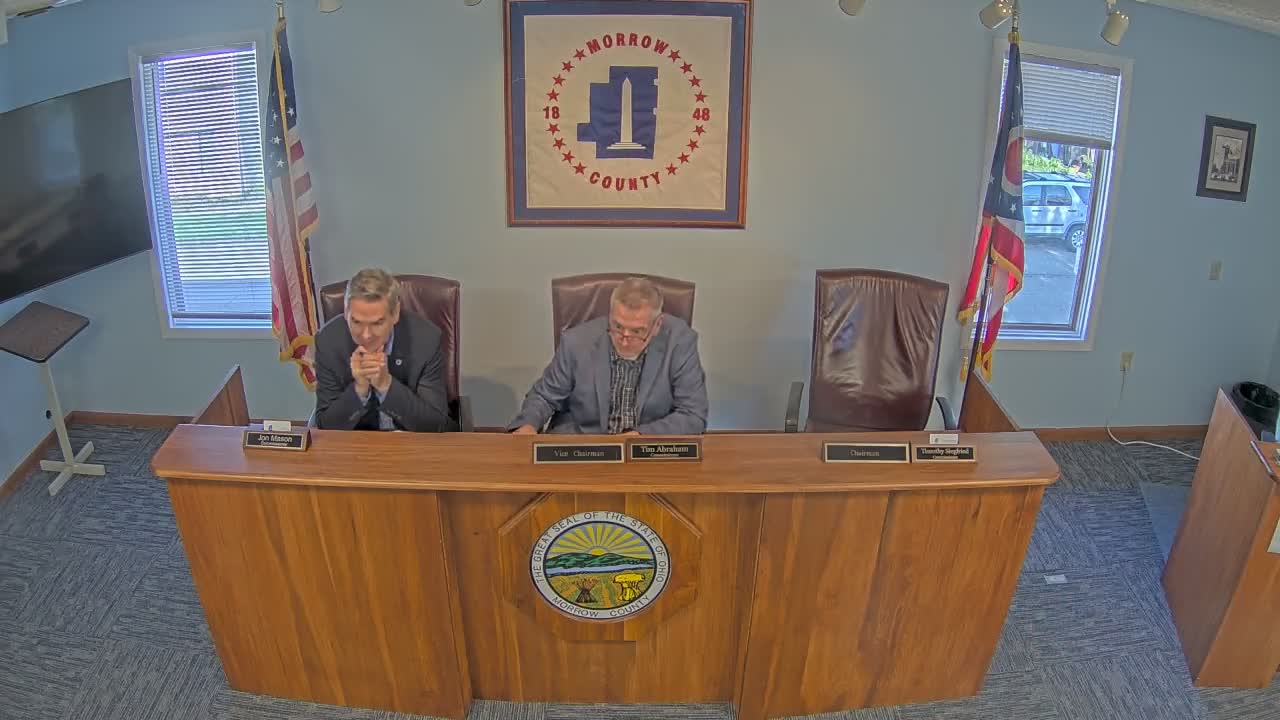
A state representative visiting the Morrow County Commissioners on April 23 reviewed the recently passed House budget, steps to prevent school funding cuts over the next two years, and proposed changes to how school cash balances are handled to deliver property-tax relief.
A state representative visiting Morrow County on April 23 told county commissioners the Ohio House has sent a two-year budget to the Senate that seeks to stabilize school funding and address growing property-tax burdens.
The representative said the House budget prevents school districts from taking base funding cuts in fiscal years 2026–27 and includes a proposal to limit how much cash school districts may carry over year-to-year — a change the House estimates could produce roughly $4.2 billion in property-tax relief if set at a 30% carryover cap.
The visit provided local officials a summary of provisions that could affect county residents, including property-tax reform measures, proposed changes to replacement-levy rules, and adjustments to library funding. The representative also described workforce and local infrastructure priorities that were part of the budget and discussed projects and programs involving Morrow County.
The representative said the House sent its budget package to the Senate in mid-April and that negotiations will continue through June as the two chambers reconcile differences. He described the House approach as fiscally cautious after several years of increased federal one-time funding and said the House trimmed a number of one-time spending items proposed by the governor.
On school funding, the representative said the House took the fiscal 2025 base aid level and held districts harmless for the next two years so no district would see a base cut under the updated formula in fiscal 2026–27. He said the state is also considering limits on school districts’ unencumbered cash balances; the representative told commissioners there is roughly $10.5 billion in excess school carryover across Ohio today and cited a House proposal to require districts to restrict carryover to 30% of operating expenses. He described the 30% figure as a policy choice that would, in the House’s estimate, translate to about $4.2 billion in property-tax reduction in 2026 if enacted as written.
The representative said the legislature is also looking at the rules that govern replacement levies. Under a bill the House advanced, replacement levies would be subject to stricter transparency standards so voters better understand the dollar impact of a replacement compared with a renewal with an increase. He said historical passage rates for replacement levies and renewal-with-increase measures are “nearly identical,” but that the change is intended to make ballots clearer for voters.
Library funding also drew attention. The representative said the House moved libraries off a percentage-based share of the General Revenue Fund to fixed dollar amounts — $490 million in year one and $500 million in year two in the House proposal — to provide greater predictability for library systems.
The representative noted other budget topics affecting rural counties, including childcare, workforce programs and limited tax changes proposed by the governor that the House removed. He also described state-level conversations about potential constitutional measures and other proposals addressing property taxes that remain under consideration in both chambers.
County officials used the visit to highlight local projects that received one-time funding and to preview workforce and school initiatives in Morrow County. The representative said he had met with local superintendents and treasurers as part of the outreach and expects further conversations as the Senate takes up the bill.
He closed by thanking local leaders for hosting the visit and by noting the Legislature’s work will continue through the budget calendar into June.