Get Full Government Meeting Transcripts, Videos, & Alerts Forever!
Get email alerts on the Public Safety Technology topic
No spam. Unsubscribe anytime.
Sierra Vista police seek $115,470.72 state grant to buy license-plate readers, drone and K-9
Summary
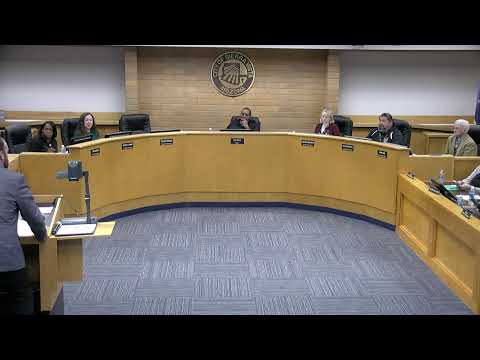
City staff presented a resolution to accept an Arizona Department of Public Safety local board support grant of $115,470.72 to fund the police department's first license-plate readers, a replacement drone for accident reconstruction and a new patrol/narcotics K-9; council questions focused on program use, data retention and staffing.
The police chief told the Sierra Vista City Council that the city applied for and was awarded $115,470.72 in local board support grant funding from the Arizona Department of Public Safety to buy license-plate readers, a new drone and a replacement canine.
The chief said, “This is our allocation of local board support grant money from the Arizona Department of Public Safety,” and explained the three planned purchases and intended uses.
License-plate readers would be placed at strategic ingress and egress locations, including state highways, to record vehicle “fingerprints” — a combination of plate plus vehicle appearance — and to retain data for 30 days before deletion, the chief said. “This particular grant will be used to fund first ever license plate readers for our city,” the chief said. He added that the cameras are not for traffic enforcement or facial recognition, and that other local agencies already use them, including the Cochise County Sheriff’s Office and Douglas Police Department.
Councilors asked practical questions about the program, including where images are accessed and how long data are stored. The chief said the system includes a cloud-based data-management system the department can access from phones, squad cars and its real-time crime center. He described one use case: locating a missing person or identifying a vehicle after an incident when a full plate is not available.
Councilors also asked about the K-9 unit and drone. The chief said the city is down to one K-9 unit and the grant would fund a replacement dog and the training for a new handler. He described the drone purchase as targeted at newer platforms that enable three-dimensional crime‑scene diagramming and accident reconstruction.
No final vote on the grant acceptance appears in the transcript excerpt. The item was introduced as resolution 2025‑017 and staff answered council questions; the chief said he would “answer any questions” and took follow-ups from council members.
Why it matters: the license-plate readers expand the police department’s investigative tools and are intended to support locating missing persons and solving crimes; the drone and K-9 funding are replacements/modernization efforts. The city plans to coordinate any installations on state highways with ADOT permit processes.
Next steps: staff presented the resolution for council consideration; the transcript shows discussion and questions but no recorded final vote in the provided excerpt. Staff indicated it would start ADOT permitting if approved and proceed with procurement if the council accepts the grant.