Get Full Government Meeting Transcripts, Videos, & Alerts Forever!
Get email alerts on the School Budget Tax Levy topic
No spam. Unsubscribe anytime.
Vernon board approves 2025–26 budget, seeks state OK for extra tax levy
Summary
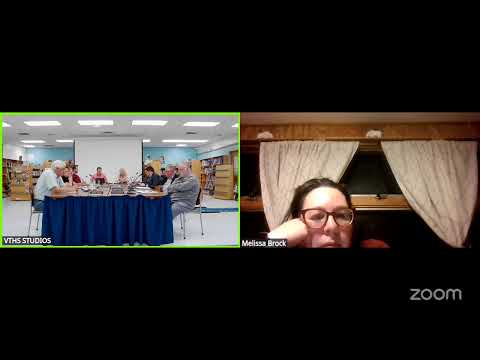
The Vernon Township Board of Education on May 1 approved a $74 million 202526ndash;26 operating budget and voted to submit an application to the New Jersey Department of Education for additional tax authority tied to a state incentive program.
The Vernon Township Board of Education on May 1 approved a $74 million 202526ndash;26 operating budget and voted to submit an application to the New Jersey Department of Education for additional tax authority tied to a state incentive program.
The budget as adopted includes the 2% tax-levy increase allowed under current law and adds a separate request for roughly $1.2 million in additional levy authority and related incentive aid from the state. The board's vote to adopt the budget and seek the extra authority passed 7-2: Brock, Smaglia, Contino, Krauss, Pellet, Sweeney and Zimmerman voted yes; Fisher and Vaccarello voted no. The board described the resolution as approval of the district's 202526ndash;26 budget, pending final approval of the district's application by the New Jersey Department of Education.
Why it matters: the application is the district's response to changes in state aid formulas and rising costs. Board and staff said the extra authority would fund a set of one-time facility and safety projects and give the district more flexibility heading into the 202627 budget process.
Business Administrator (presenter) reviewed the budget at length, describing the plan as "a financial expression of the district's needs and priorities" and walking the board and public through revenues, reserves and capital projects. He said the operating budget relies on a tax levy that is roughly 68.8% of total revenue and that state aid for Vernon remains substantially lower than in past years after the S-2 funding changes; the district has lost millions of dollars of state aid over time but has recovered some funds recently, he said. He told the board the district's advertised operating revenue total is about $74,000,000 and that the advertised tax levy is just under $51,000,000 while state aid is about $18,500,000.
The business administrator summarized major budget drivers and offsets the board heard: a projected $2,200,000 of excess surplus is being used to fund the 202526ndash;26 budget; capital reserve withdrawals and recent project costs have reduced the district's capital reserve to a projected $574,000 after withdrawals but reimbursements from a state-funded window project should raise that amount later; a new cell-tower lease is expected to produce about $52,000 per year (roughly $30,000 in a partial year); projected savings from a health-benefits change were estimated at about $700,000 over two years; transportation efficiencies were expected to reduce costs by roughly $650,000; and a recent federal/state change reduced Medicaid-related (SEMI) reimbursement by about $106,000.
Board discussion focused on trade-offs. Board member Brian Fisher said he understood the political context but warned of continuing pressure on the operating budget, saying in the meeting, "The state is telling us you will raise your taxes." Other board members and staff noted capital and safety work cited in the application: replacing school fire alarms, updating PA systems, elevator work and a planned science-lab repair, and the link between facilities and day-to-day school safety.
Public comment during the hearing was extensive and split. Several parents, former students and educators urged the board to vote for the full levy allowed, saying programs, class sizes and staff retention depend on local funding. "Adequately funding our schools is, in my opinion, the single most important investment we can make in our town and in our kids' futures," said Carolyn Ross, who identified herself as a Highland Lakes resident and parent. The Vernon Township Education Association president, Colleen Ranzan, told the board staff were not seeking extras but stability: "We are asking for stability, for the ability to retain skilled educators, keep our class sizes manageable, provide safe buildings, and continue delivering services that go beyond the classroom."
Other residents opposed adding the extra levy authority, saying the district should tighten spending and pointing to past budget and audit controversies. A number of speakers questioned whether higher spending has produced better academic results. The board and administration acknowledged those concerns and said the district has already used a combination of cuts, program design, grant-seeking and revenue initiatives (the cell-tower lease, preschool expansion aid and ESIP energy projects) to reduce recurring pressures.
Formal action: the board adopted the 202526ndash;26 district budget and separately approved submitting the application for supplemental tax authority and the incentive paid by the New Jersey Department of Education; the action is explicitly conditional on state approval. The motion and second were recorded at the meeting; the roll-call vote was 7 in favor, 2 opposed. The board recorded no amendments to the budget at the vote.
What happens next: the district will file the application with the New Jersey Department of Education and proceed with the budget schedule set by state law. If the state grants only part of the requested tax authority, the administration said it would return to the board to adjust the budget to the approved amount. Several board members noted the adoption protects the district's options and that the request is for largely one-time capital and safety projects; they emphasized that recurring operational cost pressures still must be managed.
The meeting included additional budget detail: the district's ESIP (energy savings) project is tied to a power-purchase agreement for solar canopies; the preschool expansion (PEA) is paying for staff and eligible offsets that help the operating budget; and recent changes to the way the state counts special-education students have partially restored prior aid losses. The business administrator said the district has been pursuing shared services with the town, cooperative purchasing, E-rate and other efficiency measures to reduce recurring costs.
Board members and staff asked the public to stay engaged and urged residents who want broader change in state funding to take the issue to Trenton and to the ballot box. The board set a public input session on the superintendent search for the coming week and said staff would post budget slides and audit documents on the business office web page for public review.
Ending: with the vote the board moved forward with a budget that the administration described as balancing immediate safety projects and day-to-day operations while depending on state action for the additional levy authority. If the New Jersey Department of Education approves the application, the district said it will prioritize the listed safety and facility projects and report back to the public on plan implementation and any adjustments to operational spending.