Get Full Government Meeting Transcripts, Videos, & Alerts Forever!
Get email alerts on the Municipal Budget topic
No spam. Unsubscribe anytime.
Gilbert studies tighter FY2026 budget after $14 million revenue shortfall; $1.7 billion CIP planned
Summary
Town staff told the council the preliminary FY2026 budget faces roughly $14 million less in ongoing general-fund revenue, recommends $44 million of requested items be funded and includes about $1.7 billion in capital improvement program (CIP) spending; council set May 20 for preliminary adoption and June 10 for final adoption.
The Town Council of Gilbert on April 22 held a study session on the preliminary fiscal year 2026 budget, hearing from staff that ongoing general-fund revenues are expected to fall about $14 million and that the proposed spending plan includes roughly $1.7 billion in capital projects.
Patrick, a staff member, told the council that “in fiscal 26 … we will have 14,000,000 less in ongoing revenues to our general fund” driven in part by about $9 million lost from residential rental sales tax and roughly $4–5 million from the second phase of a state flat income tax change. He said the town has raised sales tax rates to meet infrastructure needs but continues to face inflation, supply-chain pressures and wage competition.
The shortfall matters because general-fund revenue pays for core services such as police, fire, parks and recreation and administrative functions. “With available revenues moving forward, we believe they are going to continue to be exceedingly tight,” Patrick said.
Kelly Fost, a staff member presenting the budget details, told the council the town received roughly $80 million in staffing and project requests across all funds for FY2026 and is recommending funding about $44 million of those requests so ongoing revenues and expenditures stay balanced. The recommended $44 million includes about $26 million in the general fund, roughly $7 million for new full-time-equivalent (FTE) positions and about $4 million in overtime for the police department.
Fost said the recommended hiring approach would include about 34 FTEs and 18 limited-term agreement (LTA) positions; LTAs typically run about a year and use one-time funding. “It just costs more to provide those services,” Fost said, adding that LTAs are being used more this year to avoid adding permanent ongoing expenditures.
Capital spending remains the largest area of investment. Fost said the proposed budget contains about $1.7 billion of CIP investment, most in streets, water and parks; roughly $500 million of that represents new funding or new projects added to carry-forward work. The town budgets the full CIP project amount up front so contracts can be issued and multi-year projects completed, she said.
Fost compared this year’s proposed total budget of about $2.46 billion to the current-year budget of about $2.3 billion and said the difference is largely CIP-related. She also noted the draft includes a decrease in debt service that assumes council direction to pay off the university building debt; staff said they will align the budget to whatever direction council gives.
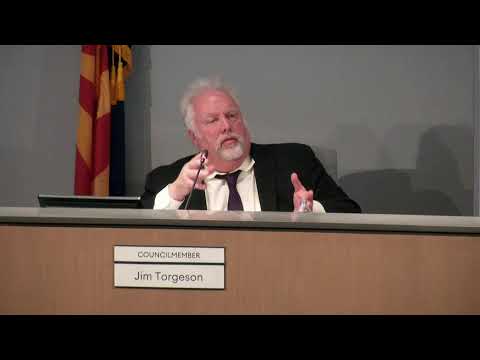
Council members asked clarifying questions about budget-to-actual spending, the LTA approach and property tax options. Fost explained why LTAs are used — to preserve balanced ongoing funding — and noted implications for employees seeking mortgage qualification. She also summarized property-tax procedure and timing, saying May 20 is scheduled for preliminary budget adoption (which sets the cap and includes the first reading of the CIP and the public hearing on property tax) and June 10 for final adoption of the budget, CIP and property tax levy.
A brief procedural motion to adjourn the study session was moved by Council Member Chuck Bongiovanni and seconded (seconder not specified in the transcript); a voice vote followed with “Aye” from council members and the motion carried.
The council will next consider the preliminary FY2026 budget at a May 20 meeting, when it will set the spending cap and hold the property-tax public hearing.