Get Full Government Meeting Transcripts, Videos, & Alerts Forever!
Get email alerts on the Racing Commission Penalties topic
No spam. Unsubscribe anytime.
Committee advances bills increasing civil penalties for unlicensed racing and wagering
Summary
The House Committee on Commerce moved Senate Bills 854 and 855 to the House floor May 1; the measures raise civil penalties related to unlicensed racing and wagering and direct recovered penalties into the state general fund.
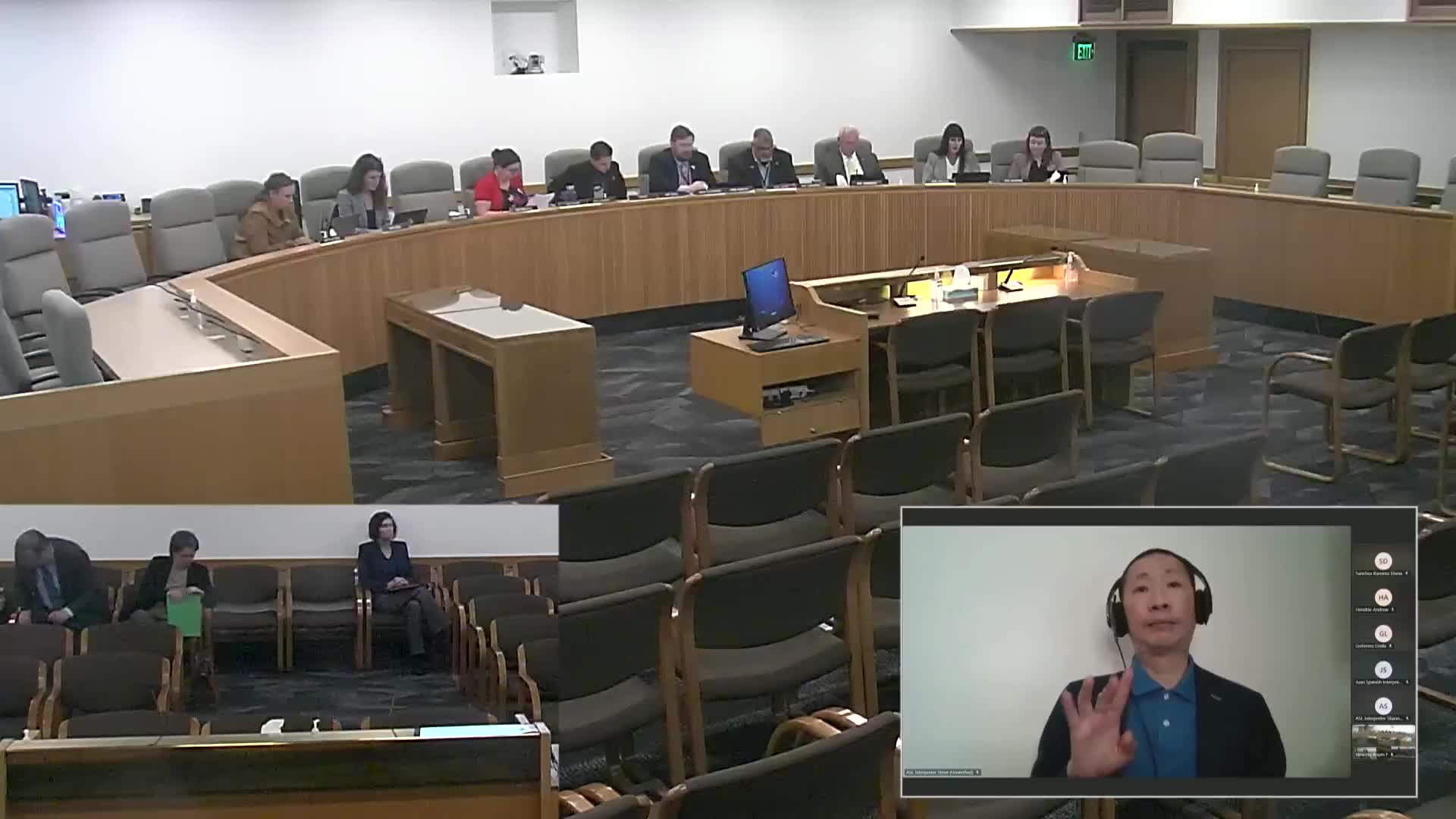
The House Committee on Commerce moved two Oregon Racing Commission bills — Senate Bill 854 and Senate Bill 855 — to the House floor with due‑pass recommendations during work sessions on May 1.
Senate Bill 854 would authorize the Oregon Racing Commission to impose civil penalties for holding a race meet without a license or accepting or facilitating wagers without a license; the measure specifies procedural protections under the Oregon Administrative Procedures Act, lists factors the commission must consider when imposing penalties and directs recovered penalties to the general fund to the credit of the Oregon Racing Commission account. Committee staff described a maximum penalty of $25,000 and stated the bill carried a minimal fiscal impact.
Senate Bill 855 would increase the civil penalty the commission may impose to $5,000 per offense and require the commission to adopt rules establishing civil penalties. In separate discussion members contrasted the two bills and asked whether higher fines could make up a shortfall in commission revenues following the closure of Portland Meadows.
Connie Winn, director of the Oregon Racing Commission, told the committee the bills are not intended to be a revenue‑raising measure and said the commission lacks enough racing days to generate the level of fine revenue necessary to close a budget shortfall. She cited one enforcement example in which an out‑of‑state participant abandoned horses in Oregon; Winn said a $500 maximum fine is insufficient in that circumstance and that higher penalties would help deter serious neglect or misconduct.
Representative Albert (committee member) said he supported the bills but agreed increased fines would not close the commission’s budget gap, which the Legislature will have to address through the budget process. Representative Ruth Kate voiced opposition to increasing the penalty cap without clearer guardrails: “I just have concerns that we’re going from a $500 max potential penalty to a $5,000 max potential penalty really with all discretion ... left to a commission,” she said.
Committee members voted on the work‑session motions. For SB 854 the committee vote passed (Chair Sosa announced “Aye. Motion passes.” after a roll call during which Representative Cain voted No and several members were recorded as Aye or Excused). For SB 855 the committee also voted to send the bill to the floor with a due‑pass recommendation after debate; the chair announced the motion passed and congratulated the representative carrying the bills to the floor.
Both bills advanced to the House floor; the committee record shows discussion about enforcement discretion, deterrence of unsafe operators, and recognition that increased fines are unlikely to replace lost racing commission revenues.