Get Full Government Meeting Transcripts, Videos, & Alerts Forever!
Get email alerts on the Committee Worksession Bills Guard Veterans Tribal topic
No spam. Unsubscribe anytime.
Committee advances several National Guard and veterans‑related bills to the House floor
Summary
In a work session the House Committee on Emergency Management, General Government, and Veterans moved multiple measures to the House floor with do‑pass recommendations, including bills that adjust adjutant general appointments, expand insurance opportunities for National Guard members, permit Civil Air Patrol access to armories, add hiring
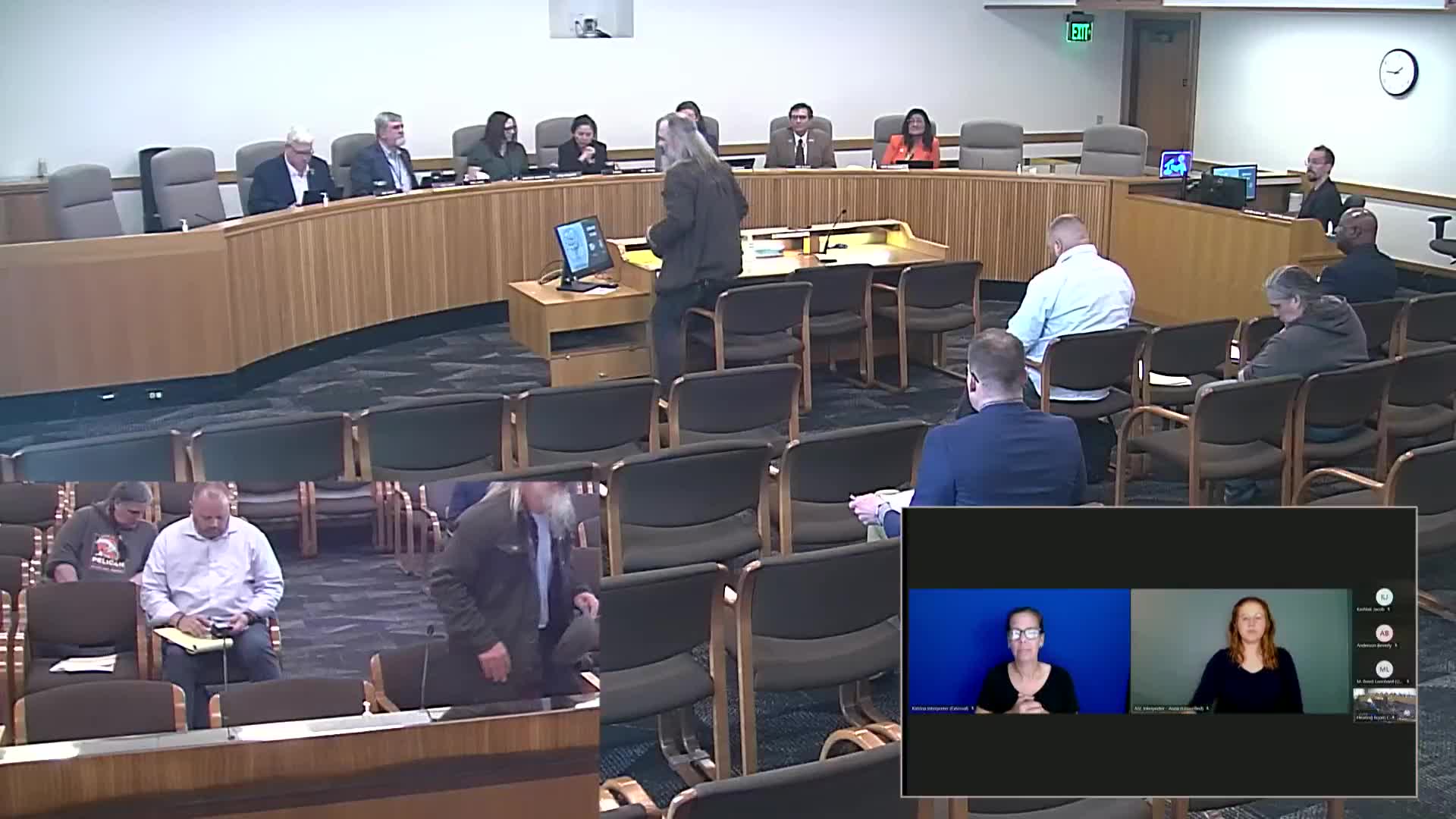
The House Committee on Emergency Management, General Government, and Veterans moved a package of bills to the House floor Friday with "do pass" recommendations after brief work‑session consideration.
Bills advanced and summaries: LPRO staff provided the committee summaries before votes. Items moved to the floor included:
- Senate Bill 801: increases from one to two the number of assistant adjutants general and clarifies appointment authority and fidelity bond requirements for an acting adjutant general; LPRO staff reported no fiscal or revenue impact.
- Senate Bill 803: allows state‑sponsored life insurance products and opportunities for Oregon National Guard members to purchase state‑sponsored life insurance; LPRO staff said no fiscal or revenue impact.
- Senate Bill 806: allows a Civil Air Patrol unit to use an armory or military facility for official business at no cost, provided it does not interfere with organized militia units and is approved by the officer in charge; staff noted minimal fiscal impact and no revenue impact.
- Senate Bill 808: adds current and former members of the Oregon National Guard to the existing civil‑service hiring preference for veterans and applicants seeking promotion; staff reported minimal fiscal impact.
- Senate Bill 1011: permits a federally recognized Indian tribe in Oregon to request retrocession of Public Law 280 jurisdiction by petition to the governor; staff noted the measure was heard earlier and that the committee received tribal testimony during that hearing.
Roll calls and outcomes: The committee recorded roll‑call votes for each motion and moved all items to the floor with "do pass" recommendations. Examples from the transcript:
- SB 801: Vice Chair Graeber moved the bill "to the floor where they do pass recommendation." Roll call included Representative Boyce (aye), Representative Evans (no), Representative Scarlatos (excused), Representative Buenavle (aye), Vice Chair Graeber (aye), Vice Chair Lewis (excused) and Chair Tran (yes). The clerk announced the motion passed.
- SB 803: Vice Chair Graber moved the bill "to the floor with a due pass recommendation." Roll call included Representative Boyce (aye), Representative Evans (aye), Representative Scott Lewis (excused), Representative Watanabe (aye), Vice Chair Graber (aye), Vice Chair Lewis (excused) and Chair Tran (aye). The motion passed.
- SB 806: Vice Chair Lewis moved the bill to the floor; roll call recorded multiple ayes and the motion passed.
- SB 808: The committee moved the hiring‑preference bill to the floor with a due pass recommendation and assigned a carrier.
- SB 1011: Vice Chair Graber moved the bill to the floor with a due pass recommendation. Representative Graber acknowledged powerful testimony from Chief Lana Jack (Celilo) during the earlier hearing and noted the bill does not affect tribes that are not federally recognized. The motion passed and Representative Lewis agreed to carry the bill.
Carriers and next steps: Several members volunteered to carry advanced bills on the House floor (transcript records Chair Tran and others offering to carry specific measures). Each bill carried a committee do‑pass recommendation; LPRO staff summaries noted no significant fiscal impacts for the measures moved.