Get Full Government Meeting Transcripts, Videos, & Alerts Forever!
Get email alerts on the Public Pensions Climate Risk topic
No spam. Unsubscribe anytime.
Oregon House directs treasury to analyze climate risks to public pension fund, approves carbon‑intensity reporting
Summary
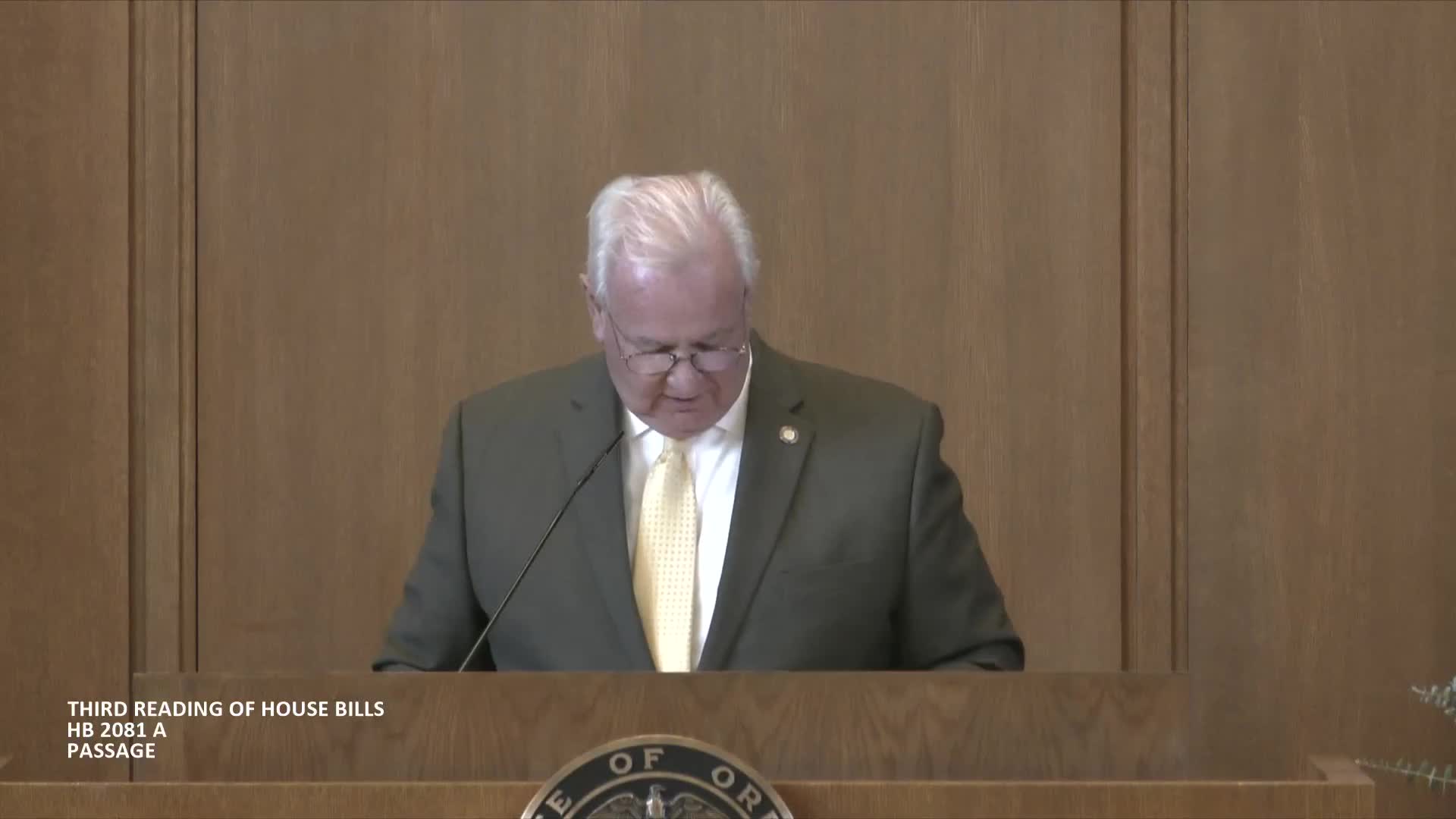
The Oregon House on May 1 passed House Bill 20 81, directing the Oregon Investment Council and the state treasurer to analyze and manage climate-related risks to the public employees’ retirement fund and to pursue reduced carbon intensity through investment preferences so long as actions are consistent with fiduciary responsibilities.
The Oregon House on May 1 passed House Bill 20 81, directing the Oregon Investment Council and the state treasurer to analyze and manage climate-related risks to the public employees’ retirement fund and to pursue reduced carbon intensity through investment preferences so long as actions are consistent with fiduciary responsibilities.
The bill requires the treasury and the investment council to assess scope 1 and scope 2 emissions tied to fund holdings, analyze how climate-related risk analysis could affect portfolio returns, pursue a goal of reducing carbon intensity through preference for investments that lower net greenhouse gas emissions, and provide a collaborative biennial report to the Legislative Assembly on progress and methods. Sponsor Representative Graeber said, “please pay attention to this part. This bill explicitly states that nothing requires OIC or the state treasurer to take any action pursuant to this section unless the council or state treasurer determines in good faith that the action is consistent with fiduciary responsibilities.”
Supporters said the measure formalizes climate risk assessment without displacing fiduciary duty. Representative Javidy, who described a background in investments, told the House the bill “requires the treasurer and the investment council to formally evaluate how climate related risks...could affect the financial health of the PERS fund,” and called that “responsible risk assessment.” Representative Nathanson pointed to written testimony from the state treasurer asserting that “market forces are making carbon intensive investments riskier,” and said beneficiaries and some unions support the bill’s focus on reducing exposure to potentially stranded assets.
Opponents warned the language could politicize investment choices and carry financial and legal risk. Representative Yonker said the measure was, in his words, “in plain attempt to drive people's pension balances to actual 0,” and argued the bill could prioritize climate goals over maximizing returns. Representative Deal said the bill “directs the Oregon State Treasury to elevate 1 risk above all others, climate change,” and warned that mandating preferences for climate‑positive investments could conflict with fiduciary duties.
Sponsor Graeber addressed the bill’s indemnity provision during closing remarks, saying the clause “does not shield anyone from liability if they are negligent or take criminal action” and was intended to avoid litigation that could chill prudent, risk‑management actions. The bill text also states that the treasury and council shall be indemnified “from all claims and damages incurred pursuant to this section,” language supporters said protects decision‑making from litigation aimed at blocking climate‑oriented strategies.
The House declared House Bill 20 81 passed after debate. The bill text, as read on the floor, sets an effective date of the 90th day after adjournment of the 2025 regular legislative session and requires biennial reporting to the legislature on progress toward any carbon‑intensity investment goals and related methodologies.
What happened next: The state treasurer and the Oregon Investment Council are expected to incorporate the bill’s reporting and analysis requirements into their existing investment oversight work and to prepare the first collaborative report to the Legislature as required by the bill.