Get Full Government Meeting Transcripts, Videos, & Alerts Forever!
Get email alerts on the Education Scholarships topic
No spam. Unsubscribe anytime.
House concurs with Senate on Education Scholarship Trust Fund after heated debate
Summary
The South Carolina House voted 73-32 to concur with Senate amendments to S.B. 62, the Education Scholarship Trust Fund, after hours of debate over funding, eligibility and oversight. The measure sets up a trustee-run scholarship mechanism, with initial caps and audit requirements, and leaves funding source decisions to the General Assembly.
The South Carolina House of Representatives voted 73-32 to concur with Senate amendments to S.B. 62, a bill creating an Education Scholarship Trust Fund that would deliver publicly funded scholarships for children to attend nonpublic schools or other approved education providers.
Supporters said the changes the Senate added clarify eligibility windows, add audit and trust protections for scholarship funds and set enrollment caps for the program as it starts. Opponents warned the program could divert public dollars from public schools and raise constitutional and fiscal risks.
The Senate amendments require the department to contract with a trustee to manage scholarship accounts, create application windows that prioritize current recipients and siblings then families under an income threshold, and cap initial participation at 10,000 students for the first year and at least 15,000 in later years unless the General Assembly directs otherwise. The amendments also require random audits of education service providers and the trust, and retain language that applicants must acknowledge private providers are not required to provide the same services as public schools.
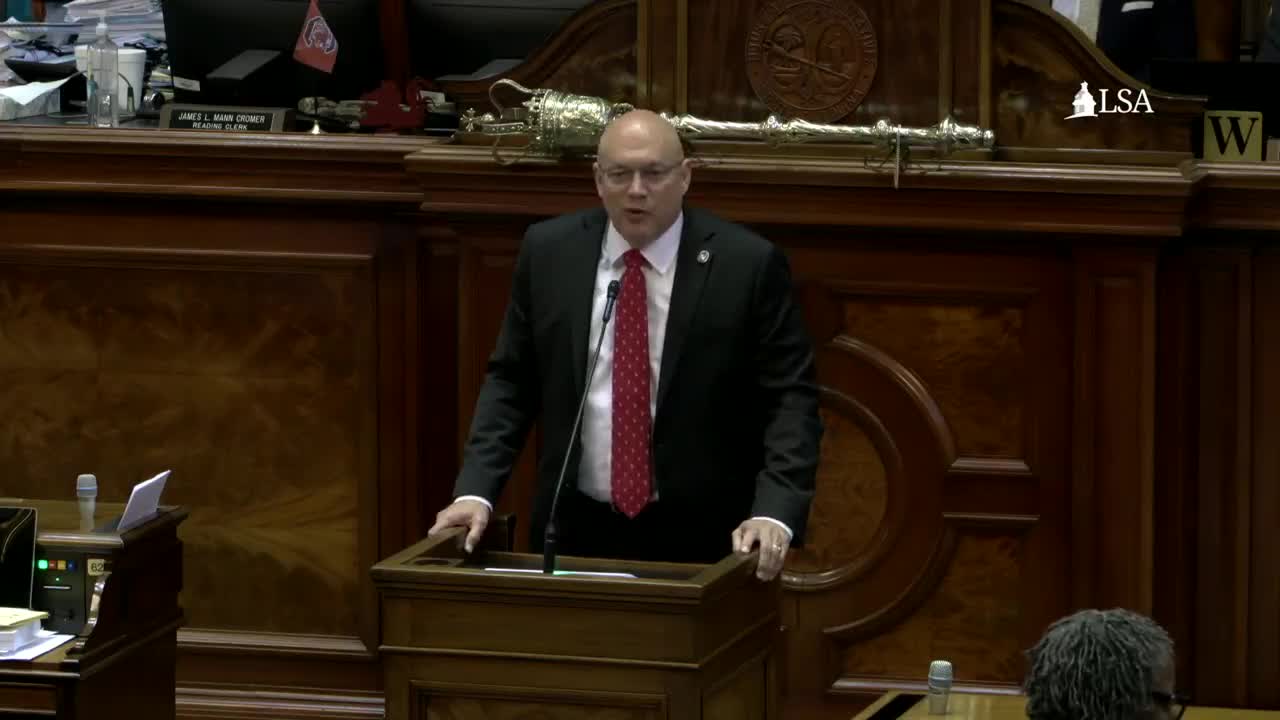
"Providing parents with more options for educating their children is in the best interest of our students, parents, and the state of South Carolina," said Representative Lee Erickson, who explained the senate amendments on the floor. Erickson said the trust structure and audit requirements were designed to adhere to the state Supreme Court's guidance and to let the General Assembly choose the funding source in the budget process.
Rep. Jermaine Garvin, speaking in opposition, said the measure conflicts with the state constitution and warned it would erode funding for public higher-education scholarships and local school systems. "No public dollars shall go to private schools," Garvin said, urging colleagues to consider the long-term fiscal and equity consequences before expanding the program.
Representatives who questioned the bill pressed on funding and program mechanics. Representative Cobb Hunter asked how the bill would interact with existing scholarship and lottery-funded programs; Erickson replied that the amendments leave funding decisions to Ways and Means and Senate Finance and add a trustee "lockbox" intended to ensure funds benefit eligible children. The House also debated access, auditing and whether private providers should be held to comparable standards with public schools.
The House recorded a roll-call concurrence vote of 73-32. With concurrence, S.B. 62 returns to the Senate; the bill still faces decisions about funding levels and administration by the General Assembly and possible judicial review.
Background: the trust mechanism and several design choices in the bill were framed by sponsors as a response to the South Carolina Supreme Court's earlier guidance about how scholarship programs must be structured. The measure retains several guardrails the House and Senate negotiators said are meant to limit misuse, including audit provisions and vendor approval requirements.