Get Full Government Meeting Transcripts, Videos, & Alerts Forever!
Get email alerts on the Building Safety Fire Code topic
No spam. Unsubscribe anytime.
Council panel postpones fire‑code amendments for affordable rental projects after DPP flags safety and water‑quality concerns
Summary
The committee postponed action on proposed fire‑code amendments for Bill 7 affordable rental housing projects after the Department of Planning and Permitting said the bill's language is too broad and could allow combustible sprinkler piping and combined domestic/fire lines with drinking‑water risks.
The Committee on Public Safety and Customer Services on May 1 postponed action on Bill 39 (2025), which proposes amendments to fire-resistance construction requirements for affordable rental housing projects under the city’s Bill 7 program, after the Department of Planning and Permitting raised technical and safety concerns.
Brian Gallagher, deputy director of the Department of Planning and Permitting, told the committee the bill's proposed change in Section C would allow ‘‘all domestic water and fire sprinkler piping’’ to be made of combustible materials "except as otherwise allowed pursuant to chapter 20," the city's fire code. Gallagher said that approach is too broad because the fire code in turn references the building code, and Bill 7 projects allow heavy timber construction that can require different sprinkler-system materials and fire ratings.
Gallagher emphasized two main concerns: first, some plastic piping now used for sprinkler systems may not carry the certifications required for potable drinking water; and second, when Bill 7 allows a combined domestic and fire‑sprinkler line rather than separate systems, stagnant sections of piping could create water‑quality problems over time. "We're not completely opposed to this amendment. We just need to get far more specific on what could be allowed," Gallagher said, noting the department would provide technical written testimony.
Council Vice Chair Wyer, an introducer of the measure, asked whether DPP would be satisfied if the bill deferred to the fire code or whether DPP preferred stricter requirements than the fire code for Bill 7 projects. Gallagher replied that compliance with the fire code is acceptable in a normal building but that, because Bill 7 projects can use heavy timber and combined water systems, stricter, more specific language may be required to avoid unintended safety and water‑quality outcomes.
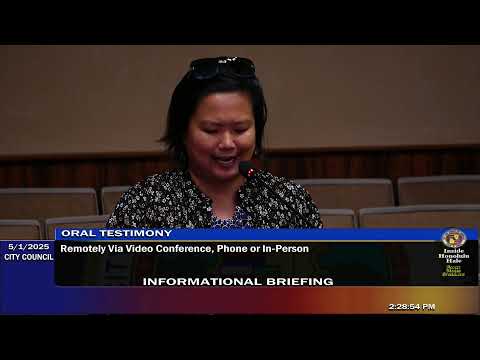
Public testimony included Angela Melody Young, who testified in support of the bill but urged careful attention to life‑safety standards.
After discussion among members and the department, the committee chair said the measure needed rewording and additional departmental analysis. The chair recommended postponing action on Bill 39 to a date and time to be determined so staff and stakeholders could refine the proposal; members agreed without objection.
The committee asked DPP to submit written technical analysis and to work with the bill introducers and stakeholders on specific language before the measure returns to committee.