Get Full Government Meeting Transcripts, Videos, & Alerts Forever!
Get email alerts on the Animal Control Noisy Dogs topic
No spam. Unsubscribe anytime.
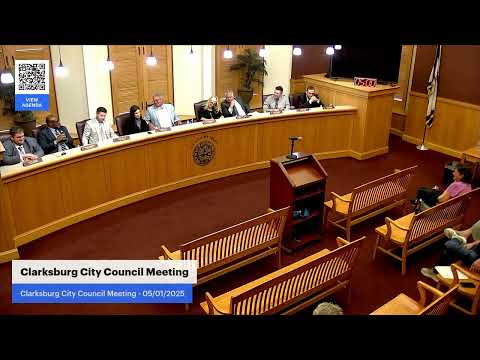
Clarksburg council approves stricter noisy-dog ordinance with first-offense warning
Summary
The Clarksburg City Council approved changes to the city's codified ordinances on noisy dogs, adding time-based thresholds and higher fines while amending the measure to make the first offense a warning and directing animal-control follow-up.
The Clarksburg City Council voted 5-2 on May 1 to adopt amendments to Section 507.17 of the city's codified ordinances that set specific time thresholds for barking and increase fines, while adding an amendment that makes the first offense a warning.
Council members debated the ordinance for more than two hours, focusing on enforcement, impacts on service animals and unintended consequences. Supporters said the measure clarifies what counts as a nuisance and gives enforcement tools; opponents warned it could produce unfair penalties and possible safety risks if residents retaliate.
The ordinance matters because it defines when persistent dog barking becomes a punishable nuisance, who enforces complaints, and how evidence will be treated. Council members pressed police and animal-control leaders on how many barking-dog calls the city receives and how officers should handle after-hours complaints.
Discussion and supporting details: Council members framed the change as a modification of existing animal-control rules to create a time-based standard for continuous barking and to raise fines. One council member said he had voted no previously and had received multiple constituent letters opposing the revision. Several members urged that enforcement include checks for neglect or abuse when a dog is found barking repeatedly; one council member said inspections should determine whether a dog is being neglected rather than imposing fines immediately.
Police and animal-control testimony: The chief of police told the council that the department logged fewer than 50 barking-dog complaints in the preceding year and that officers typically resolve most calls with a door knock and a warning; citations are used for repeat or continuous problems. A representative identified as Mr. Lang (animal control) confirmed that animal-control would investigate complaints and that officers would not rely solely on a private party's video as the exclusive basis for issuing citations.
Enforcement mechanics and amendments: Council members discussed whether officers must see ongoing barking to issue citations or may act on submitted video evidence. The council adopted an amendment to make the first offense a warning; the ordinance retains a defined time threshold for what constitutes continuous barking (discussed in the meeting as a 10- to 15-minute window) and raises fines for subsequent violations. The council also discussed directing police to refer after-hours calls to animal control or code enforcement for follow-up the next business day while allowing officers discretion if there is a related public-safety concern.
Vote and outcome: After debate and an amendment to require a warning for the first offense, the council approved the ordinance. Recorded votes during the final roll call showed Council member Dean and Council member Hyndon voting no; Council member Haft, Council member Jackson, Council member Wirt, Vice Mayor Riffle and Mayor Maffodone voting yes. The action carries the effect of changing the city's noisy-dog rules and authorizing the enforcement approach described above.
Next steps: City staff and the police department will implement the revised ordinance language and the amended warning-first approach; animal-control staff will respond to complaints and conduct follow-up investigations to assess neglect or other underlying causes. The council and staff said they plan to monitor complaints and enforcement outcomes to judge whether further changes are needed.