Get Full Government Meeting Transcripts, Videos, & Alerts Forever!
Get email alerts on the Accounts Payable topic
No spam. Unsubscribe anytime.
Bethlehem finance committee presses administration to tighten accounts-payable process, expand electronic payments
Summary
City finance staff described a multi-step invoice workflow and pledged a new standardized receiving slip, expanded ACH use and a living accounts-payable process document to reduce invoice errors and late charges.
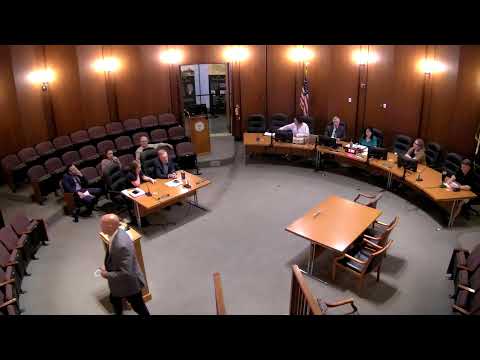
The Bethlehem City Council Finance Committee on Thursday held a detailed discussion of city accounts-payable procedures after committee members raised concerns about invoices arriving late or missing information and occasional late fees. Chair Grace Krampsey Smith said the topic was brought to the committee after multiple meetings with administration and the controller’s office.
Officials explained why invoices can stall, outlined near-term fixes and described longer-term steps to move more payments to automated clearing house (ACH) transfers. Joe Vlasic, head of financial services, told the committee the city processes “nearly 21,000 payment transactions” a year and that financial-services staff now run multiple check runs weekly and are pursuing high-volume ACH conversions such as utility payments.
The discussion matters because timing and clarity in invoice processing affect vendors’ cash flow and the city’s ability to avoid discretionary late charges. Committee members said vendors and downtown merchants had pressed the council to reduce payment delays.
Vlasic described the standard workflow he said the city follows: invoices typically start at the bureau that ordered goods or services, the bureau’s account clerk adds a receiving slip and a supervisor or superintendent inspects and signs off, the department business manager reviews and forwards packets to financial services, and financial services prepares check runs or ACH payments after controller review. Vlasic warned that the multi-step process “takes time” and that “if it’s followed exact order and touched the hands it needs to move through … it’s going to be likely two weeks” before financial services receives an invoice.
Controller Yasso (controller) and budget director Lenny Lazarczyk supported Vlasic’s description and said many hold-ups are human and administrative — missing or illegible invoices, incorrect account codes, transposed numbers and staff absences. Vlasic and Lazarczyk said audits of the payment process had found no material findings on accounts payable but that process improvements were still needed.
Vlasic and Mayor’s administration representative Mike Evans outlined steps the administration is taking: a draft “living” accounts-payable process document; a single, standardized citywide receiving slip with a checklist of required fields (PO number, account code, legible invoice, receiving confirmation and requested due date); and targeted training for the business managers and staff from the city’s six departments. Vlasic said the receiving-slip checklist will include a payment-due-date field so financial services can prioritize near-term payments.
The committee also discussed expanding ACH payments for recurring or high-volume accounts; Vlasic said the city recently migrated PPL electric accounts to an ACH portal and expected that change to reduce the late fees tied to mailed checks. Vlasic cautioned that ACH is not suitable for every payee — set-up requires bank routing and account numbers and some small vendors resist sharing that information — but called ACH “very effective” for recurring payments like bonds, payroll taxes and utilities.
Committee members asked whether the city should adopt a broader paperless invoice workflow system (document routing software). Vlasic and Evans said such systems exist and that staff will continue to evaluate solutions, balancing cost, vendor readiness and fraud risk. Lazarczyk added that accounts-payable staff already flag and follow up on near-due invoices and that the city uses “Positive Pay,” a bank service that validates checks and blocks altered or fraudulent items.
The committee did not take a formal vote on policy changes but encouraged staff to finalize the receiving-slip template, begin department-level training and return with a progress update. Officials said the city’s external audit is ongoing and that the audit team reviews accounts-payable controls as part of their work.
The discussion concluded with committee members urging clearer time frames for departments to forward invoices and praising the administration and financial-services staff for recent progress on ACH conversions and other fixes.
The committee adjourned after the accounts-payable conversation and several other budget-line items were recommended for placement on the May 6 council agenda.