Commission moves to formalize enforcement plan, consider enforcement coordinator and updated procedures
Summary
Commissioners discussed creating an enforcement coordinator role (or nomination process), updating enforcement procedures and public-facing materials, and clarifying follow-up for certificate-of-compliance enforcement.
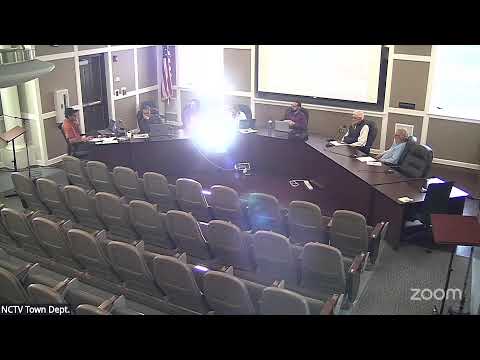
At its May 1 special meeting, the Nantucket Conservation Commission agreed to develop a clearer enforcement action plan, evaluate creating a designated enforcement coordinator role, and publish updated policies and procedures for the public and applicants.
The commission's discussion focused on reducing enforcement workload and public confusion by documenting enforcement steps, clarifying triggers for action, and increasing outreach and education. Commissioner RJ Turcotte said the commission "could do a lot to assuage" public confusion by memorializing enforcement steps and publishing them, and he proposed assigning a commissioner to help staff track enforcement cases and produce a public flowchart.
Commissioners debated whether an enforcement coordinator should be a formal position created in the commission's bylaw or an informal nominee. Commissioner Mike Mizzarelli noted the commission’s bylaw only authorizes three officer positions (chair, vice chair and secretary), which could require a town-meeting amendment to create an official new role. Several commissioners suggested a practical path: nominate or vote at a public meeting to designate a commissioner to act as an enforcement liaison, and have staff seek town-counsel advice on legal limits.
Staff and commissioners discussed certificate-of-compliance (COC) follow-up. Will explained that orders of conditions are recorded on deeds and that a property owner must obtain a COC before common transactions (for example, sale or subdivision). He acknowledged gaps in follow-up when property owners do not apply for a COC, but noted that recorded orders typically surface during title searches and transfers.
Commissioner Joe said the current wetlands enforcement manual is well written but out of date: "The current wetlands enforcement manual is probably one of the better written government documents I've ever seen. It is unfortunately from 02/2004." The commission agreed the manual and a public-facing enforcement flowchart should be updated and posted to the commission's webpage. Staff said it would produce an interim one-page change summary quickly and work toward a full handbook revision.
On meeting efficiency, commissioners agreed to move some routine orders of conditions to a block vote procedure if staff and the chair prepare and circulate draft orders in advance (for example, by Friday before the meeting). Will volunteered to circulate drafts earlier in the week so commissioners could review before the meeting.
The commission directed staff to consult town counsel about the bylaw implications of an enforcement coordinator and to prepare draft procedures and outreach materials for review at a future public meeting. No formal appointment or bylaw amendments were made at the May 1 meeting.
AI generated
The text on this page is AI generated. Summaries, highlights, analysis, and video transcripts are all produced from the original source material.
AI can make mistakes, so if you spot one, and we will fix it for everyone.
Note: the source content is unaltered by us. Any content source we link to, be it a video, an audio recording, or a document, is presented exactly as its publisher released it. That publisher is usually a government body, sometimes an individual official or another organisation.