Get Full Government Meeting Transcripts, Videos, & Alerts Forever!
Get email alerts on the Municipal Budget topic
No spam. Unsubscribe anytime.
El Campo officials warn of 5.8% sales-tax decline and urge contingency planning for FY25
Summary
City staff reported a 5.8% drop in sales tax receipts (about $216,897) compared with the prior period and recommended identifying roughly $200,000 in expenditure reductions, monitoring May receipts, and planning conservative projections for next year’s budget.
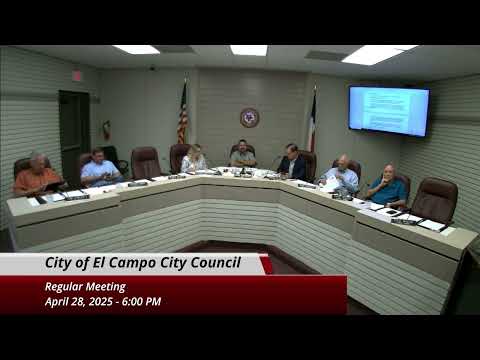
City of El Campo officials on April 28 alerted the City Council to a 5.8 percent decrease in sales tax receipts compared with the same period last year and urged the council to develop contingency plans for the current and next fiscal year.
“ We are down 5.8%,” a city finance staff member told the council, adding that the drop amounted to $216,897 from the same period last year and that sales tax is the largest and a volatile general-fund revenue source. Staff said April receipts reflect purchases made in February and recommended continued monitoring, identifying approximately $200,000 in additional expenditure reductions to cover potential ongoing losses, and planning next year’s budget with conservative sales-tax projections.
Staff also said the city could cover the current shortfall using $100,000 in excess interest earnings that were not budgeted and $135,000 in revenue from the sale of fixed assets realized in the fall. Officials said they will know more when May sales-tax numbers are posted in about two weeks.
Council discussion covered the limits on data staff can share from the comptroller’s HDL reports (staff can share the top 10 taxpayers but not dollar amounts), the components of the decline (a large-box retailer showing lower sales, reduced construction sales tax, and a fall in financial transaction–related receipts), and the use of existing salary savings and other line items for short-term mitigation. Staff noted the budget is already lean and identified limited areas for additional reduction; past options include hiring freezes or wage freezes if needed.
Council members also discussed strategic options: creating a capital-project fund to set aside one-time surplus for capital purchases (rather than relying on sales tax), continuing engagement with state and regional partners on economic development, and preparing for potential reductions in federal assistance after disasters. No formal budget reductions or tax-rate changes were adopted at the meeting; staff were directed to monitor receipts, report back, and incorporate conservative projections into the upcoming budget process.