Get Full Government Meeting Transcripts, Videos, & Alerts Forever!
Get email alerts on the Medical Education topic
No spam. Unsubscribe anytime.
Representative explains opposition as House approves bill on allopathic medical schools
Summary
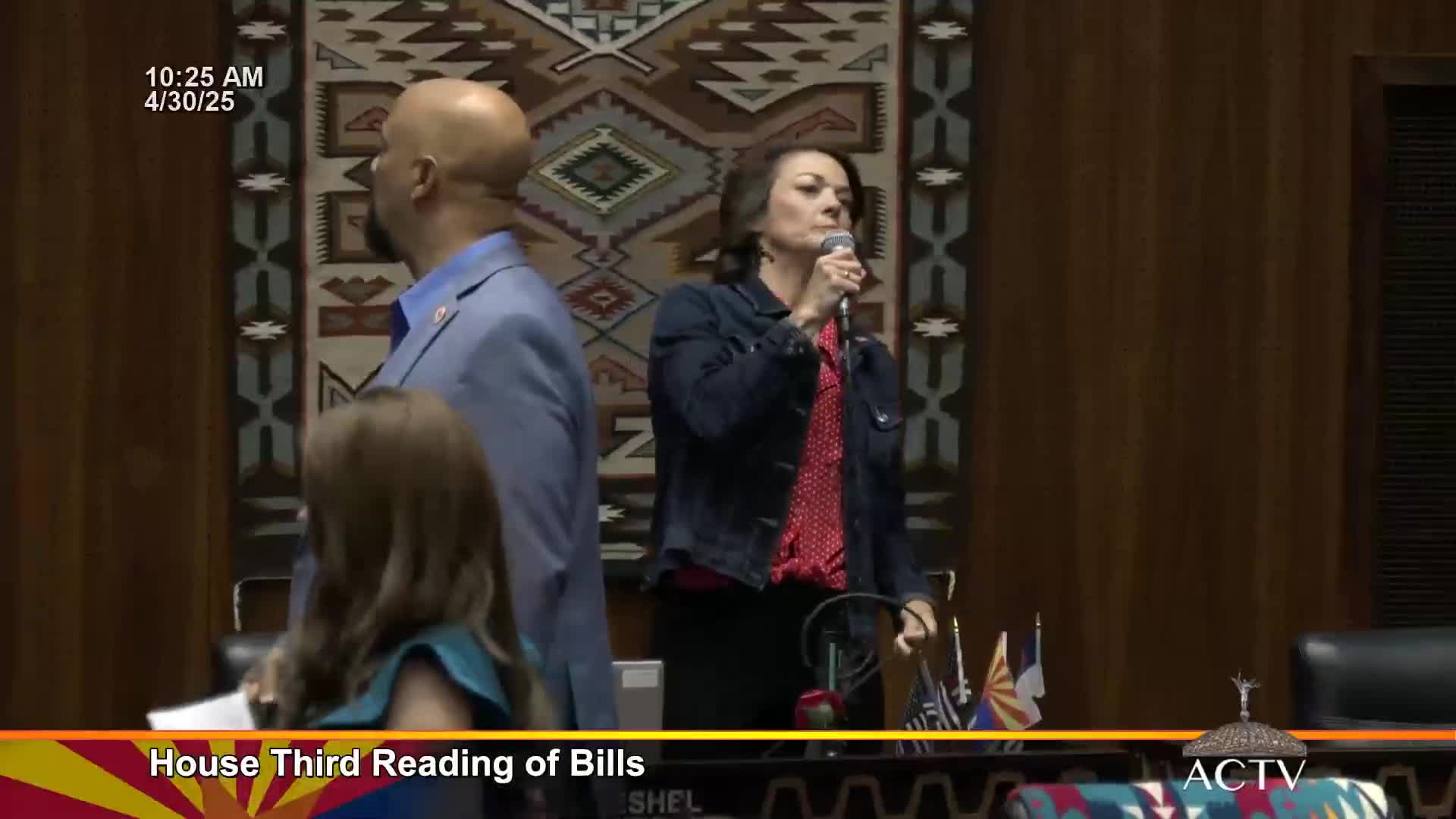
Representative Kessel spoke on the House floor before Senate Bill 1395 passed 36-18 on third reading. Kessel said she opposed the bill because she prefers addressing physician shortages by supporting U.S. students rather than bringing in foreign-trained doctors.
PHOENIX — Representative Kessel rose on the floor April 30 to explain her no vote on Senate Bill 1395, a measure amending section 32-14-23 of the Arizona Revised Statutes relating to allopathic medical schools, ahead of the House's recorded 36-18 passage of the bill.
Kessel said she understands there is a shortage of doctors and that rural areas struggle to recruit clinicians, but said she does not believe the bill is the right solution. "We should be looking at our own American citizens, kids who want to go to medical school, be qualified in medical school, and be our next generation of doctors," Kessel said. She added that, in her view, the bill risks allowing doctors "that, in my opinion, are not as qualified" and said placing those doctors in rural areas would send a message that rural residents "are not worth high quality medical attention." Kessel concluded, "So, it's frustrating to continue to have to vote no on this bill. It is not the right answer for getting more doctors and addressing the medical shortage that we have. We need to look at other ways to do that. And once again, I am a no vote on this bill."
The clerk later recorded a final tally of 36 ayes and 18 nays; the clerk instructed that the action be recorded and the bill conveyed to the Senate.
Context: The floor explanation is recorded in the public journal as an "explain my vote" statement; the record shows the House passed the bill on third reading. The transcript does not contain the full bill text, fiscal notes, or committee report; those documents are required to assess the bill's detailed provisions and implementation timeline.