Citizen Portal

Nominee for DEA Administrator Promises Urgent Push on Fentanyl, Calls for International and Domestic Tools

3168216 · April 30, 2025

Get AI-powered insights, summaries, and transcripts

Subscribe
AI-Generated Content: All content on this page was generated by AI to highlight key points from the meeting. For complete details and context, we recommend watching the full video. so we can fix them.

Summary

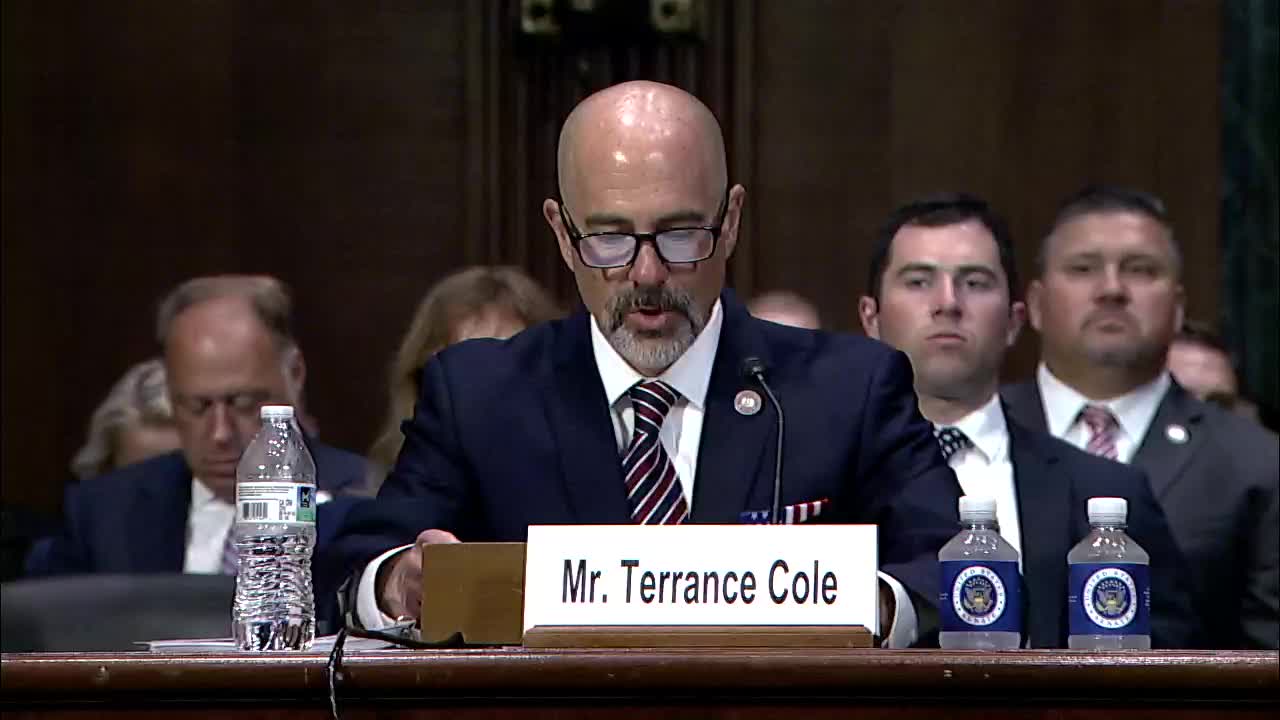
Terrence Cole, nominated to lead the Drug Enforcement Administration, told the Senate Judiciary Committee he would make combating fentanyl the agency’s top priority and urged stronger international cooperation, intelligence sharing and domestic education and enforcement efforts.

Terrence Cole, President Trump’s nominee to be administrator of the Drug Enforcement Administration, told the Senate Judiciary Committee that if confirmed he would make combating the fentanyl crisis the DEA’s “number 1 priority.” He said the United States loses nearly 300 people daily to drug poisonings and argued that the response must use law enforcement, intelligence, financial sanctions and diplomacy to target cartels and their networks.

Cole, a former DEA special agent with decades of domestic and overseas experience and a recent Virginia secretary of public safety and homeland security, described cartel operations in Mexico and the influence of transnational networks he said involve actors in China and, more recently, Canada. “These cartels have demonstrated an extraordinary ability to adapt, evolve, and relocate their operations,” he said, adding that designating cartels such as Sinaloa and CJNG as foreign terrorist organizations “is a necessary and overdue step in this fight.”

The nominee urged rebuilding investigative capacity in Mexico akin to past U.S. efforts in Colombia: “We need to build capacity, similar to what we did in Colombia in the eighties,” Cole said, citing judicial wire-intercept programs and broader intelligence cooperation as essential tools. He said some precursor chemicals for fentanyl originate in China and that greater diplomatic pressure and sanctions are needed if China does not act.

Senators pressed Cole on operational details and limits of DEA authority. Sen. Josh Hawley asked what additional tools Cole needs in Mexico; Cole responded that judicial wire intercept capacity, more coordinated investigations and closer cooperation from Mexican partners would be critical. Sen. Alex Padilla asked whether interdiction alone will solve the crisis; Cole said it will not, describing a “multi-legged” approach used in Virginia that includes prevention, education and enforcement.

Cole also addressed several media reports about past operations. In response to questions about an ambush of Colombian police in 2006 and allegations tied to later incidents in Mexico, Cole said DEA had no operational role in the Colombian incident and denied transferring intelligence that led to killings in Mexico, saying, “I did not.” He described those matters as part of ongoing investigations or prosecutions in foreign jurisdictions.

On domestic policy, Cole said he would review the DEA’s administrative work on rescheduling marijuana and would “look at the science” and the status of the regulatory process before acting. He said the agency should coordinate with states and federal prosecutors on complex cross‑jurisdictional questions, including large-scale trafficking across mixed legal jurisdictions.

Lawmakers also asked about online distribution of fentanyl. Sen. Tammy Baldwin and others described youth deaths tied to drugs purchased via social media; Cole backed stepped‑up outreach and education, noting programs in Virginia and support for parental and community engagement. Sen. Peter Welch and Cole discussed expanding access to fentanyl test strips as a harm‑reduction measure; Cole said he was open to learning more and working with the committee.

Several senators warned against diverting DEA personnel from drug enforcement to immigration enforcement. Cole acknowledged DEA agents have assisted under Title 8 in some operations but said DEA’s statutory mission under Title 21 must remain focused on combating illicit drugs. “If a request comes from another law enforcement agency, ... it is a custom for us to help,” he said, adding that he would prioritize DEA’s core mission.

Cole tied his priorities to international enforcement actions, including recent extraditions of cartel leaders and prosecutions he described as important to dismantling transnational networks. He closed his opening remarks by saying, “We must act decisively. We must act now.”

Votes or formal actions were not taken at the hearing; the committee will send written questions for the nominee to answer before any committee vote.

Background and context: Cole cited experience in Colombia, Mexico and Afghanistan and his recent role in Virginia, where he said fentanyl‑related deaths fell during his tenure. He recommended expanding intelligence sharing, judicial wire‑intercept programs in Mexico and strengthened bilateral cooperation with Canada and China to disrupt precursor flows.

What’s next: The committee will submit written questions; senators said their votes would depend on the nominee’s written responses and follow‑up materials.