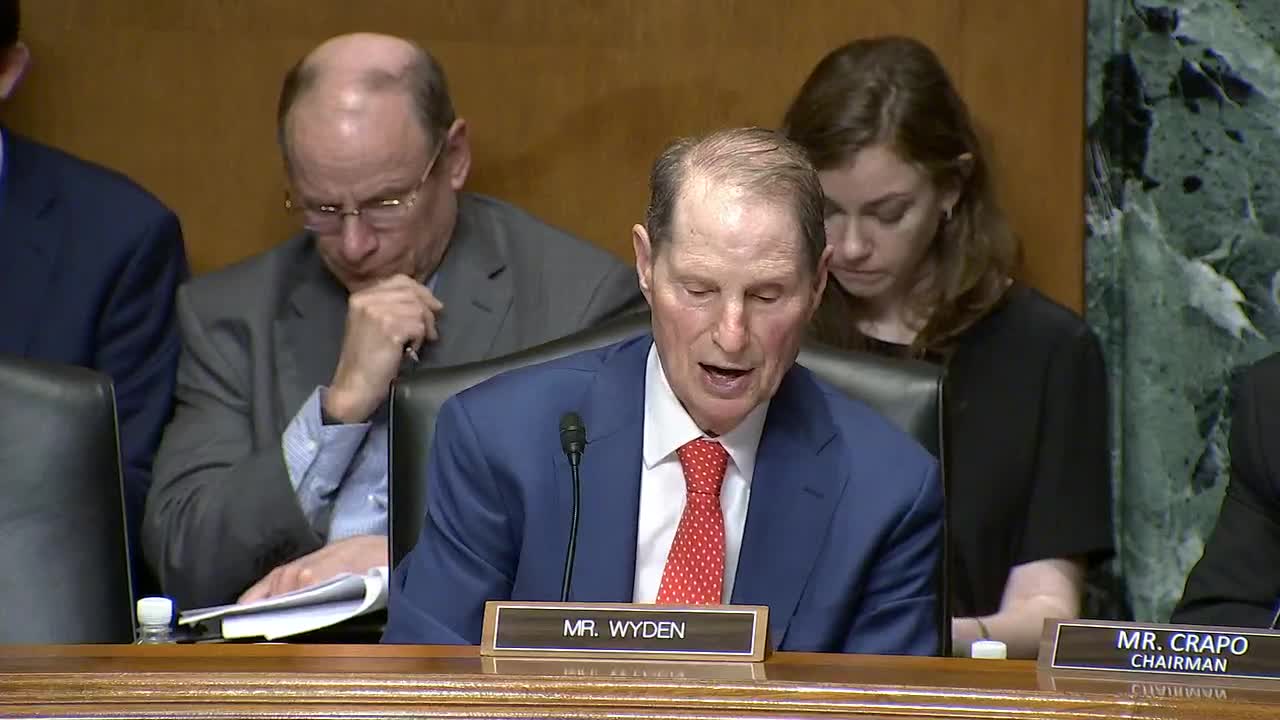
Senators question Rodney Scott on social-media conduct, detainee transparency and rapid-DNA testing for trafficking
Get AI-powered insights, summaries, and transcripts
SubscribeSummary
Senators on the Finance Committee used confirmation questioning of Rodney Scott to press him on personal conduct, transparency in CBP custody, and tools to combat trafficking.
Social media and conduct: Sen. Ron Wyden and others raised Scott’s past membership in a private Facebook group where racist and sexually explicit material circulated. Wyden asked whether it was appropriate for a senior official to be a member of that group. Scott said he was a member, that the group had some 9,000 members and that a small number of people had posted inappropriate material. He said many members did not see the posts, that the group was investigated, and that some individuals were disciplined or fired. On a separate matter, Wyden cited a 2021 tweet from Scott aimed at a critic; Wyden said a judge called the tweet a "classic **** threat." Scott told senators he had apologized in person to the woman and, he said, "I did not mean for it to come across that way."
Detainee transparency and phone access: Sen. Elizabeth Warren and others asked whether CBP would permit people in custody to contact family and counsel promptly. Warren said families and lawyers sometimes could not find detainees for hours or days. Scott said he "commits to transparency and sharing that information consistent with law and policy as quickly as possible," but declined to pledge a fixed timeline because CBP often processes and transfers people to other facilities and lacks detention infrastructure in many areas. He said the situation had improved since earlier periods when mass encounters overwhelmed processing capacity.
Rapid DNA and child-trafficking detection: Sen. Marsha Blackburn described past use of rapid DNA testing at ports of entry to determine whether children traveling with adults were related; she said past testing had identified trafficking in a significant fraction of cases and urged that the tests be restored. Scott said when he was chief of the Border Patrol he supported rapid DNA testing and that he would "do everything I can to get those tools back in place," because children in trafficking situations are highly vulnerable.
Sensitive locations: Sen. Raphael Warnock and others asked whether CBP would carry out immigration enforcement at sensitive locations such as churches, schools and hospitals. Scott said he would make decisions on a case-by-case basis and would "have conversations with the community," adding that if other locations are available for enforcement actions, those should be used. He declined to provide a blanket prohibition.
Where it stands: Scott apologized for the tweet and described steps taken in response to Facebook-group incidents when he said he learned of them. He promised to push for transparency consistent with law and policy and to restore tools such as rapid DNA to help detect trafficking. Several senators said they would continue oversight to ensure commitments are met.
Ending: The committee entered several letters and documents into the record and requested follow-up materials; senators emphasized that conduct, transparency, and protection of vulnerable people would remain subjects of further inquiry.