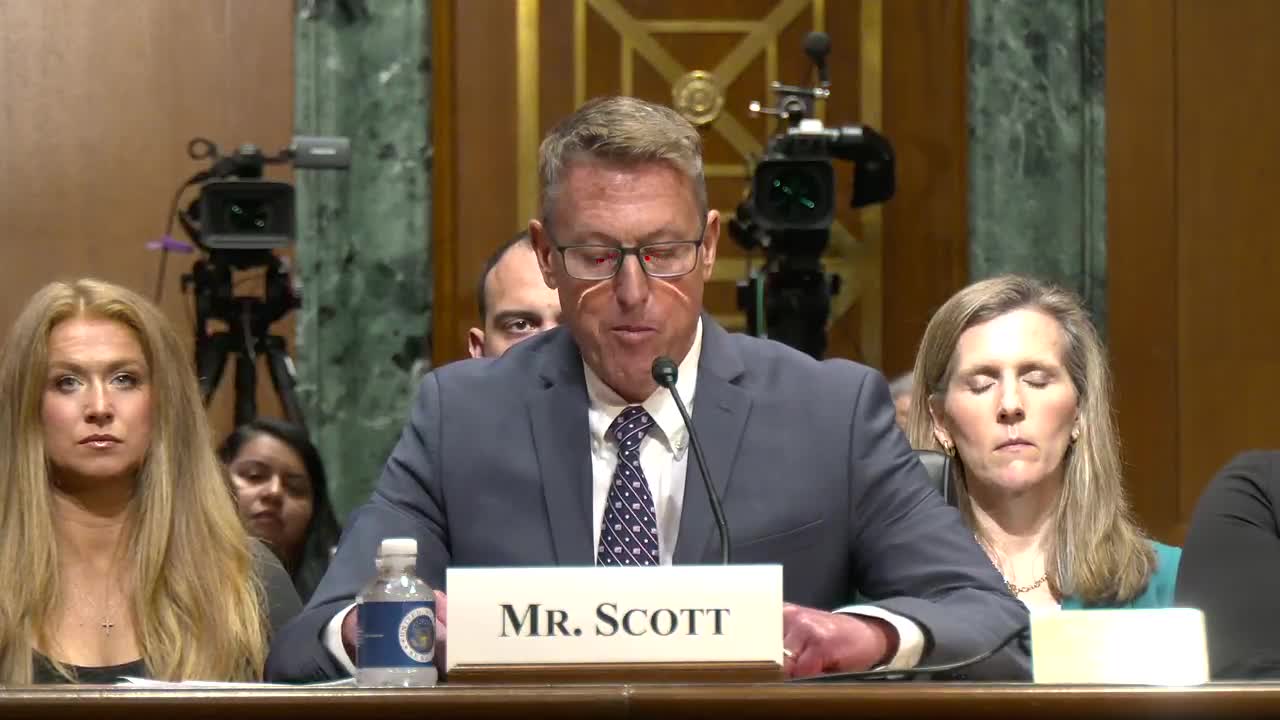
Nominee Rodney Scott emphasizes people, technology and infrastructure to 'secure the border' in Senate hearing
Get AI-powered insights, summaries, and transcripts
SubscribeSummary
Rodney Scott told the Senate Finance Committee that his blueprint for Customs and Border Protection centers on people, technology and infrastructure as the path to stronger border security and smoother trade.
In his opening statement, Scott described a long career with the Border Patrol and said, "If confirmed, I will drive actions to ensure the CBP workforce has the training, resources, and the policies to excel in every aspect of the mission and to do so safely." He framed border security as national security and said he would "encourage innovation, modernize processes, and enhance efficiencies."
Why it matters: Senators from both parties stressed that CBP must simultaneously secure the border and facilitate lawful trade and travel. Several members pressed Scott for specifics about inspection technology, port infrastructure, staffing, and how to measure returns on investments.
Technology and inspections: Scott told senators that nonintrusive inspection (NII) equipment and better data-driven targeting are central to his plan. He said ramping up NII and related AI tools would detect anomalies and free officers "to do what only a human being can do," such as face-to-face interviews that can identify trafficking victims.
On the question of whether 100% screening would make the country more secure, Scott said in theory it would, but "there's always trade offs about the amount of money invested in the amount of time and the risk" and that Congress would have to fund substantial footprint changes at some ports of entry.
Infrastructure and ROI: Scott cited a San Diego sector test of the border wall system as an example: the system "freed up 150 agents every 24 hours" in a 12-mile section and produced what he described as a "$28,000,000 return on investment for the life cycle of that border wall." He said similar calculations should guide requests for ports and technology.
Customs experience and small-business concerns: Sen. Ron Wyden and others noted Scott's long Border Patrol background and questioned his direct experience with customs facilitation, saying customs leadership affects small businesses and supply chains. Wyden asked whether Scott could ensure legal trade moves smoothly without undue delay; Scott acknowledged limits in his customs experience and committed to work with the committee and agency trade offices to prioritize trade facilitation if confirmed.
Ports and regional questions: Sen. Ben Ray Luján asked why Santa Teresa, N.M., had not been prioritized for infrastructure improvements given its rising trade role. Scott said that as a policy adviser he did not have that level of detail but pledged to reevaluate infrastructure priorities if confirmed. Multiple senators urged better staffing and expanded port hours, particularly on the northern border and in rural states.
De minimis shipments and targeting: Sen. John Cornyn raised vulnerabilities tied to the de minimis threshold for parcels valued under $800. Scott said the National Targeting Center and better advance data from trade partners are critical to target high-risk shipments without paralyzing legitimate commerce.
Where it stands: Scott repeatedly promised to supply information to senators and to tie future budget and program requests directly to measurable border-security outcomes. He did not receive a committee vote at the conclusion of the hearing.
Ending: Senators criticized gaps in documentation on specific past incidents but largely engaged Scott on operational priorities; senators left open further oversight and requests for precise resource and program-level detail.