Get Full Government Meeting Transcripts, Videos, & Alerts Forever!
Get email alerts on the Infrastructure Reauthorization topic
No spam. Unsubscribe anytime.
Senate EPW opens reauthorization work on IIJA water programs; chair and ranking member set priorities
Summary
The Senate Environment and Public Works Committee opened a hearing to begin bipartisan work reauthorizing the water infrastructure programs created by the Infrastructure Investment and Jobs Act, with Chair Capito and ranking members outlining priorities for the next authorization.
The Senate Environment and Public Works Committee opened a hearing to begin bipartisan work reauthorizing the water infrastructure programs created by the Infrastructure Investment and Jobs Act, with Chair Capito and ranking members outlining priorities for the next authorization.
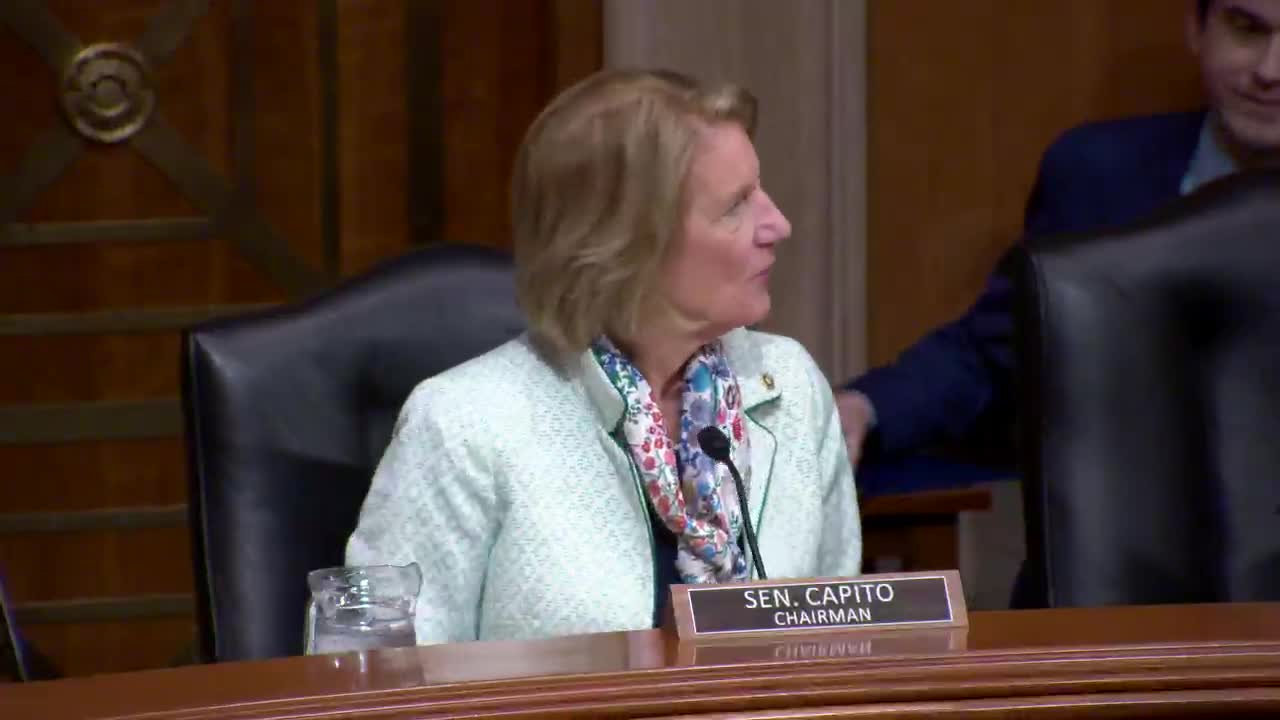
Chair Capito said the session would “examine the policies to strengthen our nation's water infrastructure,” described IIJA as “the largest federal investment in water infrastructure in our nation's history,” and said the committee must act now because the IIJA funding “expires next year.” She said reauthorization should simplify funding delivery for small and underserved communities, reinforce state leadership in implementation, and focus federal efforts on measurable outcomes.
"This law is moving our nation's water infrastructure systems forward," Capito said, noting IIJA provided roughly $50 billion for drinking water, wastewater and stormwater programs. She cautioned that some federal implementation approaches have "departed from the statute's original direction" and that overly prescriptive agency rules risk leaving behind the communities the programs were designed to help.
Ranking Member Shipp said reliable access to safe drinking water is a right and highlighted lead service lines and PFAS contamination as urgent threats. Shipp cited EPA estimates of widescale needs and warned that aging systems also pose cybersecurity risks. "A successful large scale attack could have tragic and catastrophic results," he said, urging sustained federal investment and a fully staffed EPA to implement science-based standards.
Committee members who spoke in the hearing reiterated related concerns. Senator Padilla emphasized the importance of technical assistance and affordability programs for low-income households; other senators pressed on program flexibility, match requirements, and the need to preserve state revolving funds as predictable financing tools.
Why it matters: IIJA funding spurred thousands of projects, but committee leaders say the federal government and states must address barriers small and underserved communities face in accessing funds, ensure implementation follows congressional intent, and sustain investments beyond the IIJA baseline to meet long-term needs.
The hearing proceeded to witness testimony and a series of member questions on specific program design issues, SRF implementation, lead service line replacement, PFAS treatment, workforce development and small-community technical assistance. Senators announced a formal working timeline for written questions and responses to be submitted for the record.