Get Full Government Meeting Transcripts, Videos, & Alerts Forever!
Get email alerts on the Critical Minerals topic
No spam. Unsubscribe anytime.
Senate Energy and Natural Resources Committee adopts amendments and advances S.714, the Critical Mineral Consistency Act, to the Senate floor
Summary
The Senate Energy and Natural Resources Committee adopted a Lee–Heinrich substitute and a title amendment and voted to report S.714, the Critical Mineral Consistency Act, to the Senate floor after a voice vote. Sponsors said the bill will harmonize Interior and DOE critical-mineral lists to reduce confusion for industry and agencies.
The Senate Energy and Natural Resources Committee on May 7 approved amendments to S.714, the Critical Mineral Consistency Act, and voted to report the bill to the full Senate.
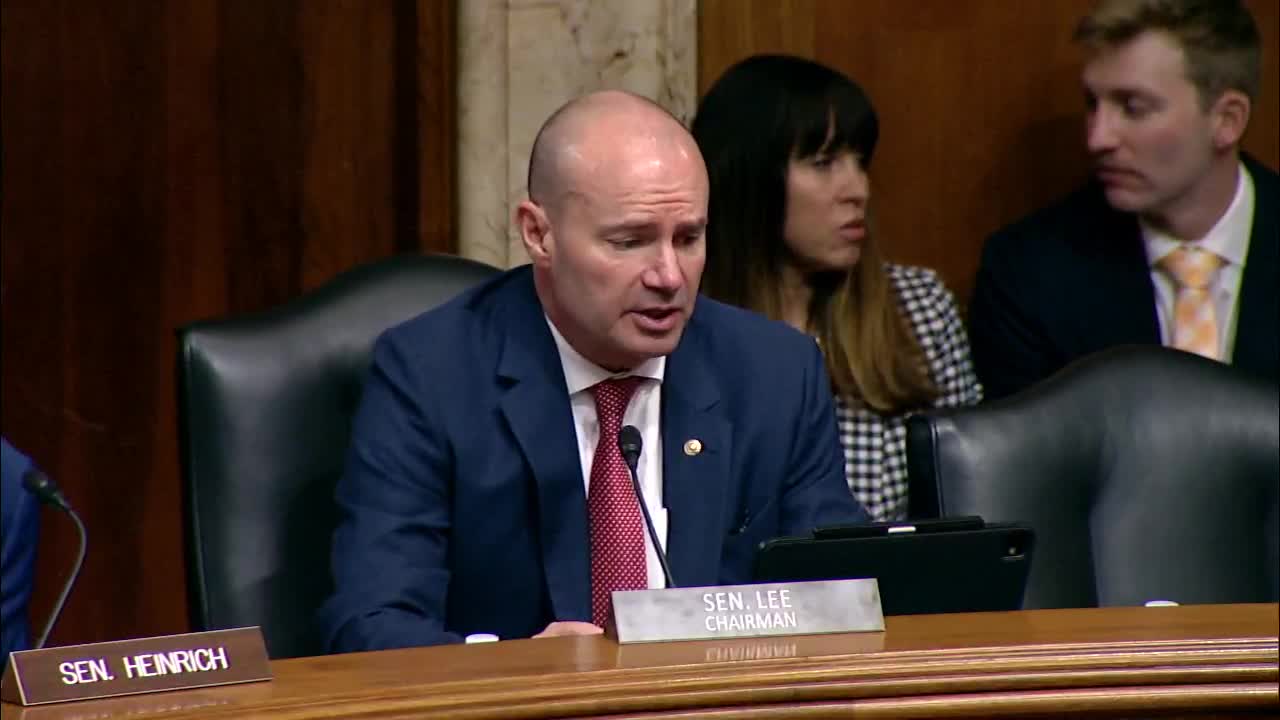
The committee adopted a Lee–Heinrich substitute amendment and a title amendment by voice votes and then approved the bill as amended. Chairman Lee said the substitute ‘‘provides clearer and more specific language’’ and that it ‘‘achieves the policy objectives’’ shared with the House companion measure. Ranking Member Senator Heinrich said he supported the substitute and the amended bill.
The legislation is intended to harmonize the lists of critical minerals maintained by the Department of the Interior and the Department of Energy since enactment of the Energy Act of 2020. Committee members and staff said differing lists have produced confusion and unintended consequences for permitting, agency guidance, and industry planning.
Chairman Lee told senators the substitute text ‘‘does so in a better way than the text of the underlying bill’’ and said the committee would take a title amendment before voting on the bill. Senators then voiced ‘‘aye’’ for the substitute and for the title amendment. After the amendments were adopted, the committee voted on the measure as amended; the chair declared, ‘‘The ayes have it and the measure will be submitted to the Senate floor.’’
Supporters framed the change as a technical, bipartisan fix that would produce more consistent agency action and regulatory certainty. Senator Heinrich thanked the chairman ‘‘for being willing to address my concerns with his original bill’’ and said he ‘‘support[s] his substitute amendment and will vote for the bill as amended.’’
The committee did not record a roll-call tally for the bill vote in the hearing record; members adopted the amendments and advanced the measure by voice vote. The measure will be packaged and reported to the Senate floor by the committee for consideration by the full Senate.
Background: law and agency lists. The committee cited the Energy Act of 2020 as the statute under which each department currently maintains its lists of critical minerals; committee members said the lists are not harmonized and that misalignment has caused regulatory and planning problems for federal agencies and private developers. The substitute aims to make the two agency lists consistent and to clarify reporting requirements between Interior and DOE.
Next steps: the committee reported the bill to the Senate floor. If and when the Senate calendar takes up S.714, further floor amendment or debate is possible.