Get Full Government Meeting Transcripts, Videos, & Alerts Forever!
Get email alerts on the Environmental Review Appeals Commission topic
No spam. Unsubscribe anytime.
Environmental Review Appeals Commission stresses need for stable appropriation to support e‑filing and technical appeals
Summary
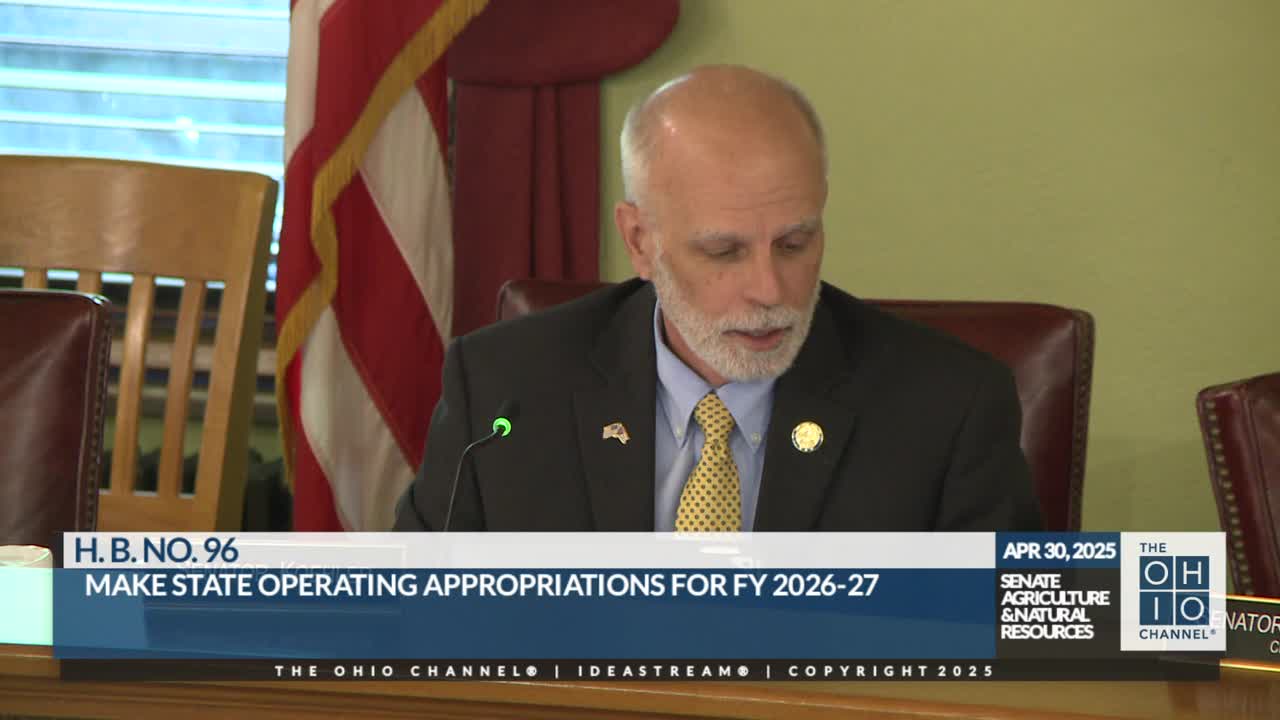
Chair Melissa Schilling told senators the small, three‑member Environmental Review Appeals Commission handles technically complex environmental appeals, maintains e‑filing and has a relatively small docket; the commission asked for the House‑passed appropriation to meet statutory duties.
The Environmental Review Appeals Commission told the Senate Agriculture and Natural Resources Committee it adjudicates complex environmental and agricultural appeals and relies on a small, specialized staff and secure e‑filing to deliver timely decisions.
"Decisions of the Commission are directly appealable to the courts of appeals," Chair Melissa Schilling said. She described the commission as a three‑member body appointed by the governor that provides de novo hearings or appellate‑style review of final agency actions by Ohio EPA, the Department of Agriculture, the state fire marshal and certain county boards of health.
Schilling said commission opinions are legally and technically detailed — often 30–100+ pages — and that the office relies on an executive director and a staff attorney with environmental expertise. She told the committee the commission had 69 active cases on its docket at the time of testimony and no backlog of cases awaiting decision.
The commission is a one line‑item agency funded by the GRF. Schilling said the House appropriation of $745,000 for FY 2026 and $795,000 for FY 2027 (House Bill 96) will allow the commission to satisfy statutorily mandated duties, including e‑filing maintenance and security. She said the commission’s e‑filing system — implemented in 2018 and upgraded since — remains the backbone of operations and requires ongoing maintenance to mitigate security threats and ensure stakeholder access.
Senators did not ask follow‑up questions at the hearing and the commission’s request proceeds through the regular budget process.