Get Full Government Meeting Transcripts, Videos, & Alerts Forever!
Get email alerts on the Student Wellness topic
No spam. Unsubscribe anytime.
Budget keeps student‑wellness funding, proposes principal apprenticeship and absenteeism prevention
Summary
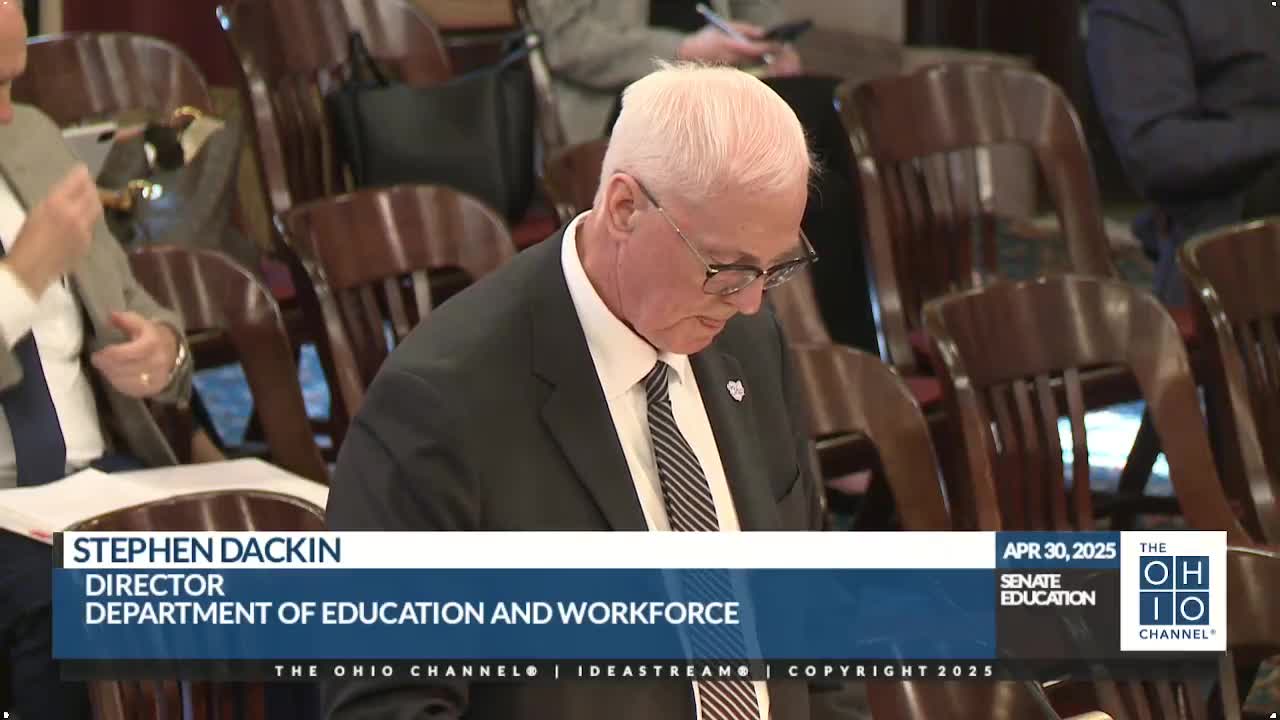
Director Steve Dakin said the executive budget maintains the Student Wellness and Success Fund, adds a $10 million principal apprenticeship program, and recommends shifting chronic absenteeism strategies from compliance to prevention.
Steve Dakin, director of the Ohio Department of Education and Workforce, told the Senate Education Committee the executive budget maintains the Student Wellness and Success Fund and funding for school‑based health clinics, and proposes new prevention‑focused strategies on chronic absenteeism.
On absenteeism, Dakin said the budget would implement recommendations of the Ohio Attendance Task Force to shift “away from compliance based methods of addressing chronic absenteeism to prevention strategies that keep students from being absent in the first place.” He said providing more intensive interventions for students with higher absence counts can address root causes.
To develop school leadership capacity, the budget recommends $10,000,000 over the biennium for a two‑year principal apprenticeship program pairing apprentices with high‑quality principals for coursework and on‑the‑job mentoring. Dakin described the apprenticeship as coursework plus supervised practice “so it's a true apprenticeship program” and said mentors and apprentices would be compensated.
On school meals, Dakin said the department has not received signals from the U.S. Department of Agriculture about changes to school‑meal funding and that federal meal funding remains a concern to some committee members. He also highlighted the Stay in the Game Network as one tool schools use to improve attendance and said the department is “very pleased” with that partnership.
Ending: Dakin said these investments support student health, attendance and school leadership; committee members requested follow‑up data on attendance efforts and apprenticeship program design.