Get Full Government Meeting Transcripts, Videos, & Alerts Forever!
Get email alerts on the Urban Forestry And Housing topic
No spam. Unsubscribe anytime.
Seattle council committee hears competing views on trees as city moves to implement HB 1110 and update comprehensive plan
Summary
Chair Joy Hollingsworth convened the Select Committee on the Comprehensive Plan April 30 for an executive briefing on the Seattle Urban Forest strategy and how it intersects with interim and permanent compliance with state House Bill 11 10, and dozens of public commenters urged both stronger tree protections and more housing.
Chair Joy Hollingsworth convened the Seattle City Council Select Committee on the Comprehensive Plan on April 30 to hear a briefing from the executive on the Seattle Urban Forest strategy and how it intersects with interim and permanent actions to comply with state House Bill 11 10, the state law the city is implementing to allow missing‑middle housing.
The meeting combined a scheduled executive presentation with an extended public comment period: 30 people spoke in person and 18 remotely. Many callers said the city can — and must — pursue both denser housing and stronger tree protection; others urged the committee to tighten the 2023 tree ordinance and to require more preservation and comparable replacement of large, mature trees.
Why it matters: the committee is preparing interim legislation intended to satisfy the state HB 11 10 deadline (the chair said the state implementation deadline is in June). The executive said it will also transmit permanent legislation that will add measures aimed at preserving or replacing trees and creating on‑lot amenity space while enabling stacked flats, changes to parking rules and other incentives to retain canopy when sites redevelop.
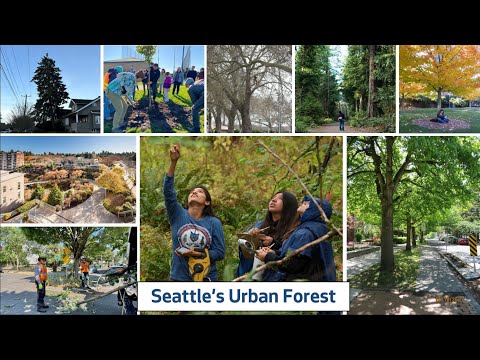
The executive team — including Brandon Staley (Office of Planning and Community Development), Lauren Ergenson (Office of Sustainability & Environment), Megan Newman (Seattle Department of Construction and Inspections) and Chris Tobias (mayor’s office) — described a citywide approach that treats street trees, parks/natural areas and private‑property trees as complementary parts of Seattle’s urban forest. Ergenson said the city’s stated canopy goal remains at least 30% by 2037 and the administration is pursuing both plantings on public land and incentives for private‑property preservation.
SDCI staff explained how the city’s regulatory framework now works on private property. Megan Newman described the 2023 tree protections and how the code groups regulated trees into tiers: heritage trees, tier 2 (roughly 24 inches diameter and greater), tier 3 (12–24 inches) and tier 4 (6–12 inches). She told the committee that from July 2023 through February 2025 SDCI permitted roughly 2,400 trees planted on redeveloped private lots, tracked about 141 larger tier‑2 removals in construction while 660 tier‑2 trees were retained during construction, and that the city has collected nearly $1,000,000 in penalties for illegal tree work since the ordinance took effect.
Members of the public gave lengthy testimony illustrating the tradeoffs and disagreements. Speakers representing housing, builders and developer interests — including Scott Berkeley (Tech for Housing), Sahar Amini (Habitat for Humanity), Randy Banneker (Seattle King County Realtors), Lily Hayward (Seattle Metropolitan Chamber of Commerce) and Jesse Simpson (Housing Development Consortium) — urged flexibility, incentives (height, floor area or parking departures) and expanded right‑of‑way planting so that additional housing can be built without net canopy loss.
Other speakers and community groups pressed for stronger protections and questioned city data and enforcement. Steve Zemke (TreePAC / Friends of Seattle’s Urban Forest), Martha Brown and several parents and students described high‑value mature trees (including the Green Lake sequoia) as irreplaceable and urged amendments to the tree ordinance to prevent discretionary removals. Testifiers also raised concerns that SDCI data overstates “protected” trees, and advocates asked the council to require alternative site plans and to expand transplanting and in‑lieu mitigation funds similar to Portland’s approach.
Staff and commenters offered numbers and studies during the discussion. Presenters noted that the city’s 2021 canopy assessment shows nearly half of canopy is on neighborhood residential land and a substantial share is in parks and the right of way; Trees for Seattle staff described multi‑department planting programs (city departments planted roughly 4,700 trees and the Green Seattle Partnership planted roughly 18,000 trees over a recent two‑year span) and the Trees for Neighborhoods program reported an 88% survivorship rate for trees it has planted. Callers disputed presentation claims with alternate counts: one public commenter said SDCI permit data showed roughly 2,000 trees removed in 2024 and an extrapolated 4,900 removals in 2025, and others said only a small share of “protected” trees were conserved through ordinance requirements.
Council members asked detailed technical and policy questions. Council member Moore pressed the administration on right‑of‑way maintenance costs and how canopy investments affect SDOT work; Saka and others asked about inter‑departmental coordination, species selection and funding for maintenance. Lauren Ergenson said the Office of Sustainability & Environment and a cross‑departmental urban forestry core team convene agency leads to coordinate planting, permitting and stewardship and that the administration is pursuing federal funding to expand plantings in neighborhoods with low canopy and high heat‑risk.
No formal legislative actions or votes occurred at the meeting. Chair Hollingsworth announced the next public hearing on the interim HB 11 10 amendments for Monday, May 19 (morning virtual and a 4:00 p.m. in‑person session) and said the administration will transmit a permanent HB 11 10 package in the coming weeks. The committee scheduled its next meeting for May 7.
What to watch next: the administration’s permanent HB 11 10 legislation (expected to include stacked‑flat incentives, updated neighborhood residential planting standards tied to tree size at maturity, an on‑lot amenity area requirement, and parking waivers tied to tree preservation) and any council amendments to the 2023 tree code, replacement standards, or mitigation funding mechanisms.
For readers: public testimony was strongly divided but repeatedly emphasized that trees provide heat mitigation, stormwater benefits and habitat, and that denser housing reduces sprawl and greenhouse‑gas emissions. Committee members and executive staff said the city intends to pursue both more housing capacity and targeted investments in trees, including right‑of‑way plantings and continued coordination across SDOT, Parks, SPU, SDCI and OSC/OSE.