Get Full Government Meeting Transcripts, Videos, & Alerts Forever!
Get email alerts on the Homeless Services Funding topic
No spam. Unsubscribe anytime.
Council commits $40,000 from flexible housing CIP to support Sojourner House this summer
Summary
After a work-session discussion with Catholic Charities, the council agreed to a $40,000 city commitment from the flexible housing CIP to help Sojourner House bridge a budget shortfall and stay open year-round.
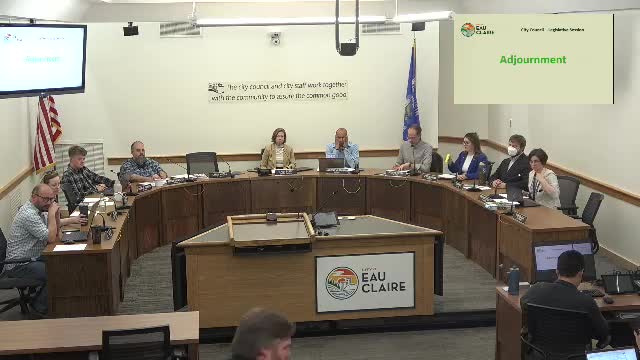
City Manager Steve Hirsch told the Eau Claire City Council at a work session on April 22 that the city will commit $40,000 from the flexible housing capital-improvement line to help Catholic Charities operate Sojourner House this year.
The request followed a presentation from Catholic Charities representatives Rob Grover, advancement director, and Roberto Partner, executive director. Partner told the council the Sojourner House’s operating budget is roughly $850,000–$900,000 annually and that a “perfect storm” of reduced donations, higher personnel costs and a capital‑campaign shortfall left the shelter with a substantial gap. Partner said the agency drew about $120,000 from reserves and secured $80,000 in state funds but still faced roughly $200,000 to cover this year’s operations.
Several council members said they supported a short-term city contribution while Catholic Charities works to shore up long-term funding. Council Member O’Shaughnessy said, “The short answer from me is absolutely I want to support this.” Council Member Mboga, Council Member Worthman and others emphasized the need for a regional approach and longer-term solutions while expressing concern about recurring shortfalls.
Hirsch summarized staff and finance recommendations before the council and described three funding options: (1) draw from the flexible housing CIP line (general-fund supported, intended for housing-related needs), (2) use the city’s contingency fund, or (3) use anticipated unspent operating budget savings for the fiscal year. Finance staff advised preferring the flexible housing CIP for this specific one-time request to avoid tapping contingency or one-time savings that could be needed for contract settlements or other emergent costs.
After discussion the city committed $40,000 from the flexible housing CIP for the immediate need; Hirsch said finance staff (Kitsy Winters) will prepare the specific transfer or amendment and notify the foundation and Catholic Charities of the city’s commitment. Hirsch told the council, “Yes. So basically to summarize, we’re going ahead with 40,000 of funding. It’s coming from the flexible CIP funding and Kitsy can get back she will return to you with that specific, transfer or whatever the next step is, but we will communicate to the foundation that we are that's our commitment.”
Why this matters
Sojourner House is the city’s year‑round homeless shelter. Catholic Charities said a continued shortfall could have forced changes to operations; councilmembers told staff they wanted to buy time for the agency while broader funding solutions are developed. Council members flagged the shelter’s regional role: other nearby shelters operate seasonally (approximately six months); Eau Claire’s shelter operates 365 days.
Clarifying details
- Catholic Charities reported Sojourner House’s annual operating cost as $850,000–$900,000 and an initial shortfall of about $400,000; agency budget adjustments and state support reduced the remaining gap to approximately $200,000 at the time of the meeting. (Roberto Partner) - Altoona agreed to provide $15,000 toward the request; the county was reported to be considering a $30,000 contribution; those commitments were reported by City Manager Hirsch during the meeting. - The council directed city finance staff to use the flexible housing CIP line for a $40,000 one-time commitment and to return with the formal transfer paperwork.
Next steps
Finance staff will prepare the formal transfer and notification to the Foundation and Catholic Charities. Councilmembers and staff said they expect Catholic Charities to continue pursuing regional funding partners and longer-term revenue solutions; staff and council asked that departmental data about service use and call types be shared to help quantify the city’s costs and potential savings from shelter investments.