Get Full Government Meeting Transcripts, Videos, & Alerts Forever!
Get email alerts on the Employee Health topic
No spam. Unsubscribe anytime.
Public presses for interim moves as questions persist about ‘sick’ Springfield courthouse
Summary
Employees, residents and some councilors urged DCAM and the trial court to move courthouse staff out of a building they described as a ‘sick’ building. DCAM and the trial court said some HVAC improvements were funded but that a full replacement requires the procurement timeline; temporary wide‑scale relocations were not planned.
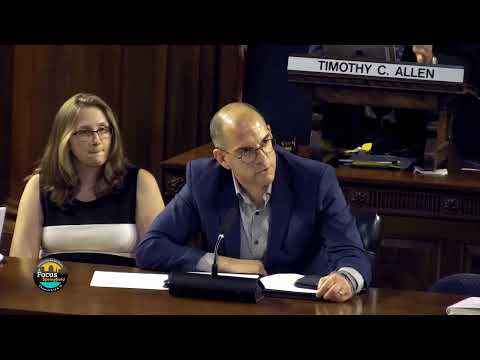
Multiple speakers at the April 30, 2025, Springfield City Council Finance Committee meeting said courthouse employees continue to suffer illness allegedly linked to the existing Roderick L. Ireland Courthouse and urged immediate temporary relocation or remediation.
Springfield City Councilor Victor Davila urged that any redevelopment or reuse of the existing 50 State Street site begin only after a land‑study to address health concerns. Several public commenters, including Steven Howard, asked why more temporary court space was not being used to move employees out of the existing courthouse while a new facility is developed.
DCAM and the trial court responded that the trial court has repeatedly sought a new building to address the condition of the existing courthouse, and the trial court administration supports the expedited lease‑back approach because it is the fastest path to a replacement. Tom Ambrosino, court administrator for the Massachusetts Trial Court, said the trial court “is in full support of this DCAM effort” and is anxious to move into a new building.
Adam Bakke said DCAM has provided funds to make HVAC improvements in portions of the existing building to improve conditions while the new facility is procured. He also said there is no current plan to move employees into temporary leased space as part of this procurement, noting that moving to temporary space can be costly and may not shorten the overall timeline. Bakke cautioned the public that even with the lease‑back approach, completion will take time and said estimates are likely to be more than two years before a new facility is occupied.
Speakers pressed for clearer interim plans for employees and for confirmation of any medical or environmental assessments; DCAM said the trial court has conducted examinations and that the agencies will continue to engage the public as the procurement progresses. The meeting did not produce new commitments to relocate employees pending construction.