Get Full Government Meeting Transcripts, Videos, & Alerts Forever!
Get email alerts on the Location Economic Impact topic
No spam. Unsubscribe anytime.
City leaders urge downtown siting and highlight tax and economic impacts of Springfield justice center
Summary
City councilors and city officials pressed DCAM to prioritize a downtown site for the Springfield Regional Justice Center and discussed taxes, economic development and what geographic area should be considered “downtown.” DCAM said state rules require the facility be located in the City of Springfield and welcomed input on prioritized areas.
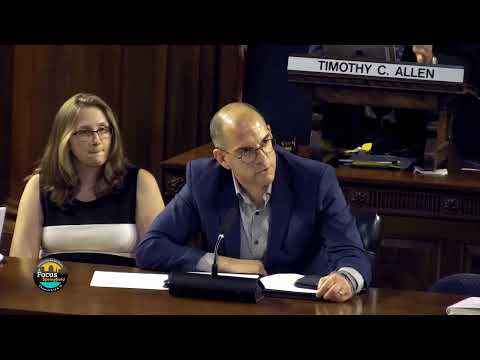
City councilors and downtown stakeholders told the Department of Capital Asset Management and Maintenance at a public finance committee meeting April 30, 2025, that locating the Springfield Regional Justice Center in downtown is a top priority and urged the agency to protect the city’s economic core.
Kathy Bono, chief financial officer for the City of Springfield, told the meeting the new facility is expected to be privately owned and therefore taxable, which would produce substantially more property tax revenue than the existing state‑owned Roderick L. Ireland site. “The land and the building on the property will be taxable,” she said, adding the project would bring people into the city and be “a huge increase for the taxes for the city.”
City Chief Development Officer Tim Sheehan said a privately owned facility will count as new growth and called the procurement approach “ultimately leads to a better position for the City of Springfield.” DCAM Commissioner Adam Bakke said the agency is required to locate the facility within the City of Springfield, and he invited the council and the public to help define which parts of the city should receive comparative advantage in the RFP.
Speakers from neighborhood groups and the downtown business improvement district stressed that “downtown” is not a single, narrowly defined block and asked DCAM to clarify boundaries or weight proposals by an impact area. Betsy Johnson, president of the Metro Center Association, asked whether the RFP will ensure developers pay for any site infrastructure improvements so those costs do not fall to the city.
DCAM said it will evaluate how developers propose to finance and deliver infrastructure and will weigh that total cost when comparing proposals. On a recommended approach for the current Roderick L. Ireland site, DCAM said it does not anticipate a state need for the property once a new facility opens and indicated the agency has previously worked with municipalities to convey old court properties to support local redevelopment. DCAM did not commit to purchasing privately owned buildings such as 1550 Main Street but invited owners to submit proposals in response to the RFP.
Councilors also asked whether tax increment financing agreements might reduce the tax revenue the city expects; DCAM and city staff said such agreements would be at the discretion of the city council and any tax stabilization would be a local decision.
No site was selected at the meeting; DCAM repeatedly emphasized that the asset management board’s earlier vote authorized the procurement method, not a specific location.