Get Full Government Meeting Transcripts, Videos, & Alerts Forever!
Get email alerts on the Education topic
No spam. Unsubscribe anytime.
House Education hears hours of testimony on bill to bar discriminatory book removals; supporters urge ODE support role, opponents warn of unintended effects
Summary
Senate Bill 1098, which would prohibit banning instructional or library materials on the basis of protected-class perspective and require written removal requests and local review panels, drew prolonged public and legislator testimony in a House Education public hearing.
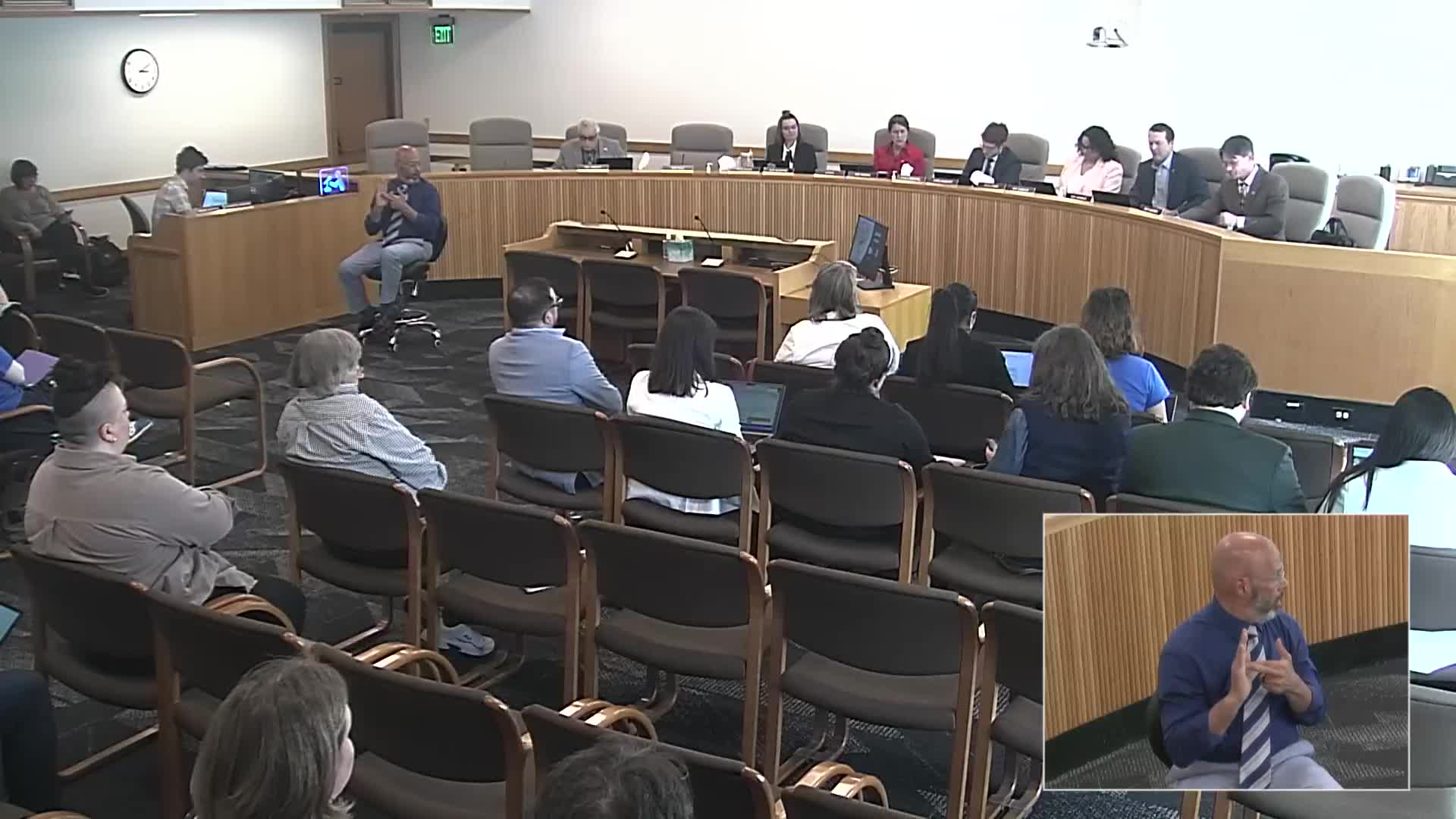
The Oregon House Education Committee held a public hearing on Senate Bill 1098 on April 30, where sponsors and dozens of witnesses debated a measure intended to prevent removal of library, textbook and instructional materials based on the identity or perspective of authors or subjects protected under Oregon law.
Senator Lou Frederick, chief sponsor of SB 1098, told the committee the bill "simply" prevents exclusion of books because they are by or about individuals in protected classes under Oregon's anti-discrimination law and does not prevent removal for age-appropriateness, obscenity, or lack of educational value. Frederick said the bill does not force teachers to assign every book and described the measure as protecting freedom to read and guarding against selective exclusion of materials by viewpoint.
Representative Travis Nelson, a House sponsor, said the bill makes explicit that banning materials because they feature or are written by members of protected classes is a form of discrimination and reiterated that parents and guardians would still be able to seek removal for their own children. Nathan Soltz, chief of staff to Senator Frederick, described the bill as tying the existing anti-discrimination statute to school book decisions and establishing a clear local committee-based challenge process; he offered to provide a state library list of challenged books.
Committee staff summarized the bill: SB 1098 would prevent licensed teachers, schools and districts from prohibiting selection, retention or use of materials because they contain perspectives, stories or are created by members of protected classes listed under Oregon's anti-discrimination law. The bill requires removal requests to be made in writing by a parent or guardian of a student or an employee of the school, requires district review by a committee, and directs the Oregon Department of Education and the State Board of Education to provide guidelines and technical support. The bill declares an emergency and takes effect upon passage.
Supporters included the Oregon Library Association, the ACLU of Oregon, Basic Rights Oregon, school board and library staff, authors and parents. Testimony from librarians and the Oregon Library Association cited a surge in challenges to school library materials: the State Library report (cited by testimony) showed challenges increased by 231% over five years and listed 151 official challenges in the most recent year, with many reasons logged simply as "LGBTQ". Witnesses urged a dedicated ODE support position to help local librarians and to ensure transparent local review processes.
Proponents emphasized SB 1098 preserves local authority to assess age appropriateness and educational value while stopping viewpoint-based exclusion. Mariana Garcia Medina of the ACLU of Oregon said the bill would make clear that "viewpoint-based decisions about who is represented in school materials qualify as discrimination." School librarians and classified library staff told the committee that many Oregon schools lack licensed librarians and that the absence of institutional support makes staff vulnerable to ad hoc or discriminatory removals.
Opponents included Senator Robinson and Representative Duane Juncker, who said the bill would make it harder to remove "obscene" or sexually explicit materials and would undermine local control and parents' ability to protect children. Concerns were raised repeatedly about whether the bill would limit the ability to remove materials deemed not age appropriate and whether external out-of-district complaint campaigns were influencing local decisions. Several legislators asked for clarifying amendments; Vice Chair McIntyre signaled she planned to offer an amendment that would instead require explicit compliance with ORS 659.850 (the state's discrimination-in-education statute) to avoid adding language that might mobilize outside challenges.
Committee members asked staff and sponsors for data; Nathan Soltz and others offered to provide the State Library's list of challenged books and categories. Testimony included personal accounts from adults who described lacking affirming resources in youth and from parents and educators who described the effect of removed materials on students' sense of belonging.
No committee vote was taken on SB 1098 at the hearing. Chair Neron closed the public hearing and adjourned the committee. Sponsors and some members signaled further amendment work and asked ODE to consider resource and staffing supports for school library challenge processes.
The hearing record includes many voices for and against; supporters asked for ODE technical assistance and protections for librarians, while opponents asked for clearer limits on age-appropriateness and local control. Sponsors and staff said they intend to provide additional materials, including a list of challenged titles and an LC (Leg Counsel) review of any amendment Vice Chair McIntyre circulates.