Get Full Government Meeting Transcripts, Videos, & Alerts Forever!
Get email alerts on the Signal Jammers topic
No spam. Unsubscribe anytime.
Committee advances bill criminalizing possession of signal jammers with intent to steal; members debate right-to-repair carve-out
Summary
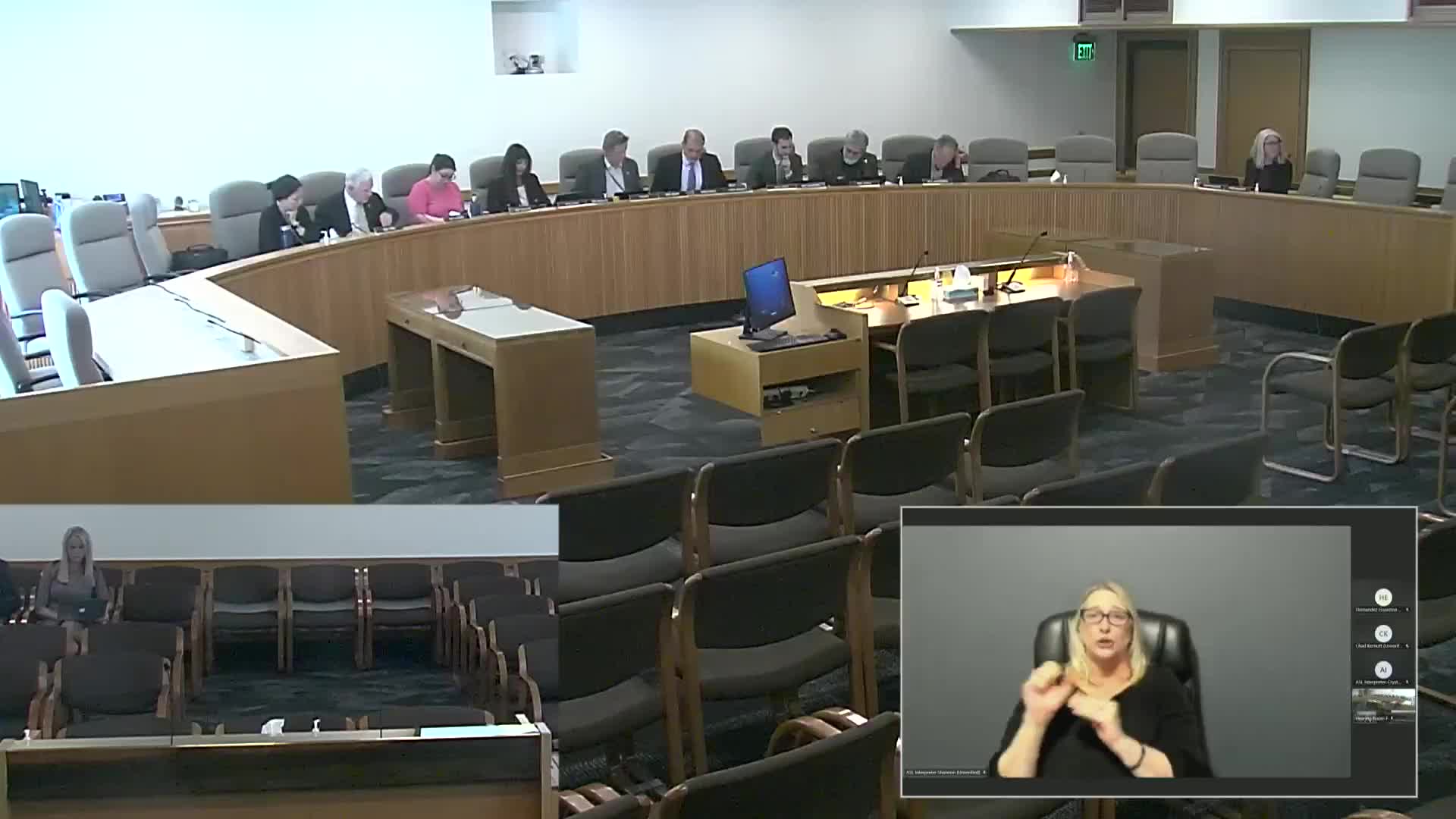
The House Committee on Judiciary on April 30 advanced Senate Bill 959 to the floor with a "do pass" recommendation; the bill criminalizes possession of signal jammers with intent to commit burglary or theft and includes an exemption for alarm-system manufacturers from replacement-part supply requirements.
The House Committee on Judiciary on April 30 voted to advance Senate Bill 959 to the House floor with a "do pass" recommendation. The bill classifies a signal jammer that can interfere with an alarm system as a burglary tool and makes it a crime to possess a signal jammer with intent to break into premises or commit theft. It also exempts alarm-system manufacturers from being required to supply replacement parts or tools to an owner or third-party service provider.
Committee discussion centered on a tension between preserving security protections for alarm systems and the state's recently enacted right-to-repair law. Representative Tran voiced concern about creating a narrow carve-out from right-to-repair: "I'm concerned about how we're carving out the right to repair for just this 1 item. Because we're gonna open the floodgate for other, item to go against something that we passed recently." Representative Mannix, supporting the bill, argued that the security context justifies an exception: "...I heard enough of a convincing case that they have specific protections that they need to have in place. And, so that's I would favor this for that reason."
After discussion, Vice Chair Wallen moved the bill to the floor with a due-pass recommendation. A roll-call exchange recorded the following votes in committee: Representative Anderson — Aye; Representative Taichi — Aye; Representative Lewis — Aye; Representative Manning — Aye; Representative Tran — No; Vice Chair Walden — Yes; Chair Kraft — Yes. The chair announced the motion passed and said he would carry the bill to the floor.
Members repeatedly asked for care in applying right-to-repair principles and signaled openness to revisit the carve-out if it proves overly broad; the committee did not make changes on the floor of the committee meeting.