Get Full Government Meeting Transcripts, Videos, & Alerts Forever!
Get email alerts on the Arts Education Grant Review topic
No spam. Unsubscribe anytime.
Wisconsin Arts Board review panel vets arts-education grants, flags evaluation, budget and accessibility gaps
Summary
A volunteer advisory panel convened by the Wisconsin Arts Board held a recorded, livestreamed meeting to review phase‑2 Creative Communities arts‑education grant applications and to confirm scoring and conflict‑of‑interest procedures.
A volunteer advisory panel convened by the Wisconsin Arts Board held a recorded, livestreamed meeting to review phase‑2 Creative Communities arts‑education grant applications and to confirm scoring and conflict‑of‑interest procedures.
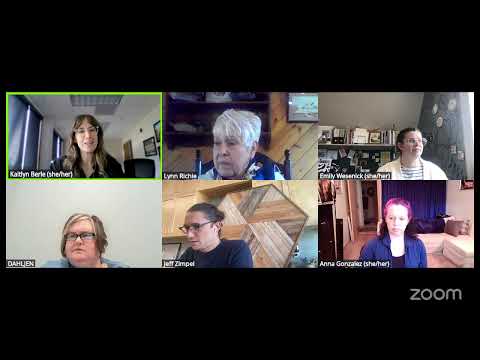
The panel chair, Lynn Ritchie, introduced the session and the board’s expectations, thanking participants “for all the work you've done in advance of the meeting and for all the time and thoughtfulness you'll put into today,” and reminding reviewers that their recommendations will be taken to the full board for ratification at the May meeting.
Panelists spent the day reviewing multiple applications from across Wisconsin — including proposals from Sheboygan, Green Bay, Milwaukee, Madison, Wausau and smaller communities — and discussed each application’s artistic approach, community partnerships and evidence of sustainable planning. Panelists did not make final grant awards in this meeting; staff will average reviewers’ numeric scores, look for natural breaks in rankings and the panel chair will present recommendations to the full Wisconsin Arts Board.
Reviewers repeatedly raised three cross‑cutting concerns while discussing individual proposals: how projects plan to evaluate learning and community impact, whether budgets and in‑kind/“staff time” matches were clearly documented, and whether programs had adequate language access and other accessibility accommodations. For example, Emily Wesnick, youth and family program manager at the Lee Aoki Woodson Art Museum, praised a Sheboygan children’s museum project for deep community collaboration but asked whether volunteer capacity would match an expected visitor load and whether scholarship or free programming would be available for economically disadvantaged families. Jeff Simple, artist‑in‑residence curator at Arts at Large, said one museum proposal’s language — “working collaboratively with the Mexican community rather than creating exhibitions for them” — was a strength that indicated authentic partnership.
Budget questions surfaced in multiple reviews. Panelists flagged an Aldo Leopold Community Center request that listed a large “staff cash match” figure (noted in the packet as roughly $387,007.50) that reviewers found confusing relative to the organization’s overall listed operating budget. Reviewers also noted applications that reported zero in‑kind contributions in one section but listed in‑kind income elsewhere and asked staff to clarify those entries.
Evaluation methods drew sustained attention. Several applications described participant surveys and teacher feedback but lacked detail on multilingual tools, observational protocols or ways to assess participants who cannot complete written surveys. Anna Gonzales, community engagement coordinator at American Players Theatre, and others urged clearer plans for translated surveys or orally administered assessments when projects target refugee or non‑English‑speaking communities.
Panelists also urged stronger documentation and storytelling in several applications so future reviewers could better assess artistic quality and community reach. Multiple reviewers recommended that applicants include clearer artist bios and richer work samples (audio with sufficient sound quality, brief documentary clips or photographed examples with context) to show how artists and partners will engage students and community members.
The meeting followed the board’s established process: each panelist will submit numeric scores from 1 to 100 on the review criteria; Dale Johnson, grants and information specialist on staff, will average scores and rank applications; the panel will identify any score floor (a cutoff below which applications would not be recommended for funding) and the chair will report the panel recommendation to the full board at its May meeting. The board’s conflict‑of‑interest policy was reviewed; panelists were reminded to withdraw from discussion and scoring if an applicant involves a person with whom they have a familiar relationship.
Panelists singled out several individual proposals as examples of strengths and open questions. Highlights included a Sheboygan children’s museum project seeking $6,000 that emphasized community advisory input and bilingual materials; a Green Bay wildlife‑connected mural residency that proposed to reach nearly 500 students but left questions about a large staff time entry in the budget; and a Wausau “Art2Go” mobile classes proposal aimed at multilingual and rural audiences that reviewers asked to strengthen its translated evaluation tools.
No formal votes or final grant decisions were recorded during the session. Staff told the panel that applicants will be notified of board decisions after the board’s May meeting and that appeals may be filed only on procedural grounds, not on artistic judgment. The panel paused for a mid‑meeting break and planned to reconvene to finish the packet and finalize scores before the chair submits the recommendation to the board.
The meeting underscored the board’s dual priorities for arts‑education funding: projects that demonstrate meaningful community partnership and clear artistic intent, and applications that document measurable, accessible evaluation and sound, transparent budgets. Panelists said they would communicate their specific comments to applicants through the usual written feedback that accompanies grant notifications.
Lede note: This article summarizes the advisory panel’s proceedings and reviewer commentary; it does not report final grant awards, which are pending the Wisconsin Arts Board’s vote at its next full meeting.