Get Full Government Meeting Transcripts, Videos, & Alerts Forever!
Get email alerts on the Transportation Infrastructure topic
No spam. Unsubscribe anytime.
Buckeye plans Jackrabbit–I‑10 interchange, seeks construction funding; other corridor projects also slated
Summary
City traffic engineer John Willett outlined timelines, scope and funding sources for the Jackrabbit Trail interchange and a set of corridor projects funded by a voter-approved bond and state funds, with design work largely complete and construction targeted to begin in spring 2026.
City traffic engineer John Willett said the long‑planned Jackrabbit Trail interchange with Interstate 10 is largely through design and is scheduled to go to construction bidding next year, with construction hoped to begin in spring 2026 and a finish "in the spring of 20 27, maybe summer," he said.
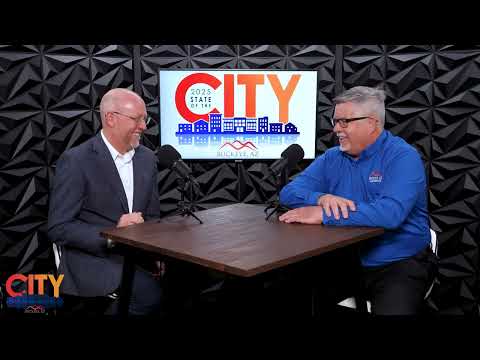
The interchange and a suite of corridor improvements matter because they aim to relieve congestion across eastern Buckeye as new development and freight traffic increase. Willett told an interviewer the project’s construction component is funded in part by state transportation funding from "Prop 4 79," and that the city’s voter‑approved go bond will support a range of other roadway projects across Buckeye.
Willett described the ADOT (Arizona Department of Transportation) process for large projects: a study to identify solutions, a design phase that can take about a year to 15 months, then bidding and construction. On the Jackrabbit interchange, he said, "Is originally, it was about $65,000,000 and that's the range is looking in right now to redo everything." He said ADOT and the Maricopa Association of Governments (MAG) funded design work early and that ADOT is "probably 75, 80 percent through the design, hoping to have it wrapped up this fall." He added contractors would be invited to bid in an advertisement process before construction starts.
Scope and near‑term schedule: Willett said the interchange work will include replacing the bridge, moving utilities and addressing a nearby flood control channel. The roadway portion will build three lanes in each direction on Jackrabbit Trail from McDowell Road to immediately south of the freeway, and a second phase will continue Jackrabbit south to Van Buren Road to connect with existing developer work. Willett said the construction schedule for the interchange itself would be about "a year, 15 month construction schedule." He also said the city plans traffic signals at McDowell and Thomas and is planning for possible future signals at Palm Lane, Encanto and Roosevelt where appropriate.
Funding and other projects: The interviewer noted voters approved a go bond last year and said the city has "upwards of a hundred and $50,000,000" available for transportation projects; Willett described spending the bond in phases over several years. He listed near‑term bond/CIP (Capital Improvement Program) projects: design for Indian School Road from Jackrabbit to Perryville, a study and lane additions on Jackrabbit from Thomas to Indian School, widening Miller Road between Broadway and Lower Buckeye, improvements to Watson Road between Broadway and Lower Buckeye, and a Verrado (Verrado Way/Veratta Way) corridor tie‑in. He said work is already under way or about to begin on Miller between Lower Buckeye and I‑10 and other city projects scheduled to go to construction this fall.
Willett also outlined additional traffic signal and intersection work citywide: signals planned or under study at Broadway & Watson, Southern & Apache, Apache & Yuma, Apache & Lower Buckeye (near Yonker High School), and Van Buren & Jackrabbit (a city CIP project) among others. He said some signals may be developer driven.
Longer‑range corridors: Willett discussed State Route 30 (SR 30) and I‑11. He said MAG and ADOT have broken SR 30 into phases; the first five years of bond planning include a study to identify a preferred alignment for the Buckeye segment, followed by right‑of‑way acquisition and later construction phases. On I‑11, Willett said ADOT was narrowing large corridor studies toward a final alignment and that timing is likely years away.
Implementation notes and risks: Willett cautioned that projects depend on multiple approvals and external agencies: "We gotta go through the process of getting the blessing from ADOT, designing, getting a contractor, the building." He said the city "has set aside money for some improvements so we can do something," but any work on state facilities requires ADOT confirmation of what the city is allowed to build. He characterized the current implementation risk as contingent on ADOT/MAG approvals and normal design/bidding timelines.
How residents will see changes: Willett said many of the bond and CIP projects should be built over the next two to four years and that the eastern portion of Buckeye’s transportation network will change substantially as lanes, signals and the interchange are completed. The interviewer closed by directing residents to buckeyeaz.gov for more information.