Get Full Government Meeting Transcripts, Videos, & Alerts Forever!
Get email alerts on the Toxic Free Kids topic
No spam. Unsubscribe anytime.
Doctors, advocates press committee to pass 'Toxic Free Kids' bills to curb PFAS and other chemicals in children's products
Summary
Physicians, environmental groups and legislators urged a favorable report on S.195 and H.384 to ban PFAS from products made for children, require chemical disclosure, and give the Department of Environmental Protection and TURI power to list and restrict toxic chemicals.
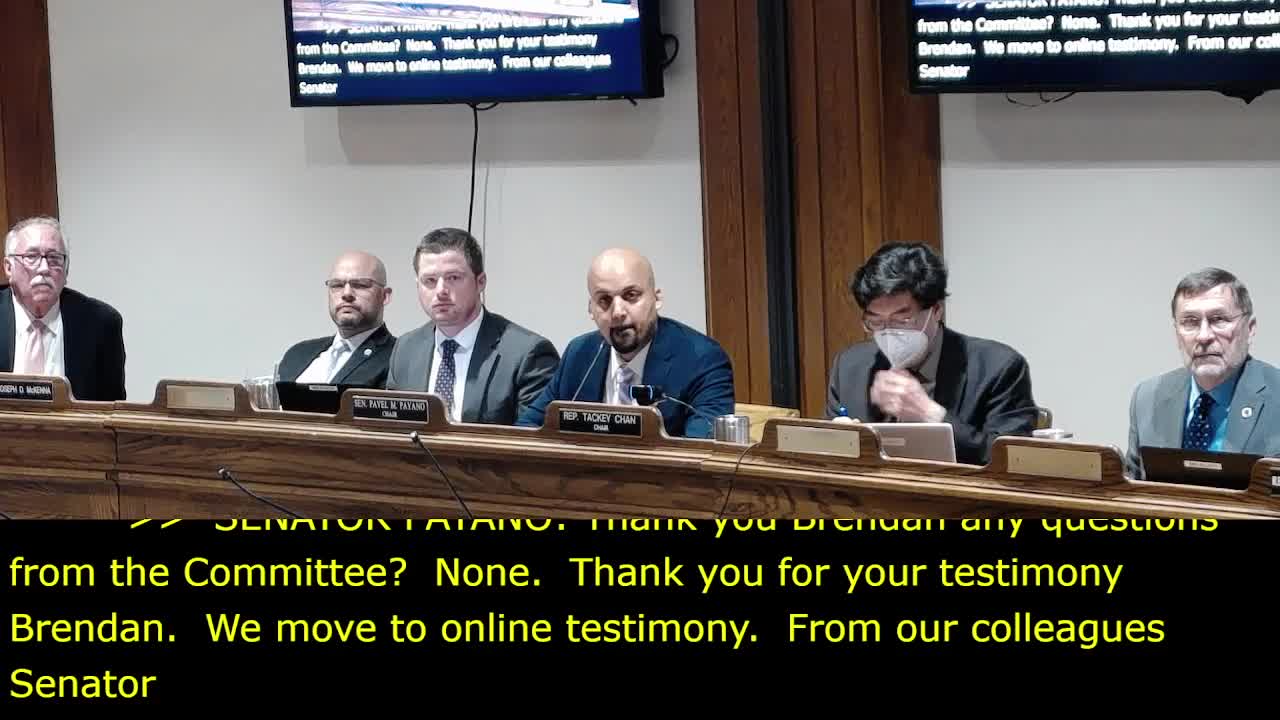
Legislators, doctors and public‑health advocates urged the Joint Committee on Consumer Protection and Professional Licensure to advance S.195/H.384, known as the Toxic Free Kids Act, during a packed hearing where experts described biological vulnerability of infants and children and the long‑term health effects of exposure to PFAS and other toxic chemicals.
Supporters described a multi‑part bill that would ban the addition of PFAS to children's products, require the Massachusetts Department of Environmental Protection and the Toxic Use Reduction Institute (TURI) to create lists of known toxic chemicals for children, mandate manufacturer disclosure when listed chemicals are used, and give DEP authority to restrict chemicals in products for young children within defined timelines.
“Scientists report that an overwhelming body of evidence links toxic exposures, especially early in life, to these rising disease rates,” Senator Joe Comerford told the committee, asking for a favorable report. Philip Landrigan, a pediatrician and professor at Boston College, said more than 300,000 synthetic chemicals have been invented over recent decades and that “80 percent of them have never been tested for toxicity,” arguing Massachusetts should act when federal regulation is insufficient.
What the draft requires Witnesses outlined several components discussed in testimony: a ban on added PFAS in products intended for children 12 and under; a requirement that DEP and TURI maintain two lists of hazardous chemicals and update them periodically; mandatory disclosure by manufacturers if a listed chemical is present in products sold or made in Massachusetts; and staged phase‑outs with a three‑year compliance window in certain product categories (for example, children’s items designed for infants and products that are likely to be mouthed).
Medical and scientific testimony Multiple clinicians stressed children’s unique vulnerability. Philip Landrigan described how prenatal and early‑life exposures can impair organ and brain development. Laura Lundberg, a physician and member of the Massachusetts Medical Society’s environmental health committee, said the scientific evidence is “clear and compelling” that chemicals such as PFAS and endocrine disruptors are linked to developmental harms and chronic disease. Silent Spring Institute and other research organizations presented studies finding PFAS markers and other concerning chemicals in children’s bedding, apparel and personal care products.
Support from public‑interest and business voices Clean Water Action, the Conservation Law Foundation, the Sierra Club and health‑focused nonprofits urged passage. Several businesses and industry advisors also testified that modern manufacturing can meet restrictions — and that comparable laws exist in other states and abroad — saying safer substitutes now exist at scale and competitive cost.
Opponents and questions Witnesses for industry noted practical considerations: supply chains, testing costs and the need for clear definitions and transition periods. Several advocates said the bill was intentionally modeled on laws already adopted in other states to reduce legal and market disruption while protecting children.
Why it matters Supporters argued the bill would reduce preventable toxic exposures during the most sensitive stages of development and align Massachusetts with states that have restricted PFAS and other toxic chemicals in consumer products. They framed the legislation as preventive public health policy that lowers future disease burden and health‑care costs.
Next steps Committee chairs accepted written testimony and were asked to coordinate technical drafting with DEP, TURI and stakeholder groups. Supporters requested a favorable report to allow the bill to proceed to further legislative consideration.